New York City currently operates over 5,500 plug-in electric vehicles (PEVs), with the total number nearing 10,000 when hybrid electric vehicles (HEVs) are included. As part of its electrification efforts under Local Law 140, the city has prioritized evaluating long-term battery performance and the operational implications for its municipal fleet.
To support this initiative, the Fleet Office of Real-Time Tracking (FORT) conducted a study using telematics data collected from over 6.5 million miles of electric vehicle (EV) usage across city agencies. This analysis contributes to the city's clean fleet transition strategy, aligning with Executive Order No. 53 of 2020.
Key Findings
Fuel Efficiency of BEVs: Battery electric vehicles (BEVs) demonstrated the highest fuel efficiency among all propulsion systems. On average, BEVs achieved 91 miles per gallon equivalent (MPGe) in actual operations, which is approximately 14 percent below their Environmental Protection Agency (EPA) ratings. BEVs performed more closely to EPA expectations than plug-in hybrids (PHEVs), conventional hybrids (HEVs), gasoline or diesel vehicles.
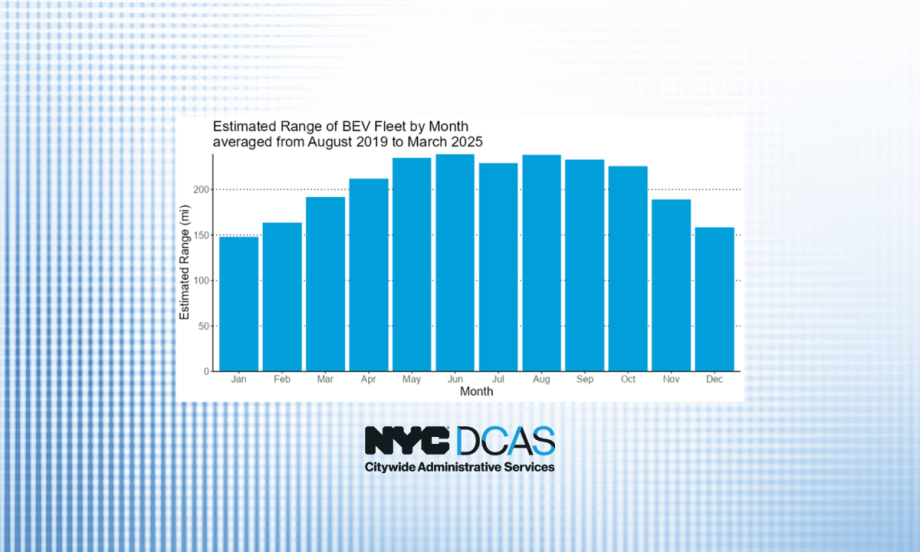
Cold Weather Effects: Battery performance was notably affected by temperature. In cold weather, range and fuel efficiency decreased by an average of 33 percent across all electric models. Internal combustion engine vehicles did not experience comparable performance drops, indicating the need for agencies to adjust operational planning during winter months.
Battery Degradation: The study found limited degradation in battery range over time, with reductions ranging from 0 to 4.8 miles annually. This level of degradation appears manageable under current operational conditions.
Idling and Energy Use: Unlike gasoline or hybrid vehicles, BEVs produce no tailpipe emissions during idling. However, energy consumption still occurs, especially in colder conditions, making idling more energy-intensive in winter.
Crash and Driving Behavior: Crash performance between EVs and hybrids showed no significant differences. However, BEVs experienced higher rates of harsh acceleration events, likely due to instant torque and the dynamics of one-pedal driving.
Impact of Intelligent Speed Assistance (ISA): Chevrolet Bolts equipped with ISA exhibited a 6 percent improvement in fuel economy compared to those without it. This suggests that ISA contributes to both safety and operational efficiency.
Conclusions
The findings confirm the operational advantages of BEVs in terms of fuel economy and support the broader transition toward low-emission fleet technologies. However, the results also highlight specific challenges—such as cold-weather range loss and energy consumption during idling—that require proactive fleet management strategies. Additionally, current EV technology may not be suitable for certain high-demand applications, such as snow plowing, without further advancements.