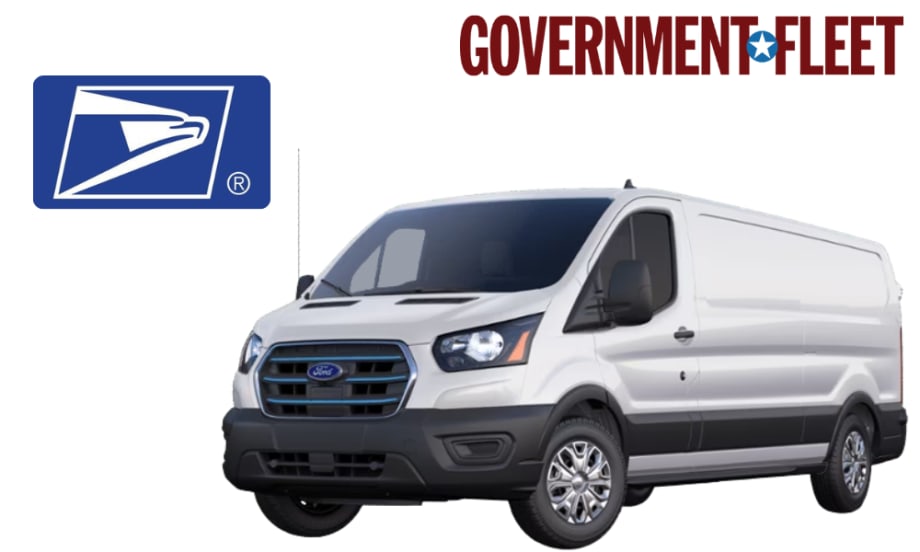
The U.S. Postal Service (USPS) is continuing its efforts to plan for fleet electrification. The Postal Service announced it awarded contracts for 9,250 commercially available left-hand drive (LHD) battery electric vehicles (BEVs) from Ford. The Ford E-Transit vans represent the latest move by the USPS to convert the largest federal fleet to electric vehicles (EVs). The agency also announced initial orders for more than 14,000 charging stations to be deployed at Postal Service facililties across the country. That's according to a press release.
In December 2022, Government Fleetdetailed the agency's updated fleet electrification plans. It includes the expected acquisition of at least 66,000 BEVs to be used for deliveries as part of its 106,000-vehicle acquisition plan for deliveries between now and 2028.
What's in the Mix
In its December plan, the USPS announced it anticipates increasing the quantity of next-generation delivery vehicles (NGDVs), built by Oshkosh Defense, to a minimum of 60,000, with at least 45,000 of them being battery-electric by 2028. However, the Postal Service also intends to purchase more internal combustion engine (ICE) delivery vehicles, which it deemed "necessary to meet immediate vehicle replacement needs," according to a press release.
The plan also includes a total of 21,000 additional battery-electric commercial off-the-shelf (COTS) vehicles, depending on market availability and operational feasability.
NGDV acquisitions delivered in 2026 or later are expected to be entirely electric.

To summarize, the Postal Service intends to electrify its fleet with the following vehicles and equipment:
At least 45,000 BEV NGDVs from OshKosh Defense.
21,000 battery-electric COTS vehicles, which includes 9,250 LHD BEV Ford E-Transit vans.
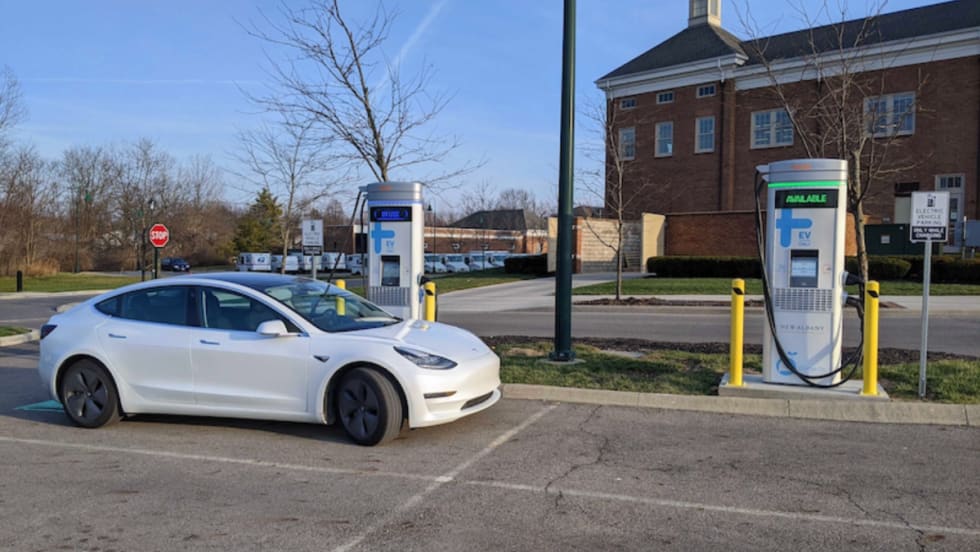
More than 14,000 charging stations.
Ford president and CEO Jim Farley released a statement regarding the automaker's contract, saying, “Ford is proud to support the United States Postal Service in delivering a more sustainable future for America by electrifying their fleet with over 9,200 E-Transit vans through the end of 2024. Built by our dedicated UAW workforce at the Kansas City Assembly Plant, vehicles will be operated by the largest electric fleet in the country serving communities on every street corner. Together with USPS, we are committing to cleaner air and a better planet."
The E-Transit vans are expected to be delivered in December 2023, assuming successful completion of the Supplemental Environmental Impact Statement (EIS) the agency announced it would undertake in August 2022. The agency published a Notice of Intent to supplement its EIS after accounting for expected changes following a plan to improve its delivery network, announced in July 2022. All contracts are contingent on the agency's "satisfactory completion" of National Environmental Policy Act requirements, according to the press release.
As part of the earliest stages of the delivery vehicle replacement plan, a contract for 9,250 COTS ICE vehicles will also be concurrently awarded to fill the urgent need for vehicles. A spokesperson told Government Fleet that the ICE vehicles will come from Stellantis, but did not specify the vehicle model.
The electric vehicle supply equipment (EVSE) contracts were awarded to three suppliers. A spokesperson named the suppliers for Government Fleet as Blink Charging Company, Siemens Industry Incorporated, and Rexel Energy.
The Road to Electrification
The specific locations for deployment of the vehicles and infrastructure have not yet been finalized and will depend on route characteristics, including whether an LHD vehicle is mission-suitable, as well as other business considerations. The Postal Service plans to begin building out its charging infrastructure across a minimum of 75 locations within the next 12 months, and will continue the infrastructure build out in the succeeding years at many additional facilities as a part of its delivery vehicle electrification strategy.
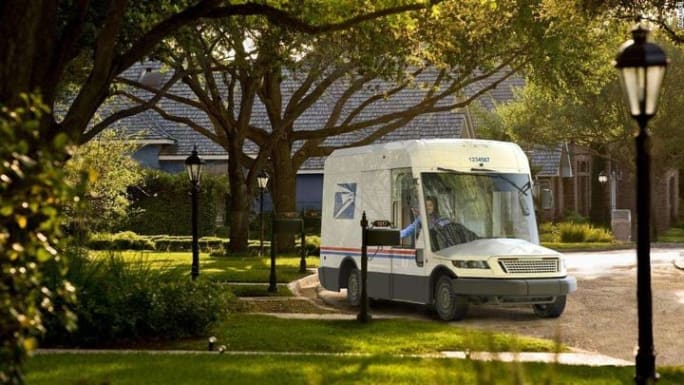
The NGDVs from OshKosh Defense will include a mix of BEVs and ICE vehicles.
Photo: USPS
“We are moving forward with our plans to simultaneously improve our service, reduce our cost, grow our revenue, and improve the working environment for our employees. Electrification of our vehicle fleet is now an important component of these initiatives,” Postmaster General Louis DeJoy said. “We have developed a strategy that mitigates both cost and risk of deployment – which enable execution on this initiative to begin now. I again want to thank the Administration officials and members of Congress who have assisted us in this initiative. Each has shown genuine understanding that our movement toward electrification must be thoughtful and deliberate, must appropriately manage risk, and must be consistent with our primary delivery mission for the American people.”
The Postal Service has continually assessed its operational and infrastructure build-out capacity and vehicle mix deployment over the past 12 months. It has also considered its financial position. In Its December 2022 announcement, the agency announced its total investment is expected to reach $9.6 billion, including $3 billion from Inflation Reduction Act (IRA) funds.
It anticipates this commitment of funds by 2028 for both vehicles and charging infrastructure will result in a total of 66,230 electric delivery vehicles and an overall acquisition of 106,000 delivery vehicles.
The Postal Service has faced criticism for its plans, with legislators and advocacy groups saying it did not include enough BEVs in the plan. In the last year, the agency has continued to increase the number of EVs in its fleet modernization and electrification plans.
The USPS generally receives no tax dollars for operating expenses and relies on the sale of postage, products, and services to fund its operations.