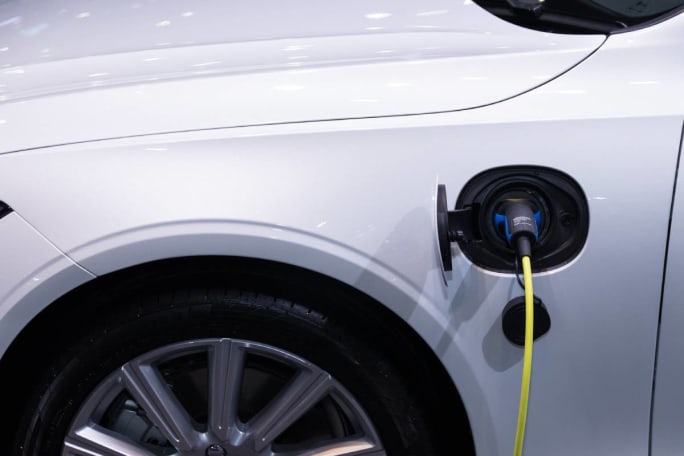
Projects prioritize communities underserved by EV infrastructure and those disproportionately impacted by climate change and pollution from transportation systems.
The Washington State Department of Commerce announced Dec. 17 $9.8 million in Electrification of Transportation Systems (ETS) grants for 14 projects in communities across the state. Priority was given to projects designed to close gaps in availability of EV charging infrastructure and aid communities disproportionately impacted by climate change and pollution from transportation systems.
Transportation is by far the largest source of greenhouse gas pollution – over 40% of all carbon emissions and a variety of co-pollutants.
Washington state is one of the top three states for EV adoption, having already surpassed Gov. Jay Inslee’s initial goal of 50,000 EVs by 2020. Investments in fast-charging infrastructure are crucial to ensuring the state is equipped to handle the next phase of accelerated adoption of EVS called for in the 2020 Motor Vehicle Emission Standards law, requiring a percentage of yearly new vehicle sales to be zero emission.
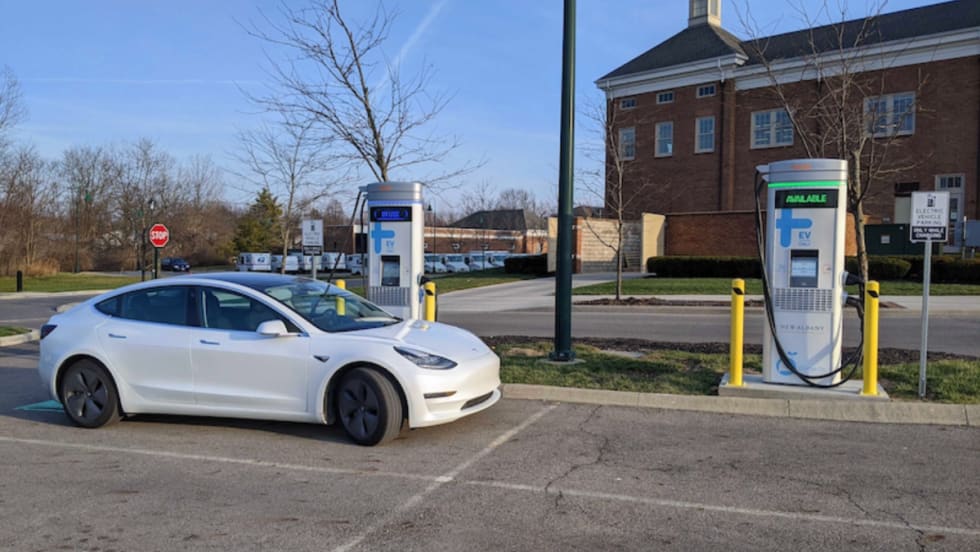
The ETS grants are from the state’s Clean Energy Fund, established in 2013, and will result in over 320 new plugs in 11 counties installing Level 2, fast-charging and heavy duty public transportation charging stations. The initial round of 37 applications totaled $25 million in requests for funding.
“Investing in the electrification of transportation is essential to Washington’s clean energy future and for equitable economic recovery and growth throughout the state,” said Commerce Director Lisa Brown. “Importantly, these projects cover the entire state, supporting expansion of EV infrastructure that will benefit the most communities.”
Proposed projects conditionally awarded grants include:
City of Anacortes– $28,804 for the installation of Level 2 chargers for public and fleet EV charging at City Hall and public library parking lots.
City of Bellingham– $1.5 million to install charging stations on city-owned land for public, fleet, and workplace use, including DC fast charging stations near on-and-off-ramps to Interstate 5, Level 2 charging stations at established parking locations, and off-grid solar chargers at areas with higher use during summer travel months.
City of Tacoma– $597,558 for additional EV charging stations in the downtown area, including both Level 2 and DC fast chargers at sites serving local workplaces and event centers.
Clallam County– $67,890 to provide charging stations at the Clallam County Courthouse to serve employees, residents, visitors, and county fleet vehicles.
Energy Northwest – $1.2 million to install a charging station network along the White Pass Scenic Byway, including stations in Lewis and Yakima counties.
Port of Longview – $96,800 to install Level 2 charging stations to support port fleet vehicle charging, paid workplace charging, and paid public charging.
Port of Seattle– $1.2 million to install DC fast charging EV chargers in the Seattle-Tacoma International Airport (SEA) transportation networking company/taxi holding lot, providing thousands of end-users with an opportunity to transition to electric vehicles.
Puget Sound Energy– $77,762 to install a Level 2 charger serving a shared, light-duty electric vehicle that affordable housing residents may access for transportation in Auburn.
Seattle City Light– $600,000 to install battery-integrated EV fast chargers on a city-owned parcel in the Belltown neighborhood of Seattle, serving ride hail and taxi drivers, residents of nearby multi-unit dwellings, and employees of nearby workplaces.
Skagit County– $989,521 to procure and construct shore-side EVSE for a 28-car, 150-passenger battery electric ferry for service to Guemes Island.
Snohomish County Public Utility District #1– $135,582 to install charging stations at a newly-constructed affordable multi-family housing and commercial building serving the formerly homeless in Everett.
Snohomish County Public Utility District #1– $728,780 to install an en-route induction bus charging station as a demonstration project for regional transit agencies and fleets.
Spokane Regional Transportation Council– $2.5 million to install, in a consortium with Avista and member agencies, Level 2 and DC fast charging plugs at 51 strategic locations throughout Spokane County. Chargers will be used for a variety of purposes including public, fleet, workplace, and bus charging.
Town of Cathlamet – $109,410 to install the only DCFC (Level 3) charger in rural Wahkiakum County, adjacent to State Route 4 and along State Route 409, an important rural highway connecting Washington to Oregon via the Oscar B. toll vehicle ferry.
Commerce placed priority on communities disproportionately impacted by climate change and pollution from transportation systems, many of which are often low-income and communities of color. Among the recipients are multiple projects supporting low-income households, such as charging infrastructure for an electric vehicle car share serving senior affordable housing residents, two dual-port charging stations at a location with affordable multi-family housing and a commercial building serving the formerly homeless, and a variety of other urban and rural public transit charging projects.
The grants also prioritized communities underserved by existing electric transportation infrastructure, supporting projects that advance zero-emission transportation technology that will benefit everyone. Eligible applicants included federally-recognized Tribes, local governments, and retail electric utilities. The funding is conditional upon final project details and execution of contracts.
Gov. Inslee’s climate package rolled out earlier in the week includes $100 million proposed for the Clean Energy Fund, including $20 million for transportation electrification which would significantly expand the ETS grant program. Another $5 million is proposed for decarbonization of the state’s maritime sector, a key component of the Washington Maritime Blue Strategy promoting creation of a sustainable maritime industry, environmental health, and jobs – the “blue economy” – through public-private partnerships and investment in clean tech innovation.