The Biden Administration is pushing back against the U.S. Postal Service’s recent Environmental Impact Statement (EIP) on electrifying its delivery fleet.
The EPA and Brenda Mallory, chair of the White House Council on Environmental Quality, sent letters to the USPS after reviewing its EIS for Next Generation Delivery Vehicle (NGDV) acquisitions. The EPA said the EIS is “seriously deficient.”
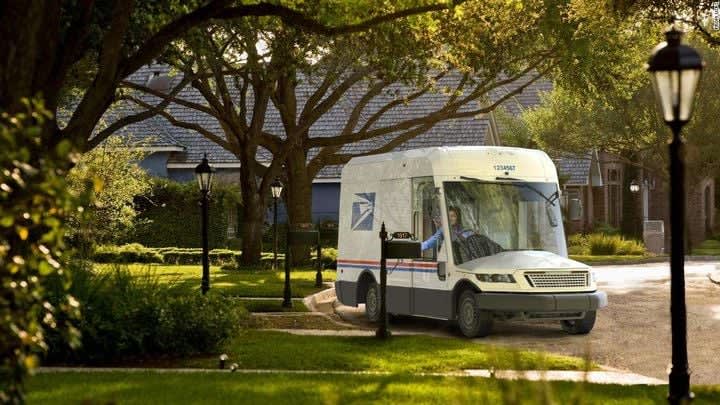
The purpose of the EIS was to lay out possible plans to purchase and deploy NGDVs to replace the Postal Service’s end-of-life and high-maintenance delivery vehicles with more energy-efficient vehicles. In the plan, the USPS committed to purchasing an at least 10% electric fleet.
EPA’s Letter to USPS
"The Postal Service’s proposal as currently crafted represents a crucial lost opportunity to more rapidly reduce the carbon footprint of one of the largest government fleets in the world,” said Vicki Arroyo, EPA associate administrator for policy. “A 10% commitment to clean vehicles, with virtually no fuel efficiency gains for the other 90%, is plainly inconsistent with international, national, and many state greenhouse gas emissions reduction targets, as well as specific national policies to move with deliberate speed toward clean, zero-emitting vehicles.”
In its letter, the EPA pointed out that the Postal Service's approach to electrifying its fleet is not in line with its major competitors. According to the letter, Walmart and FedEx have committed to fully electric fleets by 2040, while Amazon has committed to net zero emissions by 2040.
The EPA is calling on the USPS to hold a new hearing on its 10-year contract with Oshkosh Corp. that could be worth $6 billion or more to build up to 165,000 NGDVs. It is also urging the USPS to create a new, “more meaningful” supplemental EIS. In the letter, the EPA said it’s concerned that the Postal Service did not prepare an EIS prior to awarding a contract. The National Environmental Policy Act requires that.
The USPS sent Government Fleet a statement in response to the letters, saying in part, “We believe we have fully satisfied the requirements of the statute, and that the objections that some have raised concerning this matter stem from policy disagreements with the Postal Service’s decision, and are not a reflection of the adequacy of the Postal Service’s EIS.”
Funding for NGDVs
On the economic impact of the EIS, the USPS said, “while we can understand why some who are not responsible for the financial sustainability of the Postal Service might prefer that we acquire more electric vehicles, the law requires us to be self-sufficient. For that reason, given our current financial condition, the total cost of ownership of our delivery vehicle fleet must be a part of our analysis.”
The USPS doesn’t receive government aid. It will have to spend its own money when purchasing new vehicles. In December, President Joe Biden issued an executive order, asking the U.S. government to buy only EVs by 2035.
President Biden’s spending and climate bill would award $6 billion for USPS to purchase electric delivery vehicles and infrastructure. With the funding, USPS has said all delivery fleet acquisitions could feasibly be electric by 2028, and a corresponding 70% of the entire delivery fleet could be EVs by 2030. The bill is currently stalled on Capitol Hill.
Recommendations from the EPA
Based on its review, the EPA said the EIS does not, “disclose essential information underlying the key analysis of the total cost of ownership, underestimates greenhouse gas emissions, fails to consider more environmentally protective feasible alternatives, and inadequately considers impacts on communities with environmental justice concerns.”
The agency suggests the USPS revise its EIS and make the supplemental EIS available for public comment.
Here are some of the EPA’s recommendations to the USPS:
Purchase the full minimum committed battery electric vehicle (BEV) volume for the 10-year procurement first, before purchasing new internal combustion engine vehicles; and purchase commercially available BEVs, which were listed as the most environmentally preferable alternative in the EIS, for left-hand drive compatible routes
Modify its contract to include more cost-effective BEV options with smaller batteries and lower range appropriate for deployment of the 95% of the USPS’s routes that are less than 70 miles
Amend its vehicle deployment criteria to include consideration of equity and environmental justice
In its statement, the USPS said it is, “willing to accelerate the pace of electrification of our delivery fleet if a solution can be found to do so that is not financially detrimental to the Postal Service. In support of this position, the Postal Service has engaged in extensive discussions with the Administration and Congress to explain our financial condition and the reasons why additional funding would be necessary to accelerate this pace over the course of our ten-year contract.”