How is the public fleet industry doing? Government Fleet has compiled its annual benchmarking statistics using information from its own surveys as well as a fleet analytics company.
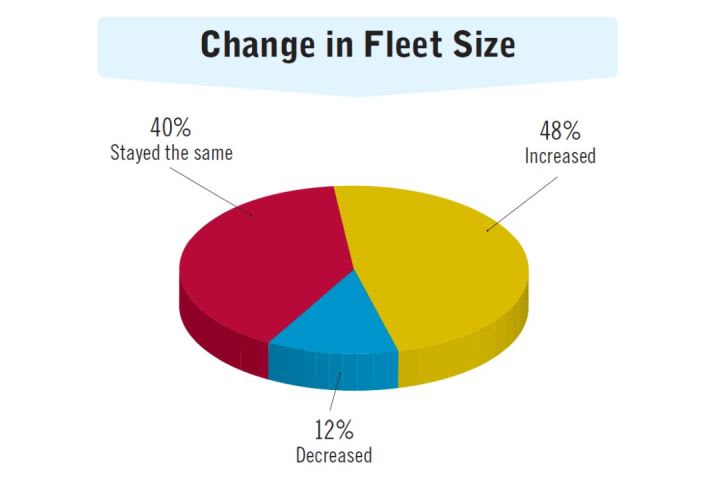
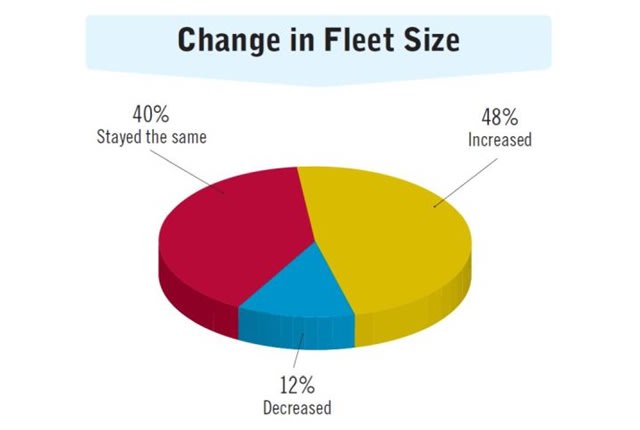
Data collected from the Government Fleet annual trends survey shows continued growth in fleet sizes, with nearly 50% of fleets reporting increases — a number that has risen since 2014. Fewer fleets reported rising operating budgets this year, and more reported no change. A slightly lower number of fleets reported replacement budget increases (47%) compared to the prior year (50%), and many of these said their increases are due to catch-up vehicle purchases.
New for this year is the average fleet inventory breakdown, showing that the largest vehicle categories respondents manage are passenger cars and SUVs, followed by trucks. Also new is average fleet inventory breakdown by fuel type, and telematics use.
Fleet professionals were additionally asked their top three concerns, with the results as follows:
45% Training needs
44% Aged fleet/Replacement budgeting
41% Advanced technology
35% Data management
32% Recruitment
30% Greening initiatives
29% Staff retirements
26% Staying competitive with the private sector
23% Increasing responsibilities of the fleet manager role
8% Other, including aging/outdated maintenance facilities, not enough staff, and increased cost of doing business
This year's benchmarking statistics are divided into two galleries: One presents the results from GF's industry survey.
The second gallery compiles data from Utilimarc, a fleet analytics and business intelligence company. This year's data shows that annual mileage driven (averaged from 2014 to 2016) has decreased for most vehicle categories, while vehicle age fluctuated, with some vehicle types reported to be older and others newer than the previous year’s data (averaged from 2013 to 2015).