The fleet of the city of Cambridge, Mass. Public Works Department is no exception to the trend of how tightening budgets and high costs have affected government fleets. For the first time ever, for fiscal year 2025, the department is adding $100,000 to its budget for vehicle refurbishment.
Assistant Fleet Manager Tom Rowlings said the DPW requested that refurbishment funding from the city council because a truck that cost $230,000 three years ago now costs about $307,000.
Long lead times to acquire vehicles has been a challenge for the Cambridge DPW fleet, so rather than make patchwork repairs, the department took a proactive approach and performed refurbishments, Rowlings said.
“We selected the vehicle and inspected it, came up with a list of work, and addressed that accordingly, so that's really an important part of our process last year that has then come into this year as well,” Rowlings said. “We plan on doing the same thing in order to extend the life of some of these larger vehicles. This is more for the larger trucks than it is for some of the smaller vehicles, but we are doing it across the board.”
Aging Vehicles and the Government Fleet
Dan Simpson has seen an increased focus on aging vehicles for government fleets. Simpson is a senior member of the product team at Fleetio, which he describes as a fleet optimization platform to help fleets run, repair, and optimize their vehicles and assets. The city of Cambridge, Mass. Public Works Department uses Fleetio for fleet management tasks such as staying on top of aging vehicles.
Simpson said the post-2020 environment has become unpredictable for fleets in many areas, which has caused many to focus on running their vehicles longer.
“That’s a big reason people are focusing on preventive maintenance,” Simpson said. “Fleet managers know they need to stay on top of PMs as their vehicles age, because when you miss services, it starts to cause expensive issues in the long run.”
Rowlings in Cambridge, Mass. is focusing on that with the added $100,000 budget for vehicle refurbishment. The fleet is doing that work mostly for larger vehicles such as Internationals, Peterbilts and Freightliners.
Rowlings said his department refurbishes vehicles “from the inside out.”
The department performs a structural evaluation on the frame. As an example, for one vehicle, the department sandblasted the frame, recoated, and repainted. The department also replaced all the wear items such as brake and suspension components.
Rowlings said the department did that proactively, because although the components might not be failing at the moment, the proactive approach will keep the vehicle downtime to a minimum once completed.
“We took the approach that we’re going to replace these so this truck can effectively be reliable and in like-new condition,” he said. “We had trucks painted to have a better curb appeal as well.”
The Era of Budget Concerns
To deal with aging vehicles in this time of shrinking budgets, Rowlings and the city of Cambridge in early 2023 came up with a five-year plan that identified an expected replacement cycle for different types of vehicles and equipment.
One goal was to have no heavy-duty vehicles older than eight to 10 years, and five to seven years for light-duty vehicles, depending on the vehicle purpose and type.
The fleet department partnered with Enterprise Fleet Management, leasing many light-duty and administrative vehicles.
“Historically you might have a department that's driving around in a 15-year-old Chevy that they don’t use very often, and it ends up in run-down condition just from sitting around, so we’ve right-sized the fleet with assessing who needs the vehicles, and then by partnering with Enterprise we’ve been able to lease a number of vehicles,” Rowlings said.
He added that Enterprise’s five-year-long lease provides quicker turnover, and that program allows the city of Cambridge to use only approximately $80,000 a year in lease costs rather than, for example, $400,000 or $500,000 to replace those vehicles.
“So that money gets stretched over a five-year budget cycle rather than just the one,” Rowlings said.
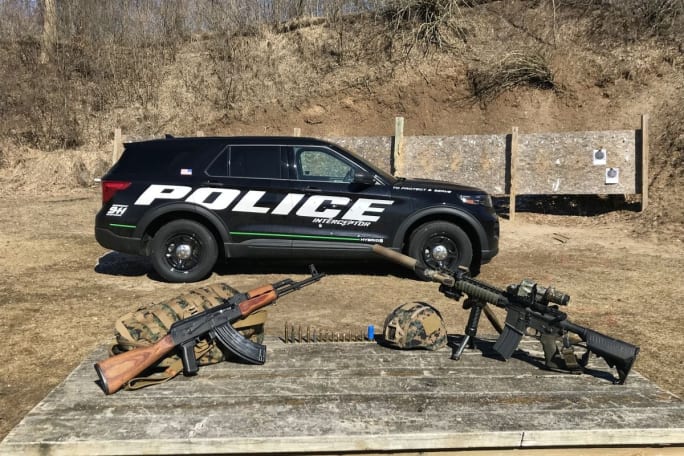
Fleets may use sensor data to keep track of vehicles and identify ahead of time when some vehicles may need preventive maintenanceto reduce the risk of repairs.
Photo: DEW Engineering
Technology and the 5-Year Plan
The city of Cambridge has used Fleetio for real-time sensor data that has helped build its five-year plan, and it helps the fleet continue to evaluate and make regular adjustments to account for any changes in the plan.
Providing an example, Rowlings said the fleet was scheduled to order a replacement for one of the pickup trucks in the fleet, but the truck suffered an engine failure about eight or nine months ago. The truck had high mileage but was in good condition overall.
“We decided we were going to replace the engine and extend that life, and we did that because we have all the data of what we had done to that vehicle for the past three years, to show that we’ve maintained it,” Rowlings said. “It's had routine brake jobs and suspension work and things like that, so that it was in a state of good repair, it just unfortunately had a catastrophic engine failure. So by replacing the engine, it brought the vehicle back to an extended service life, so that’s really using the data there.”
He said real-time sensor data provides alerts for warnings like a check-engine light or diesel particulate filter service light. But relying on drivers to report issues can be tricky, he added.
The fleet relies on a technology integration between Samsara GPS and Fleetio, which provides alerts to the fleet department. Rowlings provided an example, noting that an engine alert came from Samsara through Fleetio from one of the fleet’s rubbish packers. The alert went to a Cambridge mechanic supervisor who was able to address the issue as soon as the vehicle came back to the yard.
“That gives us the opportunity to address the issue while it’s still relatively minor and saves us some money in the long run,” Rowlings said.
Staying Adaptable with Data
Simpson at Fleetio has seen the product help fleets with maintenance tasks such as creating service programs so they can keep track and automate their service reminders through to work orders. The company also provides digital inspections for fleets, allowing fleet managers to see in real time what’s going on out in the field.
“We also allow fleet managers to integrate telematics, fuel cards, and to create and share reports so that everyone in a fleet can see the data that matters to them,” Simpson said.
If you ask Simpson how fleets can do the best job of managing aging vehicles, he advises them to stay on top of preventive maintenance, which he said will keep costs down and extend vehicle lifecycles.
He speaks to fleet managers who have done that by focusing on service compliance, making sure the vehicles are serviced on time. Those fleets track metrics such as maintenance cost per mile.
“And that gives you an indication of, OK, we may need to adjust our preventive maintenance program or it may be time to move on to new vehicles,” Simpson said.
Without specifying the specific departments, Simpson mentioned how some of his government fleet customers managed aging vehicles, noting that one of those fleets focused on asset utilization.
The fleet used Fleetio to identify which assets at different locations had higher or lower use. The fleet staff decided to rotate those vehicles so that the fleet as a whole had even use and wear on those vehicles.
“And that allowed them to extend the overall lifetime value of their fleet, and then when it came time to purchase new vehicles, they could do that in bulk to maximize their purchasing power,” Simpson said.
He mentioned another fleet of a California utility that uses sensor data to keep track of vehicles and identify ahead of time when some vehicles may need preventive maintenance to reduce the risk of repairs.
Those fleets can see in real time what is happening with different components in the vehicle. One vehicle was exhibiting symptoms of a dead battery, but because of the technology, the fleet discovered it was actually an issue with the alternator.
“We are seeing more fleets using real-time sensor data to triage vehicles while they’re still out into the field. Using sensor data, fleets can prevent issues from happening that they just wouldn’t have had visibility into before,” Simpson said. “For example, by remotely cross-matching a vehicle’s RPMs with battery charge, I’ve seen a fleet technician identify that an alternator was failing. As a result, they avoided replacing that battery only for the alternator to fail, which would have led to unplanned downtime.”
Technology can help keep preventive maintenance top of mind and while also keeping drivers and fleet departments involved.
Where to Put Your Data
Simpson offers advice to fleets on how to build a data-driven proactive maintenance plan, and his top piece of advice is to “centralize your data.”
That means if fleets want a data-driven plan, they should place all of their fleet data in one place, he said.
“A lot of fleets, from small businesses through to enterprise are still using spreadsheets, paper systems, and legacy software to manage their fleet operations. They are juggling different solutions, including telematics and fuel cards to capture data,” he said. “So the more that you can pull into one place, the more informed your decisions are going to be.”
Fleets should also use maintenance and service programs that can adjust to vehicle use and that are not “set in stone.” That helps them get vehicles that have higher usage in sooner for preventive maintenance, he said, adding that fleets should continuously monitor data and make decisions based on what they see, rather than remaining fixed on the initial plan.
He said real-time sensor data can provide actionable insights to extend the life of assets, providing yet another fleet example. An oil and gas industry fleet operates vehicles that perform site visits in remote areas. The fleet manager could see that battery voltage was low in one of the vehicles.
“They were able to reach out to that driver and get that fixed before they headed off out into the middle of nowhere, so that’s just one example, and I think we’re seeing a lot more of it as more and more sensors get added to vehicles,” Simpson said. “There are more opportunities for us to predict what’s going to happen to vehicles and get ahead of it.”
He believes that technology keeps preventive maintenance top of mind and helps keep drivers and fleet departments involved.
“Drivers who are doing inspections know the issue they’ve reported is going straight through to a fleet manager who then can communicate with them directly,” Simpson said. “It’s typically a message letting them know OK, we’ve recognized this issue, and this is what we’re going to do about it. Managing fleet communication in a central place increases collaboration and ultimately puts everyone’s focus on preventive maintenance so that fleets can stay ahead of downtime and those costly repairs.”