Motor pools can be truly handy, enabling a department or division to provide workers access to vehicles for business purposes without providing a vehicle for each specific worker. But a problem with motor pools used by a widespread government entity is that often the vehicles and the people who need them are separated by distance and/or time, meaning that some vehicles may languish from disuse.
A solution to the problem has been developed by INVERS Mobility Solutions and has so far been successfully integrated into several fleets in North America and Europe. The system is called the Company Car Organization System (CO-COS). Essentially, it allows completely automated monitoring and scheduling of pool vehicles, without the necessity of an attendant or other personnel standing by.
According to Mitch Guenthart, fleet manager at the County of Santa Barbara, Calif., the county had been looking for an automated solution for a number of issues, without success, until Guenthart saw an ad for INVERS.
After contacting the company, he found that its system, although relatively new to North America, had already been successfully used for over a decade in Europe, and was currently being used in several North American fleets. These included the University of Washington in Seattle and in the City of Kelowna, BC, Canada.
Univ. of Washington Operates U-CAR
At the University of Washington (UW), a program called “U-CAR” had provided a pool of available cars for university employees on official business. When the program started, users had to go to the motor pool location at one end of the campus to get a vehicle. The people in charge of the program wanted to change that.
“We’re not just about rental cars anymore,” said Joles Tahara, U-CAR program operations manager. “We’re about providing the UW community with efficient, economical, and sustainable transportation through our U-CAR carsharing program.”
U-CAR members pick up a car, drive it (for university purposes only), then return it to the same spot and drop off the key. The U-CAR system keeps automatic track of vehicle usage and charges departmental budgets at the end of each month. The system has become so popular that the university motor pool is adding more locations, making it easier for those eligible to obtain cars. An INVERS KeyManager box makes it possible for users to pick up the keys for the car they reserved with no attendant present.
Reservation System Problem
In the City of Kelowna, pool-vehicle reservation and use had become a problem. A cumbersome management system meant many available pool vehicles were underused.
According to Elaine Shipclark, administration manager of the Kelowna Works and Utilities Department, “Each department had one or more vehicles that would frequently sit in the parking lot unused. When the vehicles were moved under the jurisdiction of the Works and Utilities Department, all the keys were stored in a key box on the fourth floor of City Hall.
There was no guarantee a staff member would take the right keys for the vehicle booked. That system was in place for a couple of years and resulted in a lot of frustration for staff members booking the vehicles and the office staff adjacent to the key box.”
The CO-COS system can be described as an intelligent combination of administrative software with a key management and trip data logging system. An electronic key box, the “CO-COS Key-Manager,” was installed near the city’s vehicles, providing 24/7 access to all employees. Vehicle reservations are made online through the City of Kelowna’s Intranet.
On the day of the reservation, the key for the reserved vehicle can be picked up directly from the KeyManager. Employees no longer have to climb four flights of stairs to retrieve the key, or contend with other issues such as misplaced keys or the confinement of limited office hours.
Once a reservation has been confirmed, the employee uses a company identity card to open the KeyManager box and remove the key, identified by a green light. The vehicles are equipped with an immobilizer device developed by INVERS which adds to security, since they are kept in a garage accessible to the public.
Attached to the key ring is a transponder, called the “data-key,” used to disable the immobilizer upon entry to the vehicle. Trip data is recorded by an on-board computer. At the end of the trip, this data is transmitted to the Key-Manager via the data-key. Therefore, the trip is fully documented — automatically. With this information easily and accurately available, it is then to produce usage reports and allocate costs to the proper departments and cost centers.
INVERS has designed the technology to interface with standard billing and fleet management systems, allowing for streamlined integration into existing corporate structures.
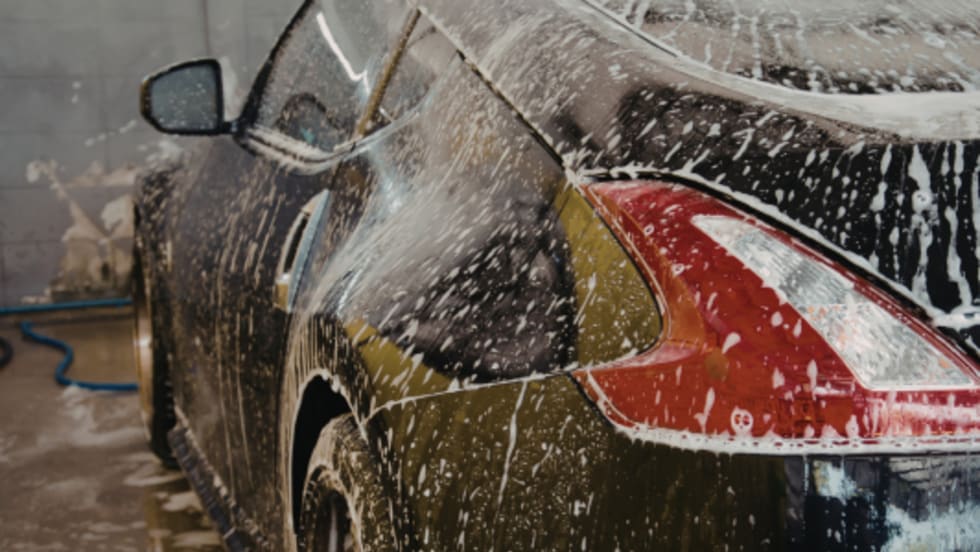
With the old system, cars were often returned anonymously, low on fuel and in need of a bath.With the new system, the person responsible can be easily identified, and the proper department billed for the fuel and car wash.
Santa Barbara Faced Staffing Concerns
The County of Santa Barbara had been dealing with some issues relating to its motor pool for several years. The most pressing concerns were related to staffing problems, underuse of vehicles, and no after-hours user access to the fleet.
Guenthart was looking for an automated solution to the issues, and came across an article about the CO-COS system from INVERS. He investigated further, and found several advantages to installing it. It fit his budget and did not need a custom manufactured configuration, but was customizable enough to meet his exact needs.
Before the system was installed, the county divided a pool of 124 vehicles among three locations, all of which had to be staffed. After the system was up and running, vehicles were simply divided among four locations, one staffed, two partially staffed and partially automatic, and one fully automatic.
The fully automatic location was a pilot project to see if it would work system-wide. The biggest advantages Guenthart has noted so far include: a decrease in staffing problems (“the KeyManager has never called in sick”) greater use of the fleet by the employees, and high user satisfaction overall.
Guenthart said the following objectives for the purchase and installation of the system have been met:
A reduction in the number of departmentally assigned vehicles.
Expansion of motor pool services without increasing staff.
A data interface with the existing MAXIMUS software system.
The availability of self-serve, afterhours access to motor pool vehicles.
The ability to provide motor pool vehicles at remote locations.
Increased parking space availability by the reduced number of assigned fleet vehicles.
Finally, Guenthart says the pilot program established by the County of Santa Barbara was extremely successful and well received by employees who use the automated system. The program will be expanded in the future.