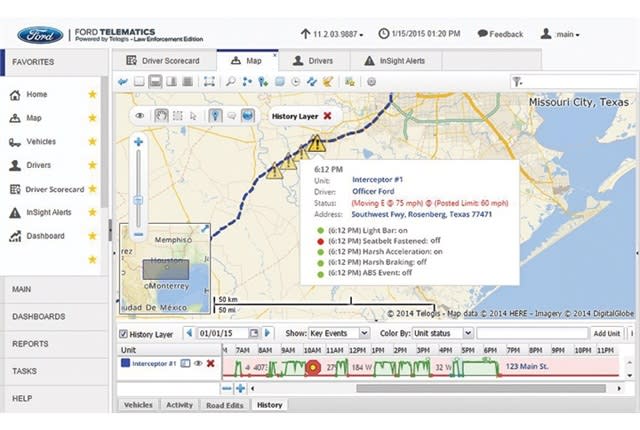
Screenshot of Telogis Ford Telematics courtesy of Telogis.
The first time most people in the United States ever had an experience with a vehicle telematics system was through OnStar. General Motors' subsidiary OnStar's technology has been available in Chevys and the other makes of GM since the mid-1990s. And while the flashier elements of the system are things like navigation and concierge service, OnStar also includes telematics technology that monitors the condition of the vehicle through sensors and alerts the company's operators to warn customers when something is wrong.
Telematics systems like OnStar receive data from a vehicle's onboard sensors via the built-in computer and transmit that data in real time via cellular connection to a cloud or other type of server outside of the vehicle. Software on the server then analyzes the data and can inform authorized persons what is happening with the vehicle. The systems can monitor a variety of different aspects of vehicle operation, including location, direction, speed, seat belt use, engine RPMs, braking, trouble codes, passenger presence, air bag deployment, light bar activation, siren status, gun lock status, and on and on.
There are two basic ways of adding a telematics system to a vehicle. A telematics module can be plugged into the onboard diagnostics (OBD) port or a telematics system can be hard-wired into the vehicle where it reads sensor information from the controller area network (CAN) bus.
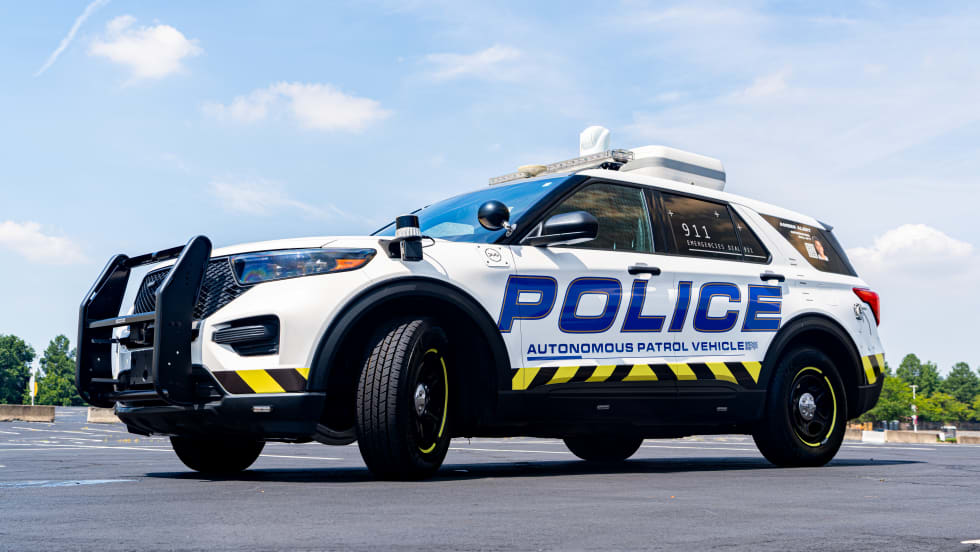
Currently, telematics systems are most commonly found on commercial vehicles where fleet managers use them to reduce costs of operation. However, some law enforcement fleet managers are beginning to test telematics systems in patrol vehicles and Ford is now offering law enforcement vehicles with built-in Telogis telematics. Experts say telematics can save agencies money and prevent officers and civilians from being injured or even killed in patrol vehicle accidents.
Saving Money
Law enforcement fleet managers—like their commercial counterparts—believe telematics can help agencies reduce the operating costs of their vehicles. The technology has the potential to do this two ways: through savings on fuel and by letting fleet managers know a vehicle has a problem before the problem becomes serious.
At the current cost of gasoline it may not seem like such a big concern these days, but fuel costs remain a major concern for agencies. Stephanie Voelker, VP of sales and channel development for North America for Geotab, says one of the many things the company's telematics tools can do is allow fleet managers to analyze gas mileage performance in detail and make comparisons between drivers. "Let's say you have two identical Chevy Impalas and you want to know why one is getting 17 mpg and the other is getting 21 mpg. You can use our product to determine what is in the driving behavior of the drivers that's giving you different gas mileage," she explains.
Fuel is a major operating cost for law enforcement fleets but an even larger cost concern is vehicle maintenance and vehicle replacement. Telematics systems can alert agencies when a vehicle needs routine maintenance such as an oil change. More importantly, a telematics system can let a fleet manager know when a car is throwing a trouble code. Which is something officers have been known to ignore until a car breaks down.
Gary Oldham, manager of public safety business development for Telogis, says officers ignoring warning lights can be a source of great pain for law enforcement agencies. "Fleet managers tell me officers have been known to bring their vehicles in for oil changes and say something like, 'A light's been on there on the dashboard for three weeks now. What does that mean?'"
Saving Lives
It's no exaggeration to say the adoption of telematics by law enforcement agencies has the potential to save both officer and civilian lives. The systems can flag unsafe driving by officers so that agencies can coach the officers to make changes in their driving behavior. But Telogis' Oldham, a retired Southern California officer, says officers should not think of a telematics system as a Big Brother tattletale that will get them in trouble but as a safety tool that could prevent even more serious trouble. "It's not intended to be a tool that lets your sergeant know you took that last turn too hard," he says. "What it looks for is repeated patterns of behavior that will end up in a bad outcome such as a citizen complaint or a preventable death of an officer or civilian."
Telematics can also track seat belt use, which remains a major safety concern in law enforcement. "Seat belt usage among law enforcement officers is still in the 42% range," says Oldham, who adds that in a conversation at a recent International Law Enforcement Educators and Trainers Association (ILEETA) conference some of the attendees told him, "If we can just get cops to wear seat belts and slow down a bit, we can save a lot of lives."
Telematics systems can also alert watch commanders and supervisors via text or e-mail that a patrol car's air bag has been deployed. Oldham believes this can lead to fewer officers dying alone from injuries incurred in an accident when timely medical response could have saved their lives. In such an incident, the telematic would not only send an alert that the officer had been in an accident, it would also pinpoint the officer's location.
Geotab's Voelker also believes telematics can save officer lives by improving law enforcement driver training. She says telematics can provide more information and more objective information to the instructor about the officer's performance during training than the instructor can gain through watching the performance or even riding along.
"We went out to an agency's road school and installed the Geotab solution into one of the cars. A student then got into the car and drove the course," she explains. "We showed the instructor that by using Geotab they could see if the students were setting up the turns in a proper way at the right speed."
Editor's note: This article first appeared in the Febrary issue of Police Magazine.