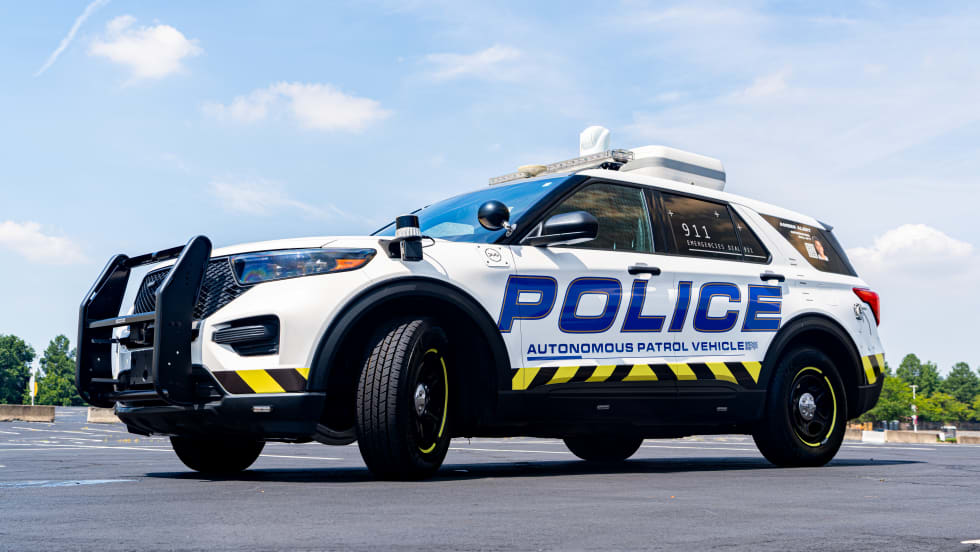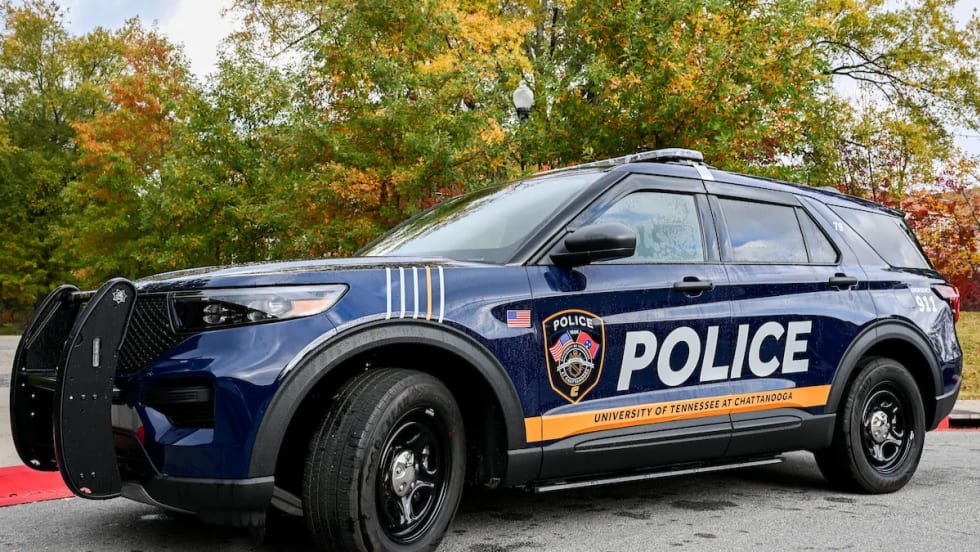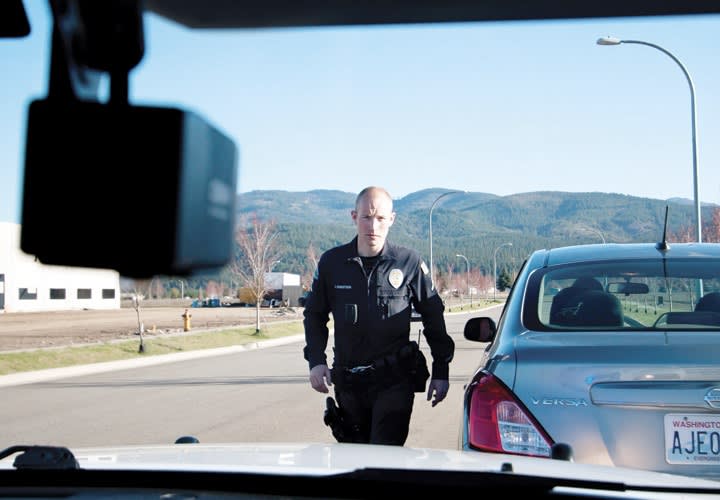
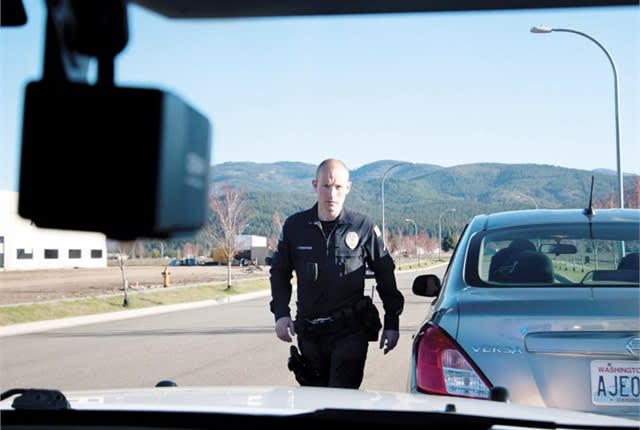
The benefits of in-vehicle camera systems in polcice cars include more reliablity, the ability to view multiple angles, and the ability to see the police officer's actions. Photo courtesy of PoliceMag.com.
It's no secret that in the last few years a number of law enforcement administrators have come to the conclusion their agencies no longer have need for in-car video evidence capture systems. The decision to abandon in-car systems in favor of body cams is usually driven by economics. The administrators of the agencies in question believe they can save money by choosing to have officers wear body cameras and use them in their cars to capture traffic stops. They may be able to save money in the short run, but they may also be short-changing the capabilities of a tool that has been a law enforcement fixture for nearly two decades.
There are many things that an in-car video system can do that body cameras can't do or can't do nearly as well. But the primary difference between the two types of video evidence capture systems is that one was specifically designed to capture a single officer's point of view, the other was specifically designed for monitoring the activity in and around a vehicle—whether that vehicle is stopped or moving.
Triggers and Metadata: 2 Advantages of In-Car Video
When you speak with experts about the advantages of in-car video over body cameras for traffic enforcement and road operations, two features of in-car systems quickly enter the conversation: triggers and metadata.
Triggers are fairly easy to explain. In-car video systems can be activated manually by the officer or automatically according to the agency's needs and policy. The most common trigger is activation of the emergency lights. Once the officer lights up a motorist for an infraction, the system begins a recording. Other common triggers include speed settings and g-force readings. The g-force setting allows the system to capture evidence of accidents.
Most body cameras cannot be set to trigger automatically. So an officer using most body cameras to document a pursuit or traffic stop has to remember to manually activate the camera. Any delay in doing so may prevent the body camera from capturing the incident that incited the pursuit or the infraction that was the cause for the traffic stop.
Metadata is data about data. In this case the metadata—the numbers seen at the top and bottom of the frame of in-car video images—includes such vital information about the video as the time and date it was captured, the speed the vehicle carrying the camera was traveling, and the GPS coordinates for the location of the incident. Such metadata can be extremely useful in court. Body cameras capture some of this information, but they do not record the car's speed and other vehicular information in their metadata stream.
Some in-car systems also have GPS tracking that shows the progress of the patrol car along its route, before, during, and after the incident. This can help document a pursuit. It can also be used to pinpoint the location where a subject may have ditched evidence so that it can be retrieved after the fact.
More Reliability in Vehicle Video Systems
In-car video systems are purpose-built for their mission, and take advantage of the car's systems. This gives the in-car system some unique capabilities that are not currently technologically possible with body cameras.
The car itself is one of the things that makes an in-car video system such a reliable evidence capture tool. In-car video systems are hard wired into the electrical systems of the vehicles that carry them. This means they are extremely reliable and their capabilities are not limited by battery runtime.
Because battery life is not a concern for in-car videos they can be constantly on. This is important because it means evidence is being captured even before the officer notices an infraction and triggers a recording. The industry calls this pre-event recording, and it allows the system to capture evidence from just before the beginning of an event to its end.
Pre-event recording is available on some body cameras but not for as much time as many in-car systems. Body systems are generally limited to 30 seconds to a minute of pre-event recording, while in-car systems are generally capable of as much as 15 minutes of pre-event recording. Some car systems also offer post-event recording, so if something happens after the officer turns off the camera, it is still recorded.
A number of in-car video system manufacturers have also taken the pre- and post-event recording concept to an extreme with after-the-fact recording. In a pre-event or post-event recording, the system is capturing video on a loop at all times and that data is not recorded to the drive unless an event is triggered for example by the officer turning on the emergency lights. With after-the-fact recording, the data is being written to the drive at all times when the system is on, whether an event is triggered or not. This technology allows evidence to be searched and captured days, maybe even weeks, after the event, even if the system was not actually triggered at the time. The data stays on the drive until the storage space is needed for another recording.
Another evidence reliability feature found in some in-car systems is dual drive recording. This means the system writes to two drives simultaneously, so there is always a backup in case of failure.
After-the-fact and dual drive recording are unlikely to be offered on body camera systems anytime soon because they are both battery and storage hogs. And battery life and storage capacity are precious on body cameras.
"Body cameras are 10 pounds in a five-pound box," says Jeff Schillinger, a product development manager at Safety Vision, describing how precious real estate is inside the compact form factor of a body camera. Schillinger, who has overseen Safety Vision's development of both the ICOP Pro in-car system and the Prima Facie body camera, says, "Adding all the capabilities that in-car cameras have had for years to body cameras will take some time while we wait for the technology to catch up."
Make Use of Multiple Cameras
One of the capabilities of in-car video systems that makes them different from body cameras and so well suited to their mission of capturing evidence in and around a police vehicle is multiple camera operation. Even some of the most basic in-car systems can run two cameras: one forward facing and another to capture any activity or speech by prisoners in the back seat. Higher end systems can run as many as eight cameras.
Each in-car video system manufacturer takes a different approach to how users can apply the multi-cam features of their systems.
10-8 Video's SD2+2 features two cameras, one forward and one facing the backseat. The backseat camera has infrared for night operation. Both cameras can record simultaneously.
The Edge HD system from Coban offers two cameras, a wide-angle, front-facing camera with a deep zoom and a compact backseat camera with infrared lighting.
Digital Ally's DVM-800 is incorporated into a rearview mirror and includes forward-facing and backseat-facing cameras. Users can add up to four additional cameras, including a backup camera that displays in the rearview mirror. Digital Ally says the backup camera is a popular option for agencies that use SUVs.
Safety Vision's ICOP Pro comes with a forward-facing camera and a cabin-facing camera with infrared illumination for night and low-light use.
VizuCop's 360 system features an eight-channel DVR, which can accommodate as many as eight cameras. It comes with three cameras, a dual front camera system that automatically focuses on the license plate of the car in front of the patrol vehicle, and a backseat camera. Users can add rear or side cameras for additional views.
WatchGuard Video's 4RE can operate multiple forward-facing, side, and rear-facing cameras. The company currently offers two different forward-facing cameras with Ultra-Wide Dynamic Range, which improves their nighttime performance and daytime performance when facing the sun.
Providing an Overall View of the Scene
The many camera options on in-car systems give the user the tools to perform a variety of missions. Multiple camera in-car video systems are even being used for surveillance. But the primary use for in-car video cameras is to monitor what is right in front of the vehicle and what is happening inside of it.
The front-facing camera view provided by any in-car video reveals both the weaknesses and strengths of in-car video as a law enforcement tool vs. body cameras. The weaknesses are evident. The body camera follows the officer and shows the officer's point of view. If the subject runs away or attacks the officer away from the car, the body camera will show it.
But it won't show what the officer is doing unless other officers are on scene with cameras. Which is one of the strengths of an in-car system; it provides an overall view of the scene, including the actions of the officer and the vehicle occupants.
So if a passenger drops evidence out of the vehicle or makes preparations to attack the officer, the front camera will capture video of that action.
Of course, when things go bad at a stop, the subject or subjects and the officer or officers often move out of the frame and that forward-facing camera doesn't follow. This is one reason why some agencies add a left side view camera to their in-car systems. It's also why WatchGuard Video will soon announce it has developed a new forward-facing camera unit it calls the Panoramic X2. Jason Stuczynski, WatchGuard Video's vice president of sales and marketing, says the Panoramic X2 is two cameras encased in a very small housing. One is a standard-angle, forward-facing camera, the other a panoramic lens. "That lens is a wide-angle panoramic strip that will capture pillar to pillar the view out the car. A lot of action goes off screen in in-car videos, but we discovered that it barely goes off screen. So the Panoramic X2 will catch that action."
Body Cameras and Video Cameras Work in Tandem
While the leaders of some agencies are seeking to cut costs by adopting body cameras over in-car systems, many other law enforcement administrators have come to the conclusion that the more video available of an incident, especially a controversial incident, the better. These administrators are equipping their officers with both in-car video systems and body cameras because they know how critical it is to capture video in the current environment and that some prosecutors are reluctant to take cases to court without video evidence. "The general public has an expectation that every interaction with an officer should be recorded in some way," says Frank Reeves of VizuCop.
The competition to supply agencies with tools for capturing video evidence is fierce. Almost every in-car video system manufacturer contacted for this story is making or marketing both in-car systems and body cameras.
Obviously, selling body cameras is a business opportunity for these companies, but it also gives customers the option of staying with the same vendor for both tools. And the addition of body cameras to these companies' product lines has inspired some of them to develop innovative ways to integrate in-car and body systems and help them complement each other in the video evidence capture chain.
Digital Ally, for example, has created an innovative technology for integrating its in-car systems with its FirstVu HD body cam. Called VuLink, the integration hardware allows the triggers on the in-car system to automatically and wirelessly activate the body camera. An officer wearing a FirstVu HD body camera that's connected by VuLink to a Digital Ally in-car system can also activate the in-car system by triggering the body camera. VuLink can even be used to activate all of the FirstVu HD body cameras of every officer on scene out to a range of 200 feet from the VuLink-equipped car.
Greg Dyer, Digital Ally's national sales manager, says the company has bundled its in-car systems with its body camera, and VuLink. "We offer an end-to-end system, and you can use the same software to manage your video evidence."
Experts say an end-to-end system is a good idea, if agencies can afford it. They argue that body cameras should complement in-car systems, not replace them.
Editor's note: David Griffith is the editor of Police Magazine. This article first appeared in the May issue of Police.