
Fleet departments are still addressing post-pandemic technician shortages through career progression plans and partnerships with local technical schools to attract and retain skilled workers.
The city of Tallahassee, Florida, fleet management department experienced a technician hiring challenge as the worst of the pandemic began to wind down. The department started an internship program with a local technical college, and it worked well, said Jeff Shepard, director of City of Tallahassee, Florida, fleet management.
“But it takes several years to develop the skill set needed for our diverse fleet,” said Shepard, who oversees about 2,800 total assets. About 2,200 of those are rolling stock vehicles and the rest are off-road equipment such as bulldozers, backhoes, and generators.
Looking to compete for technicians, the city rolled out a “career progression plan” or CPP, in early 2022 that included the levels of technicians I, II, III, and Master. The city was paying ASE supplements of $25 per month per test up to 25 tests. But the CPP rolled the supplements into the techs’ base salaries and stopped future supplements.
“So no one lost money,” said Shepard, whose department includes about 50 full-time technicians and 120 employees overall. The fleet's vehicles and equipment travel about 1.1 million miles a month. Those vehicles operate in various city areas such as power plant, wastewater treatment plant, airport, natural gas, police and fire. “Some were grandfathered in to their respective levels. Everyone is still eligible for cost-of-living adjustments, and promotions to higher levels are based on years of experience, performance and ASE certifications.”
He added that once a technician reaches a level of certifications and years of experience, the supervisor is responsible to see that the tech can perform at the next level. The supervisor then recommends the tech to the service manager for approval, and then to Shepard as director.
“When a high-level tech retires, we use salary savings from reclassing the new hire,” Shepard said. “Over the past 2 and half years, we have been able to hire over a dozen good techs.”
Shepard and Orange County, Florida, fleet manager Bryan Lucas use different budgeting methods in determining how and how much to pay employees.
Orange County, Florida: Historical Models
Orange County is internal service-funded.
“So we have maybe a little more control over our budget than some other groups do, because we bill out all the services, fuel, we have markups on everything,” Lucas said.
Every time a vehicle comes in for service, it results in labor charges and related parts markups.
“If we put an oil filter, any parts, there's the cost of the part,” Lucas said. “It looks like a retail operation, plus markup and that’s how we’re funded. So if we have to pay people more, we can adjust the internal service. We really haven’t for many years. We’ve found the right mix there, so making our budget work for the job classes we have has been OK.”
The general pay scale of employees, especially techs, has been a bigger challenge for the county, Lucas said.
“Especially our heavy diesel, heavy truck techs probably need to be a higher pay rate, and we’ve been slowly working on that for many years,” Lucas said. It seems like we get up on top of it, and the market’s gone ahead of us again, so we’re always a little behind.”
He expanded on how the county budgets to pay the employees, saying it looks at three years of historical models, reviewing what its customers are using in areas such as fuel, parts, and labor.
“We kind of know what our annual increases will be, we know what the pay ranges will be, so we kind of build our employee budget first,” Lucas said. “Making our budget work to pay our employees isn’t the problem. The hard challenge is trying to make sure we’re paying people for what we think they’re worth and to give them some opportunity to make a little extra money when we know the pay scale may be a little below the market value.”
As he mentioned earlier, the county seems to be behind in the area of paying its techs a higher rate. But the county is not behind in one area: benefits. Regarding vacation, medical, dental, and retirement, some people place a great deal of value in those benefits, and the county does well in that area, Lucas said.
“A lot of times that’s what people are looking for: stability, set work hours, good work location, good work-life balance, things of that nature,” he said. “So we can offer a lot of that, but if they’re just looking for dollars and cents, they can usually go somewhere else and make more money.”
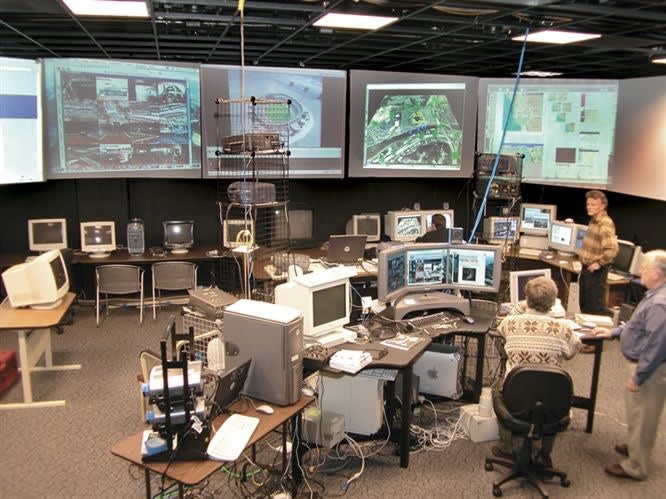
![[|CREDIT|]](https://assets.bobitstudios.com/image/upload/f_auto,q_auto,dpr_auto,c_limit,w_684/pm.crime-center_intelligence_image_1759887007345_rys6ij.jpg)
Fleet operations must adapt to workforce challenges with evolving strategies for technician retention and career development.
The Union Effect and the Fleet
Non-technician staff for Orange County work under general county guidelines when it comes to salary increases. But all of the technicians have been under a three-year union contract, and they generally received salary increases once per year.
“They kind of knew what they were going to get each year, 4%, 3 and a half, for some years they may have gotten up to 5,” Lucas said.
But the state of Florida recently decertified the union.
The technicians now fall under general county guidelines regarding salary increases, receiving a 4% salary boost this past October.
Technicians can also receive salary increases by getting promoted, and they get pay incentive for receiving ASE and emergency vehicle technician (EVT) certifications. In some cases they can get 20 cents per hour extra with certain certifications, up to 13 certifications.
“If everybody had 13 of those and we were able to pay them $2.60 an hour more, we make sure we have that funding early in the year,” Lucas said, adding that once a technician passes the ASE or EVT test, the county reimburses the technician for the cost of the test.
Is your employee promotion to higher levels based on years of experience, performance, and ASE certifications?
Planning Ahead: Career Progression
Shepard said the Tallahassee fleet management department’s career progression plan has helped avoid problems associated with a worker shortage.
“We have technicians coming to us now to get a job,” he said.
Techs and other fleet employees get cost-of-living salary increases every October.
“There’s been in the past, a couple of years, maybe around COVID, we didn’t get a raise. I think I remember in the past 10 years, two years where we didn’t get a raise,” Shepard said.
The career progression plan eliminated the ASE and lead worker pay supplements, but the city rolls any existing ASE supplements into the tech’s new hourly wage.
It also kept the tool allowance for the techs, and the city stressed to employees that the plan will not decrease their take-home pay. Employees are still eligible for cost-of-living adjustments each year, in addition to these changes.
Also under the plan, promotion to higher levels will be based on years of experience, performance, and ASE certifications. The fleet department reimburses techs for the cost of each ASE exam they complete.
Lucas in Orange County says the worker shortage has improved. But a sign just outside of the fleet facility advertises openings for technicians. The department has also held several job fairs in partnership with its facilities group, which has seen challenges in hiring electricians and HVAC techs.
For the fleet department, the county in December had 10 production position vacancies, with two technicians in the hiring process. The county has been able to keep non-technician positions full.
“It's the mechanic position, specifically diesel heavy truck heavy equipment techs, where we have our challenge,” Lucas said.
He said the county is fortunate to have been able to recruit from two tech schools in Orlando.
“We haven't been fully staffed in years, but the good news is the people I’m getting, it’s definitely quality over quantity,” he said. “I’m getting good quality people, generally speaking, versus just warm bodies.”