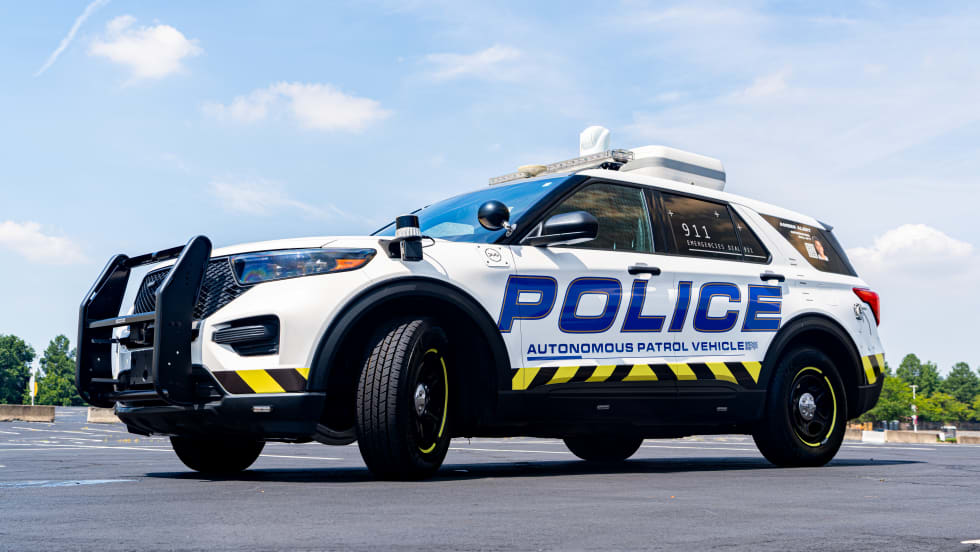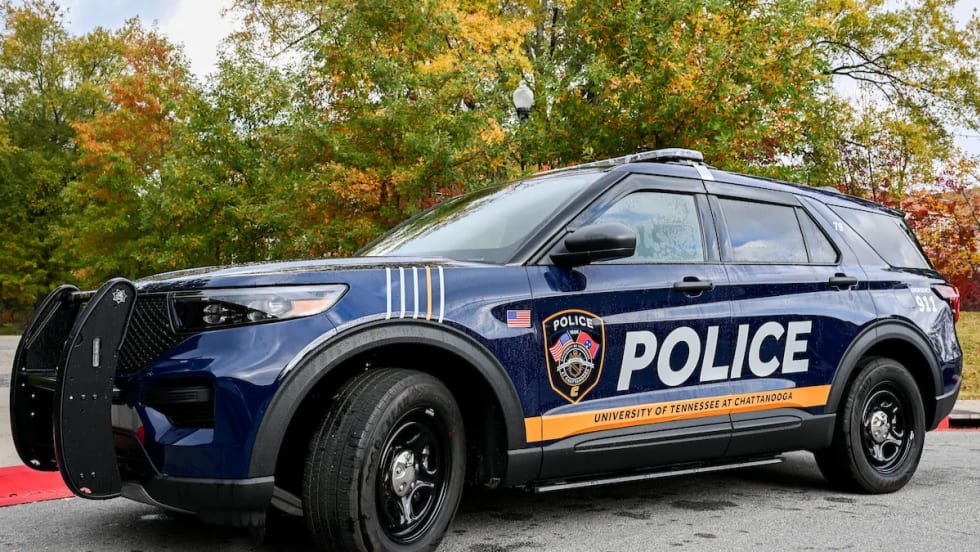





Traditionally, police vehicles have a distinctive black and white color scheme. But choosing a single color, or a unique color scheme, may better reinforce an agency's desired image.
North American police cars colors are traditionally black and white. For many decades, car doors and roofs of most police units were painted white, while the trunk, hood, front fenders, and rear quarter panels were painted black.
These police vehicles typically came in a single color, most commonly white or black. The contrasting color was added to distinguish the units from civilian vehicles.
Over the years, police and sheriffs' departments and state police agencies have broadened preferred color schemes to include a variety of colors beyond the customary black and white look and feel. However, in recent years, many agencies returned to a more traditional black and white look for a variety of reasons.
Creatively Following Tradition
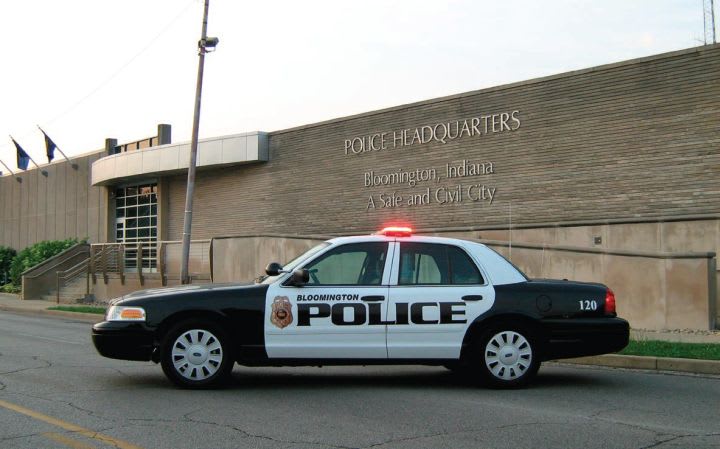
Changing the color scheme of patrol vehicles for the Bloomington, Ind., police department was an extended process, but the department decided to return to black and white vehicles, said Chief Mike Diekhoff.
However, the department found a cost-effective way to use the black and white colors. The 20-unit patrol car fleet purchases all-black Ford Crown Victoria models and adds a white wrap-around decal to cover the perimeter of the cars, Diekhoff said.
Made of vinyl, these decals are guaranteed for five years and incorporate the department's logo. The decals are placed on the vehicles by a third-party provider. By ordering all-black cars as opposed to models with a black and white paint scheme, Diekhoff estimated Bloomington saved as much as $1,000 per vehicle.
Previously, Bloomington used all-white vehicles. However, several other area agencies, including the Monroe County Sheriff's Department, had switched to all-white patrol vehicles.
"We wanted our vehicle to stand out more and this really helps us accomplish our goal of making our patrol cars different," Diekhoff said. "But we also had to do it in a cost-effective way."
"Even our sheriff's department switched from two-tone browns to a white paint scheme," Diekhoff said. "The black and white look is traditional and is obvious to residents in our community it is a Bloomington police car."
Changing the Color Scheme
Beginning in the 1970s, police vehicle colors began to vary more, largely due to minimal costs. The widespread use of computer graphics and vinyl striping was a cost-effective way to add color and "flavor" to the cars. A number of colors were used in '70s- and '80s-era police units, including blues, greens, browns, beiges, and tans. Darker, non-black colors were traditionally used by rural police agencies and sheriff department vehicles.
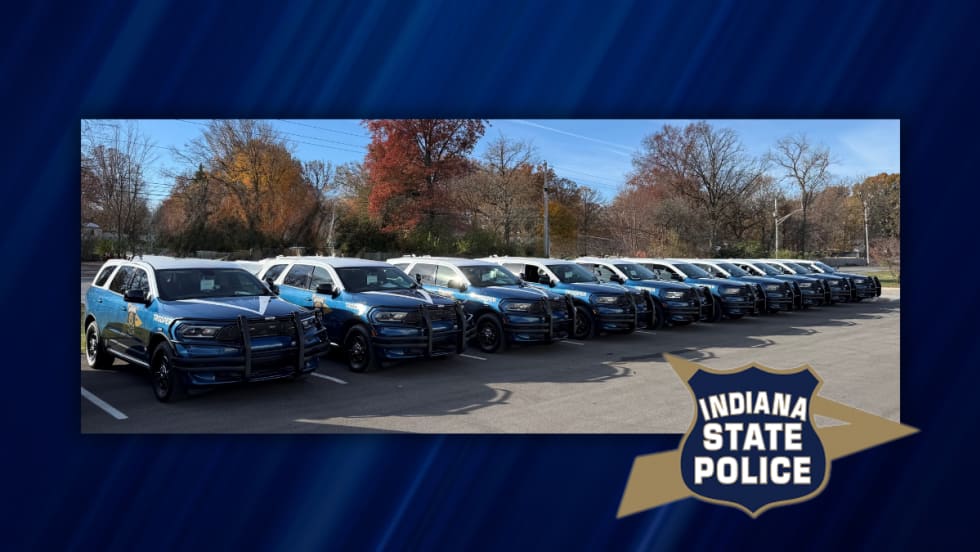
Some changes to a vehicle's color scheme can be relatively subtle, yet can significantly impact the vehicle's overall look. Six years ago, the Pennsylvania State Police added a strip of highly reflective yellow and black material to the rear of its marked patrol vehicles for increased visibility, said then State Police Commissioner Jeffrey Miller.
The same could be said for the Colorado State Police. In 1997, Colorado changed the look of its state patrol vehicles from a non-traditional color scheme to a darker hue. Its Ford Crown Victoria models, for example, included a main color with black and light blue trim on the four side doors.
This color scheme was changed to the current color palette for several reasons, said Sgt. John Hahn, Colorado State Police public information officer. At the time, research indicated black, light blue, and gray would give police vehicles a distinctive look, while allowing them to blend with the surrounding environment.
Lighter blue and gray shades also reflect colors used by early Colorado State Police vehicles, Hahn said.
"Our decision was based on the desire to respect the history and background of our agency while still adhering to some smart, tactical strategies," Hahn said. "We wanted a new, fresh look that adhered to the progressive nature of our agency while staying mindful of the past."
State police vehicles that can blend into their surrounding environment offer advantages, Hahn said. The Colorado State Police deploys nearly 700 vehicles in its fleet; the majority includes Ford Crown Victoria with some Dodge Charger and Ford Expedition models.
"If we have vehicles partially hidden, it allows us to address motorists who might not be driving legally," Hahn said.
Many other agencies throughout the state of Colorado changed to a black and white vehicle look, said Hahn, although his observations are anecdotal. "I have noticed some county agencies and local municipalities seem to be going back to the traditional colors," Hahn said.
Why Are Police Cars Black and White?
The Dallas Police Department recently purchased vehicles with a black and white color scheme, said Public Information Officer Janice Crowther. The main reason for the change was increased vehicle visibility compared to the older color scheme. City police vehicles had been all white with wrap-around decals for many years.
Through the years, Dallas Police found replacing side decals on patrol vehicles could be complicated if the vehicle had been involved in an accident, Crowther said. "Having a solid paint scheme would actually save the department money," she added.
The primary reason for the change to black and white was to provide for a traditional law enforcement message to area residents. "It allows us to get a little more respect and visibility," Crowther said.
The first group of new vehicles with this color scheme was delivered in December with others replaced through attrition. The City's fleet includes Ford Crown Victorias and Dodge Chargers.
The Dallas Police Department had black and white vehicles in the '60s, according to Crowther. The color scheme was changed to all-white in the late '70s, and remained consistent until now.
"The black and white look just represents law enforcement," Crowther said. "It's a sharp and smart look and since few (non-law enforcement vehicles) are black and white, they really stand out more than our older vehicles do."
The agency had more than 260 brand-new cars hit the streets February 2010. The vehicles have LED lights, silk-screened graphics, and the "Serving Since 1881" motto on the sides.
The department voted on the new vehicle's design several years ago, Barnard told the Dallas Observer. "Eighty percent voted for the black and white. We tested blue and black [logos] with officers, the city manager, all the chiefs, and various other people around the department, and overwhelmingly, everyone liked the blue the best because it was a way of blending old and new," he was quoted.
Adding Additional Markings
Official police fleet vehicle markings placement generally varies by jurisdiction. Side doors and sometimes the hood of a marked police car often display the agency's badge or city seal, many times in a reflective finish. Markings, such as emergency telephone numbers, generic anti-drug or anti-crime messages, and Web site URLs are also common.
Some agencies have identification numbers painted or stickered on the roofs of patrol cars to track the units by aircraft or distinguish specialized units, such as K-9 units or supervisory staff vehicles.
Currently, the paint scheme for each fleet is determined either by the individual agency or by the state. Some state laws establish standards for police vehicle markings and proscribe civilian vehicles from using certain markings or paint schemes.
Today, most fleet markings on patrol vehicles are created from reflective vinyl with an adhesive backing applied in a peel-and-stick manner. Colors chosen to represent the department's identity are typically selected by the individual department, although, as noted above, some states have specific guidelines for color schemes and markings.
Colors Around the World
Police vehicles around the world are often more colorful than those in the United States. This is particularly true in Europe and Australia where multi-hued palettes such reds, light blues, and yellows are commonplace on the side of vehicles.
In fact, the black and white color scheme is largely specific to law enforcement agencies in the United States, at least traditionally. Brighter colors are often preferred by international law enforcement agencies because of the attention they draw. However, each country — and local departments within countries — differ in their choice of law enforcement vehicle colors.