Portland, Oregon, Police Bureau fleet coordinator Andrew McCasland and internal operations manager LeAnn Barnett have worked to find solutions to challenges that have faced the bureau’s fleet since the start of the pandemic.
One of those challenges has been getting fleet vehicle orders in to Ford and other manufacturers.
“A lot of times we placed an order and it would get delayed for a very long time or canceled on us unexpectedly, which wouldn’t allow us to replace the fleet that was due,” said Barnett, who with McCasland oversees a fleet of about 800 vehicles.
Taking on the Challenge
So how did the fleet department work to overcome that issue? McCasland said the bureau simply kept its old fleet vehicles on the road, while “paying more money into the repairs and maintenance.”
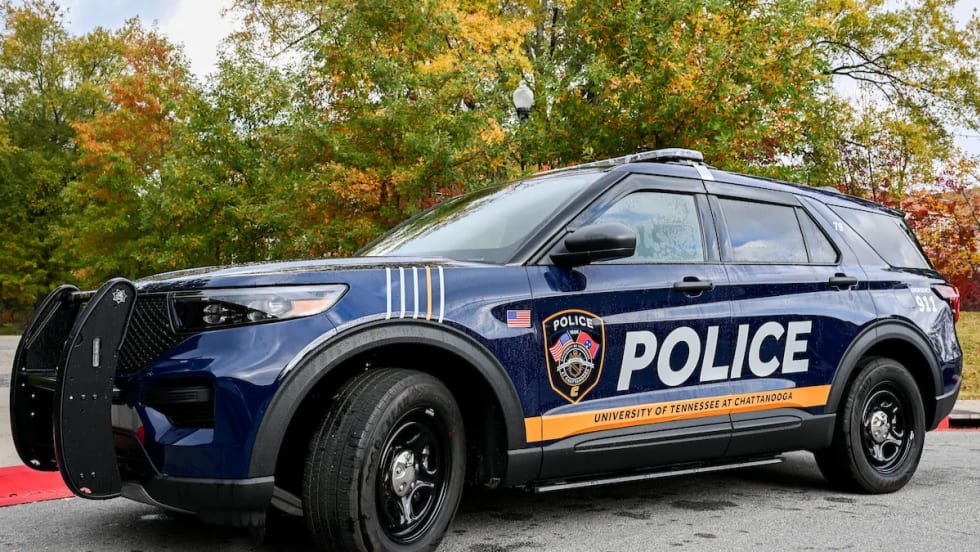
The patrol vehicles are primarily Ford Interceptors, and most of them were hybrids “until Ford couldn’t keep up and make them, so we had to switch to some gas,” McCasland said. “But we’re slowly getting back to hybrids there.”
The bureau began acquiring vehicles other than the Interceptor.
“We started buying some F150s and some Silverados...to diversify our fleet so that our eggs aren’t just one manufacturer’s basket,” McCasland said.
Diversifying Vehicles and Planning Out Additions
The diverse fleet includes pickup trucks for the SWAT team, as well as for the traffic division training unit and for undercover vehicles.
“We have a ton of different vans: transit vans, minivans,” McCasland said. “All of our canines were on a Chevy Tahoe, and our traffic division still has some Dodge Chargers from many years ago. We also have trailers, generators, ATVs and motorcycles, which are all BMWs.”
The bureau operates two electric vehicles, although McCasland said the bureau is still sorting out the charging infrastructure. The bureau operates a Ford Lightning undercover vehicle and a Chevrolet Bolt administration car.
“We’re starting to do the research into electric patrol vehicles, but we’re working through the infrastructure and all the testing and piloting that we’ll need to do before we can start placing those orders also,” Barnett said.
The department was catching up in the area of upfitting after a couple years of not being able to get orders in.
The Next Challenge: Upfitting
McCasland said it was too early to tell how diversifying the fleet has worked out, noting the supply issues that have affected the vehicle manufacturers.
“It seems like we’re starting to get to a point where that’s getting better,” McCasland said. “Chevy and Ford and Dodge are all actually starting to make vehicles again and seeing vehicles get delivered. However, it brings us to our next hurdle, which is upfitting.”
Systems for Public Safety in Lakewood, Wash. is the primary upfitter for the Portland Police Bureau fleet, and like the previous challenge, McCasland said the department was working to diversify in the area of upfitting. The department used other local Portland upfitters for additional projects.
Using Different Upfitters, Playing Catchup
“Part of our solution to the upfitting issue is to try to move vehicles to different upfitters as they can accommodate,” he said. “We always have different projects going at different upfitters that can hopefully get us back on the road sooner.”
Barnett said the department was catching up in the area of upfitting after a couple years of not being able to get orders in. That means “basically placing double orders” over the next couple years.
“But then again, that hits the upfitter issue of making sure our upfitters can get caught up and also get the supplies they need and their parts,” she said. “We still have some parts that get back-ordered often.”
McCasland said other area agencies are experiencing the same issues with upfitting.
“Our upfitter said they are working through a lot of backlogged vehicles right now.”