Limited vehicle replacement budgets challenge state Departments of Transportation in their goal to keep their snow removal fleets in top shape.
by Barbara Bonansinga
October 2, 2017
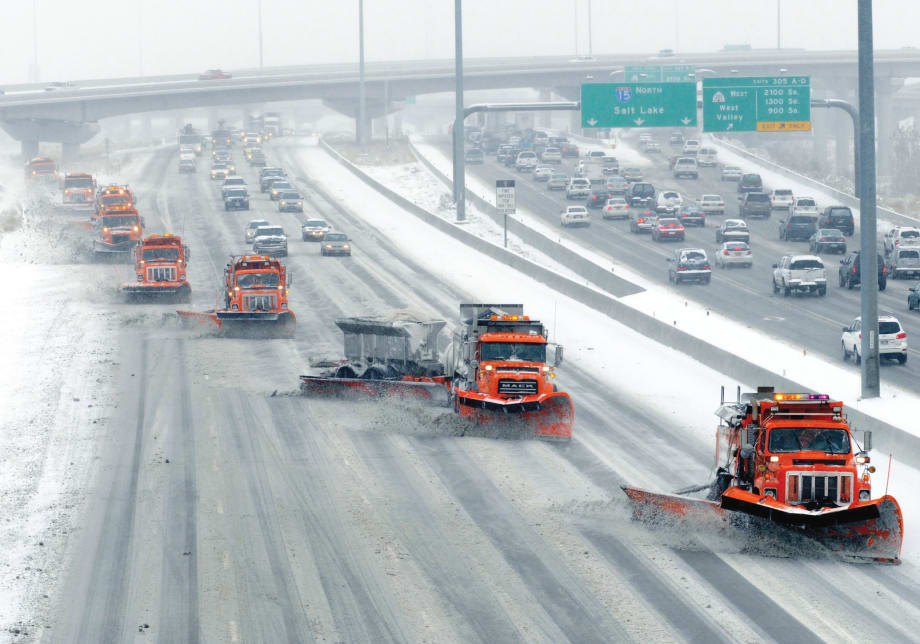
A fleet consultant determined that the ideal replacement time for the Utah DOT’s Class 8 snow removal trucks is nine years, down from 10.25 years. Photo courtesy of Utah DOT
7 min to read
A fleet consultant determined that the ideal replacement time for the Utah DOT’s Class 8 snow removal trucks is nine years, down from 10.25 years. Photo courtesy of Utah DOT
With missions of keeping your state moving through any winter weather event, promoting a world-class transportation experience, and enhancing the quality of citizens’ lives, reliable and efficient snow removal vehicles are essential. The Utah, New Hampshire, and Missouri Departments of Transportation fleet managers recently discussed what it takes to keep their fleets viable.
While these states’ fleets contain a variety of vehicles for snow removal, the focus of this article is on heavy-duty plow trucks. These fleet managers spoke to us about what their fleets look like and the challenges faced in sustaining them.
Stagnant Budgets Delay Replacement Efforts
Missouri DOT’s (MoDOT) General Services Fleet Manager Amy Niederhelm said the MoDOT fleet totals 4,900 units, and about 1,600 of these are equipped to handle snow. The average age of single-axle trucks is 11 years and the average age of tandem trucks is six years. The trucks average 103,685 miles and 6,096 hours, she said.
At a glance
To handle short replacement budgets, DOT fleets have turned to:
Data demonstrating fleet cost efficiency
Fleet consultants to help determine optimum life cycles
Bond funding.
“The fleet budget has remained stagnant for the last five years while we have seen the cost of trucks and equipment continuing to rise,” Niederhelm said. “Around 2014, the average replacement age of 15 years was reduced to 12. However, about 40% of this fleet is currently past due for replacement in the criteria of age, miles, or hours. The department continues to evaluate if our current threshold is correct for our operations.”
At the New Hampshire DOT, Mechanical Services Administrator Bill Dusavitch said the total fleet consists of about 1,200 units, of which approximately 400 are heavy trucks used for snow removal. Dusavitch agreed that budgets are not keeping pace with replacement cycles, especially when factoring in the rising costs of trucks. In Utah, DOT Operations Manager Jeff Casper faces a similar situation.
“We need an estimated $12-$20 million in spending on new trucks each year. Past practice has been to spend about $1 million, and this past year an extra $3 million was provided,” he said. UDOT’s fleet vehicle average age is 13 years. “We continue to experience significant maintenance and repair cost increases due to fleet age since the replacement cycle slowed in 2009.”
Scope of Work
State
Lane Miles
Missouri
76,277
New Hampshire
4,323
Utah
16,000
States' geography, terrain, and weather patterns vary. One common metric used to define the scope of a DOT fleet's responsibility is lane miles.
Complying with Replacement Criteria
Each of these fleets have specified criteria for replacement based on cost efficiency. However, complying with these criteria is the challenge.
MoDOT’s fleet is internally managed. Maintenance and repair are handled by a combination of external dealerships and department mechanics. The agency allocates almost $18 million annually on average for snow truck replacements, Niederhelm said.
New Hampshire DOT’s fleet is also internally managed and most repairs are done in house, while warranty and specialty work such as heavy-spring repair, glass repair, and alignments are handled by vendors. Fleet vehicles are paid for out of highway fund money through cash purchasing. In some cases, truck purchases have been supplemented with bond funds.
“This year the department received an additional $10 million for purchases in bonded money,” Dusavitch said.
Utah DOT’s fleet is internally managed, and most repairs are done in house with the exception of warranty or overflow work. Operators perform oil changes and minor maintenance, and major repairs are brought to the home shop in Salt Lake City.
UDOT’s method of replacement is also to purchase using cash. “Utah explored leasing and buybacks and found out that plows are like fire trucks — one use only — and it wasn’t feasible in this case. UDOT uses its bond funding capability to support road projects,” Casper said.
Utah commissioned an expert fleet study to identify optimum cycles and to maintain replacements at the appropriate average age for economic efficiency. The Utah fleet is somewhat unique in that it runs larger Class 8 plow trucks. Consultants from Asset Management Associates (AMA) indicated nine years was the ideal replacement cycle for Utah. The study noted Utah fleet trucks now deteriorate faster due to the use of liquid snow- and ice-dissolving chemicals such as magnesium chloride and brine, which take a toll on truck wiring and bodies. Because of this, Utah had a number of trucks with structural corrosion to address.
According to Casper, the study showed the cost efficiency of timely replacement.
“The older trucks require more maintenance and repair and don’t get fully utilized because of reliability, so the state is paying for something it’s not fully using,” he said. “In Utah, better new truck fuel economy and lower emissions are huge issues since we are surrounded by mountains, and the newer trucks run much cleaner.”
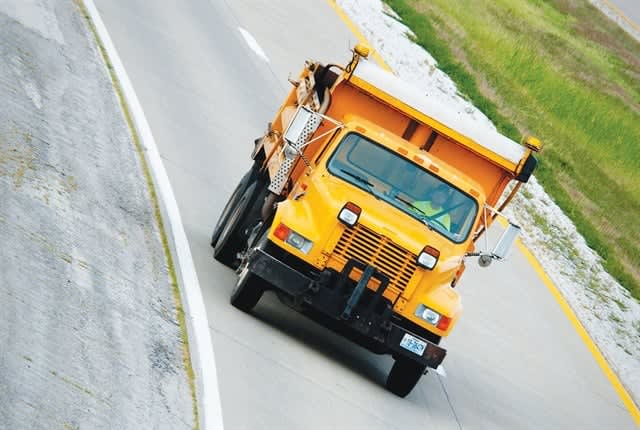
The Missouri DOT has 1,600 vehicles equipped to handle snow removal. Photo courtesy of MoDOT
Requesting Vehicle Funding
State DOT truck replacement budgets are generally controlled by state legislatures, special legislative committees, and governors. DOTs face tough competition and are up against other crucial health and safety needs in the search for truck funding.
Fleet managers agree that the key to persuading legislators, governors, and other officials to support efficient fleet replacements is making a business case based on good data to educate leaders on the cost efficiency of timely replacement. Like Utah’s example, bringing in reinforcements in the way of expert fleet consultants can help build credibility and get officials’ attention.
All three fleets used competitively bid contracts for their cash truck purchases. New Hampshire does supplement cash purchases with bond funds. Niederhelm said Missouri uses a multi-vendor award process, with a mix of manufacturers and configurations.
Snow Removal Stats
Fleet Size & Composition: Heavy Truck Snow Removal Fleet
Quantity
Type
Tow Plows
MoDOT
1.600
3- and 6-Ton
83
NHDOT
400
3- and 6-Ton
3
UDOT
500
Class 8
14
Recommended Replacement Cycles
Age
Miles
Hours
MoDOT
12 years
175,000
8,000
NHDOT
12 years
180,000
12,000
UDOT
9 years
-
15,000-21,500
The Replacement Challenge (Most Recent Fiscal Year)
Replaced
Spent
MoDOT
100
$17.8 million
NHDOT
12
$1.5 million
UDOT
50
$10 million
While fleets may have determined their ideal replacement cycles, obtaining funding for vehicle procurement remains a challenge.
Unique Vehicle Needs Complicate Purchasing
A factor that Dusavitch says complicates heavy snow plow truck replacement for the New Hampshire DOT is the unique needs of states.
“You can’t get one off the shelf. There is no one-size-fits-all truck or configuration. Terrain, weather patterns, operator expectations, and how fleets use their trucks require specialization,” he noted. “Pennsylvania’s trucks are much larger than ours, and they don’t install slide-in spreaders on the trucks. They have tailgate spreaders and actually lift the bodies when applying salt.” He said New Hampshire’s trucks can’t drive down the road with bodies lifted.
Dusavitch also said his fleet has simplified, utilizing mechanical connections versus electric to operate hydraulic controls for increased reliability and easier repairs.
New technology includes backup cameras, and fleets can save money through reduced accident liability while enhancing safety for citizens and employees.
Utah buys trucks with dealer-installed beds, while Dusavitch’s department in New Hampshire specializes in outfitting its own. He explained it takes the shop about 200 hours to outfit a large tandem-axle truck. He feels doing the work in house improves consistency in the product workmanship and materials. For example, “all hydraulic lines are plumbed the same way, with chafe protection, in turn lowering maintenance costs,” he said. “The same people building them repair and maintain them.”
Dusavitch added that attracting technicians trained to work on new truck technology remains challenging. “Technicians now must have computer diagnostic skills and the ability to keep pace with sophisticated electronics systems in their tool kit to keep fleet vehicles going,” he explained.
Innovative Plow Practices
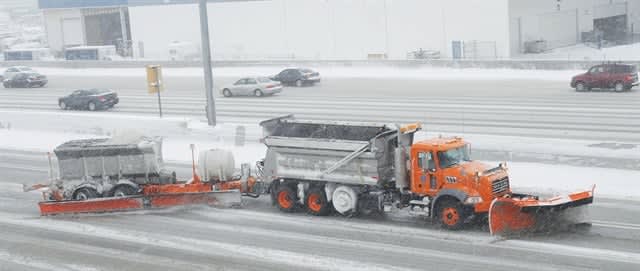
The Utah DOT's tow plows allow one driver to clear two lanes at once. Photo courtesy of Utah DOT
Fleets are incorporating alternative strategies to stretch their budgets and get more done, and some are expanding their road systems. Tow plows, trailer plows, and wing plows help fleets gain productivity, allowing them to clear more lanes with fewer trucks and drivers.
Tow plows about the size of a truck are pulled behind a plow truck in the adjacent lane, allowing one driver to clear two lanes at once, Jeff Casper, UDOT operations manager said.
“In Utah, wing plows clear a 22-foot swath of snow in one pass,” he added. “They can clean a shoulder, a lane, and part of another lane, saving trips going back over the same section of road. Overall this method saves time and fuel.”
Casper considers tow plows a successful addition, noting the DOT has also added LED lighting for enhanced visibility and safety.
The New Hampshire and Missouri DOTs use tow plows and wing plows in their fleets, and MoDOT uses 500 wing plows in various mount positions.
About the Author: Barbara Bonansinga is a fleet management efficiency study project manager with the State of Illinois. In 2016, she was named to Government Fleet’s Public Fleet Hall of Fame and awarded the Legendary Lifetime Achievement Award. She can be reached at bbonansinga@sbcglobal.net.
Work Truck, Automotive Fleet, and Government Fleet have partnered to conduct a salary survey to determine the average salary for a fleet management position in commercial and public sector fleets.
Hybrids bridge the gap between ICE vehicles and EVs, making them a smart choice for fleets that want to reduce emissions but aren’t ready to fully electrify. Hybrids, which are powered by internal combustion engines and electric motors, capture the benefits of electric power without the barriers many organizations find challenging.
When it comes to the public sector, outcomes are usually driven by three areas fleet leaders can actually control, but it’s combining these into one operating model where operations see the most success.
Limited wash locations can increase travel time, fuel costs, and admin work for fleets. Here’s how one government fleet expanded access and simplified operations.
To keep you in the loop, this episode is a quick reset on what mattered during the past month, from how to turn award season into a practical self-audit to what “leadership” looks like.
The new rewards initiative, B2X Rewards, is a gamified incentive program designed to increase engagement across BBM’s websites, eNewsletters, events, and TheFleetSource.com.