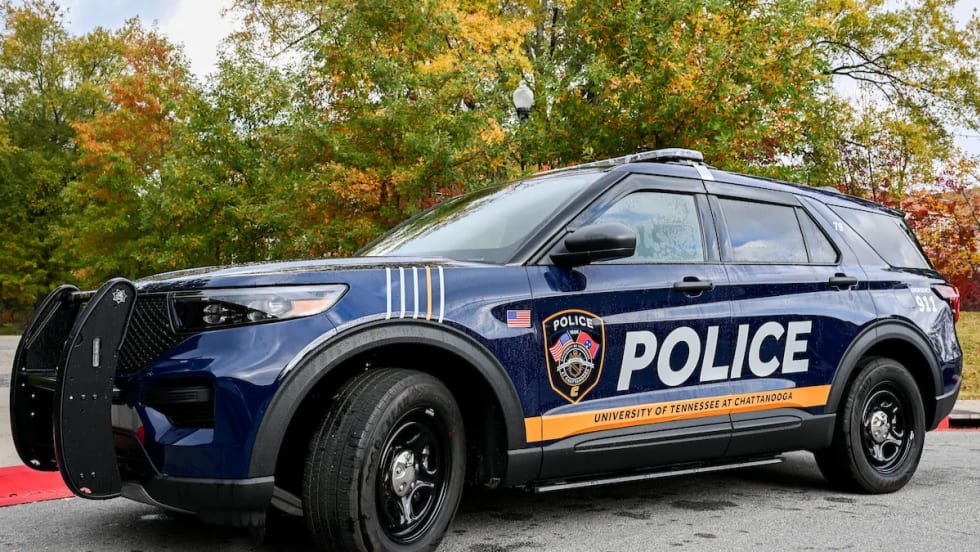
Patrol vehicles serve as law enforcement officers’ offices. Taking the time to familiarize officers with their patrol vehicles is as important as any other step in the training process.
Fleet operators across any segment of the public sector won’t care for their vehicle well unless they know how their vehicle operates and how to care for it. A lack of vehicle education can also be a safety hazard.
Sgt. Tom Gorman of the Connecticut State Police (CSP) manages the agency’s fleet operations. He educates his troopers about the ins and outs of their vehicles. At the 2023 Police Fleet Conference at GFX, Gorman gave attendees insight into what that looks like.
At a glance, the training includes:
An overview of the vehicle they’re driving.
A vehicle maintenance checklist.
A discussion on vehicle technology.
A primer on driver behavior.
A look at vehicle dynamics, ergonomics, and more.
If you are a core government fleet manager and you are also tasked with managing the law enforcement fleet, it’s important you don’t let this kind of training fall to the wayside. Before you hand over the keys, make sure the officer knows all about their vehicle, so they can care for it well and you can get a higher resale value when it’s time to send the vehicle to auction.
Starting with the Basics: What Car Am I Driving?
As with any new vehicle, there can be a bit of a learning curve when you are given a new patrol vehicle. This is why even seasoned troopers and officers should still be educated on the vehicle they are driving.
Gorman's team provides training anytime a trooper is issued a new vehicle with a new platform, or if there have been significant technological upgrades.
Gorman believes that everyone should receive vehicle training at least every three years as a refresher, or when a platform change is made — whichever occurs first.
All new recruits are provided with many hours of emergency vehicle operations course (EVOC) training. The training they receive is specific to the vehicle they are receiving.
When training troopers on a new vehicle, comparing the new vehicle’s features to the old vehicle’s features can make it easier for the troopers to understand, so they have a point of reference to compare the new features to.
Take the time to break down the kind of vehicle the officer is driving, including the basic navigation, the technology inside, and even the platform the vehicle is on. Is it four-wheel drive? Is it all-wheel drive? Is it rear-wheel drive? These kinds of things will impact how the vehicle drives, and how it should be operated.
Changes in vehicle models year over year should also be highlighted.
Gorman breaks down the acceleration on the vehicles as well. Though officers and troopers will not often need to go 0 to 80, they should still know how long it will take to achieve that speed should they need to.
Likewise, they should also be instructed on braking distance, so they are aware how long their vehicle will travel when they hit the brakes. These two pieces of information can affect the way the officers handles the vehicle in high-stress situations like pursuits.
One of the other basics Gorman touches on in his training is the payload capacity for the vehicle. While his troopers are instructed not to add their own equipment or modify existing equipment, which makes the chances of overloading the vehicle slim, they should still know the payload and understand the dangers of overloading, so they are less likely to attempt to make modifications or add their own equipment, weighing the vehicle down.
While some of these tidbits may seem very basic, many officers will not go out of their way to learn about them on their own. This is why taking time to review these facts is important.
Additionally, Gorman shares the fuel tank capacity so troopers know how much fuel they have when they are on a full tank.
Gorman also touches on how the trooper’s vehicle is powered. Knowledge about the way a vehicle is powered, whether through an internal combustion engine, a lithium-ion battery, or a hybrid can affect the way a vehicle operates.
For example, hybrids and EVs are much quieter when they start. If the officer or trooper does not know this, they may try to start the vehicle several times, draining the battery.
Moreover, the engine on a hybrid may shut off, switching to the battery. Troopers should be made aware of this, so they don’t panic and think they need to restart the vehicle.
All About Patrol Vehicle Equipment
Similarly, Gorman also educates his troopers about the equipment in their vehicles. For example, the battery that powers the equipment will still work even when the vehicle is not running.
Additionally, equipment like the lights and siren do not work when the vehicle is in park.
Gorman shared that one of his troopers went out of his way to check the lights, getting out of the vehicle. Because it was in park, the equipment did not activate. The trooper did not know this and put in a trouble ticket to have the car repaired. Lack of knowledge about the was the vehicle or equipment functions can lead to unnecessary downtime.
Pursuit-rated vehicles generally have a toggle to activate pursuit mode, which can enhance certain vehicle maneuvers to optimize the aggressive driving officers are often forced to do in a pursuit.
However, some vehicles have technology that automatically activates pursuit mode. Officers should know whether their vehicle is capable of this.
Teaching About the Importance of Preventive Maintenance
CSP has four maintenance facilities located throughout he state. The agency also utilizes numerous vendors who are available to provide servicing to the assigned vehicles. Troopers are responsible for getting their vehicles to the shop for regular preventive maintenance.
Gorman reminds troopers of this, and instructs them on PM schedules like oil changes, tire rotations, and maintenance on other vehicle components.
Troopers are responsible for checking their oil level and tire pressure daily. Skipping these steps or any other PM steps can lead to damage to the vehicle components. If your fleet operates as a motor pool, you should ensure your officers are checking these components at the beginning of every shift.
“If I’m hot swapping a car, I’m going to check at the beginning of my shift because I don't know if somebody's curb-jumped the car [before my shift], popping the sidewall and decreased tire pressure.
Proper tire care is crucial, Gorman said. The most neglected part of a police vehicle, he believes, is the tire.
If a tire needs to be replaced, Gorman also instructs troopers on steps they must take for their safety, and for the safety of other motorists.
After a tire change using a spare tire, Gorman instructs troopers to head to their troop to add another spare tire to their vehicle. This can seem like a waste of time, but it’s done for safety purposes.
In some vehicle makes and models, the 75-mph rear impact crash test rating cannot be achieved if a fully inflated, full-size spare tire is not secured in the factory tire storage location in the trunk.
Technology Does Not Replace Human Responsibility
It can become second nature for vehicle operators — officers or not — to rely on technology like backup cameras, as opposed to looking over their shoulder when backing up.
Gorman stresses to his troopers that this technology is only meant to supplement the human operator, not replace it. This applies to all advanced driver assistance system technology, like a blind spot indicator, or rear cross traffic or lane departure alert.
In the same way, the tire pressure monitoring system should not replace manually checking tire pressure, Gorman notes. Technology can fail.
“It is there to alert you of a situation that is happening, not the maintenance of your tires. You should be checking your tire pressure daily,” Gorman said.
Vehicles in the CSP fleet have rear occupant alerts, monitoring vehicle conditions and notifying the operator to check for rear seat occupants when the ignition is switched off. Even with that technology, Gorman still instructs drivers to check their backseat every time they exit their vehicle.
“The last thing I want is for somebody to get used to [being alerted to check for a rear occupant] in a patrol vehicle, just disregarding that, and then they get out of their own vehicle [and don’t check]. And there's something [or someone] in the backseat, that really matters to them. So we're not going to create that training scar,” Gorman said.
Similarly, all-wheel drive can improve vehicle handling in inclement weather. But this should not take the place of safe driving techniques they would otherwise exercise in a four-wheel drive vehicle.
All About Vehicle Ergonomics, and Why it Matters
Law enforcement officers should familiarize themselves with the interior layout of their vehicle, so they have a clear idea of where things are.
In CSP’s case, the speaker for the trooper’s radio is between the center console and the driver’s seat. Because of this, troopers must be made aware that they cannot stuff anything in that ledge, because it will muffle the speaker and prevent them from hearing it properly. This is just one example underscoring the importance of a thorough knowledge of a vehicle’s layout.
How to Educate Your Fleet Operators

Teaching your officers or troopers about their vehicles can be as simple as a PowerPoint presentation with graphics and bullet points, or a hands-on approach in the fleet maintenance facility. Choose what works best for your operation. Gorman has a PowerPoint presentation with photos of different vehicle components and technology, so the troopers get a visual to help them.
Whatever method you choose, remember that this kind of education can be invaluable both for you and for your fleet operators.
"When you are going to an emergency, that is not the time to learn the nuances of the vehicle you are operating," Gorman stressed.
Ultimately, this kind of training is invaluable, because it allows officers to be in better control of their vehicle.
Interested in attending the 2024 Police Fleet Conference at GFX for sessions like this and more? Take advantage of the Early Bird Rate by April 5, 2024, to save $200 on the most popular pass, the Full Conference Fleet Pass. Check out the GFX website for details on registration pass types, request for approval letters, lodging details, and more.