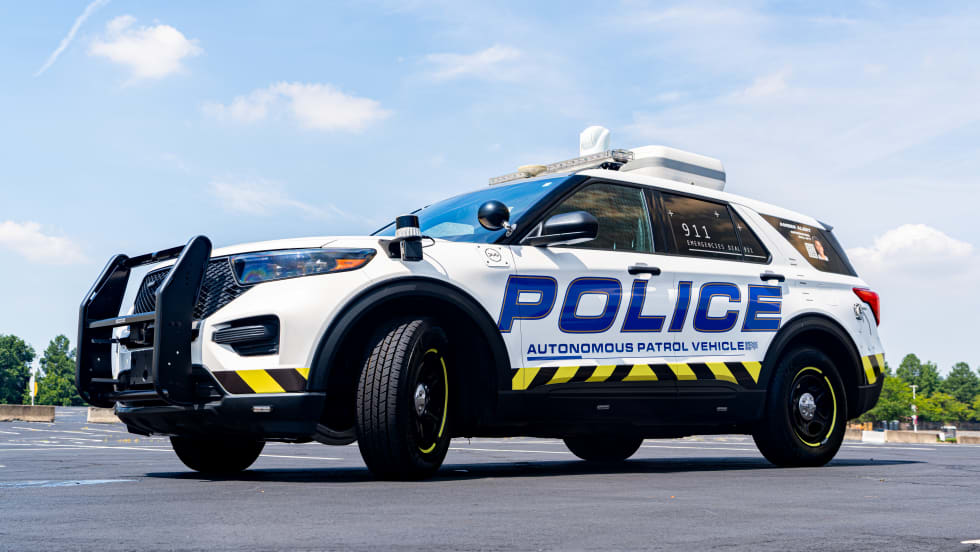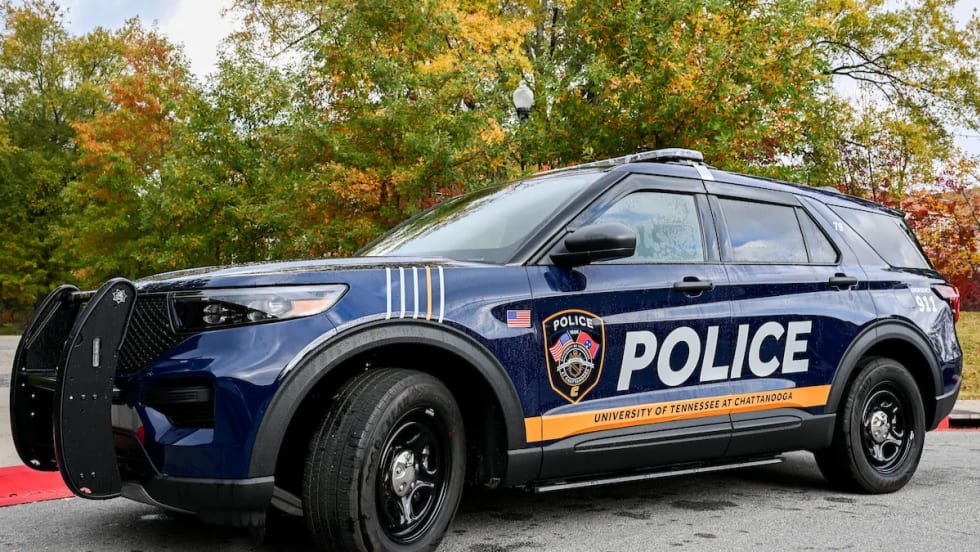




There are many things to consider before going down the road of electrifying a patrol fleet. Every department has unique characteristics like fleet size, landscape, force size, duty cycle, and political philosophy, that all play a role with fleet transitioning.
Over the past year, more local, state, and federal government agencies have been issuing mandates and executive orders to move to electric vehicles (EVs). By 2035, all new vehicles sold in California and New York will have to be EVs. Additional states will likely follow suit in the near future.
Therefore, whether in agreement or not, the time has come to learn and understand what it will take to move toward electrifying our police fleets, as well as the required charging infrastructure.
Before the EV Transition
Things to consider before going electric include — but are not limited to — duty cycle, charge time, take-home vehicles, understanding that charge time means down time, available electric power, as well as funding and grants. The two biggest caveats are availability of vehicles meeting the mission that are safe, and electric power required for charging. EVs need to operate the same way as non-electric vehicles. The mission of the agency should be paramount to transition and govern what vehicles to purchase.
Weighing the Positives and Negatives of Electrification
Pros of greening your fleet include reducing dependence on fossil fuels & foreign oil, supporting alternative fuels, and the utilization of the U.S. farming industry. Fleet operation costs are lower per mile in EVs versus internal combustion vehicles (ICE). Other cost reductions will be in preventive maintenance, such as the elimination of oil changes and tune-ups. The first service on EVs is usually made once the vehicle reaches over 100,000 miles.
Some cons include increased vehicle acquisition price, limited range, charge time equaling out-of-service time, and the fact that there are no pursuit-rated law enforcement EVs on the market. Though they are coming down the pipeline. In 2022, Ford announced the F-150 Lightning Pro SSV, while Chevrolet announced the Blazer EV PPV. Read more about the vehicles here.
Funding Fleet Electrification
The Bipartisan Infrastructure Law (BIL) was passed, which funds the National Electric Vehicle Infrastructure (NEVI) formula program. This makes available $5 billion for the U.S. Department of Transportation (DOT) to distribute funding among states to deploy EV charging infrastructure. An additional $2.5 billion in funding for a discretionary grant program for charging deployment throughout the U.S. One of the requirements for states to receive this funding is to construct charging stations having a minimum of four 150Kw chargers per site. Some positive news is the most recently enacted bills will have a point of sale credit, not just a tax rebate. This is very important to government agencies and non-for-profit organizations that do not have tax liabilities.
In order for the transition to EV to have an effect on climate change, the U.S. needs to produce green electricity. Gov. Kathy Hochul wants New York State to be 100% green electric generation by 2050. Currently, NYS Electric power is 24% hydroelectric, 25% nuclear, 9% wind and solar, with the remaining production from natural gas and oil.
Some useful resources to navigate available funding include:
Likely, one of the best resources for information is your local Clean Cities Coalition and Network.
What's Involved When Implementing EVSE?
Understanding charging infrastructure requirements will be critical for any department to transition to an electric patrol fleet to meet the needs of the community it serves. Vehicles today have three different levels of charging available for light-duty electric vehicles:
Level 1 — a standard 110V to 120V outlet.
Level 2 — 220-240V standard dryer or electric stove outlet or charging station.
Level 3 — 440-480V outlet.
Level 1 charging can take days to fully charge. Level 2 may take six to eight hours to fully charge an EV depending on battery size. With both level 1 and 2 charging, the vehicle utilizes the onboard charger that converts alternating current AC to direct current DC. The rate of charge is governed by the output of the onboard charger.
Level 3 DC fast charging requires an electric supply of 440-480 volts with 100 to 300 Amps. Not all DC fast chargers charge at the same rate. For example, a 50kW charger could take up to 2.5 hours to fully charge a Ford Mustang Mach-E with a 98-Kilowatt hour battery (kWh). In comparison, a 100kW charger can charge to 80% in less than one hour.
One of the first things many departments will realize is they do not have the necessary voltage and amperage required for fast charging. This is where some of the biggest costs and investment will incur. A large percentage of locations will need transformers and additional electric service installed. Basic calculations for charging stations is:
Voltage x Amperage for Wattage (Watts = VxA).
Why is this important to understand? Most departments will run into operational concerns with available electric supply issues and delays in construction and permitting. Charge times will greatly affect how quickly EVs can be charged and available for patrol. Determining what type of charging levels your patrol fleet will need will depend upon adequate downtime or dwell time for each vehicle in comparison to charging.
Some good news is that other than Tesla, all American made and imported electric vehicles into this country will have a standard Combine Charging System Connector (CCS). The top portion is for type 2 connectors for AC charging. During DC fast charging, both the top and bottom sections are utilized to carry high power. Level 3 DC fast charging come in many different names and programs. Tesla has its own proprietary chargers with special plug for Tesla owners, but Tesla owners can use an adapter to use other band or types of chargers.
Calculating EVSE Requirements
EV batteries also come in many different sizes and internal materials that seem to be rapidly changing. Battery size will play a role in the operational range of the vehicle and the amount of time to recharge a drained battery. The battery charger in the car converts the AC electricity into DC to charge the battery. If a vehicle has a 10kW onboard charger and a 100kWh battery pack, it takes about 10 hours to fully charge.
Time=Battery capacity’s KWh number/Changer power rating
When the vehicle battery’s State-of-Charge (SoC) is greater than 80%, the DC fast charger rate slows considerably; this optimizes battery life and limits the risk of overcharging. This is why manufacturers often claim that fast charging will get you 80% percent in 30 minutes, if charging at 200 kWh. The last 20% could double the time you are hooked up to the fast charger.
Approximate time to charge a Ford Mustang Mach-E extended range RWD.
The Ford Mustang Mach-E is fitted with an 11kW on-board charger for type 1 & 2 charging. Due to voltage differences, the charge time will increase if plugged into a 110/120v outlet or decrease when plugged into a 220/240v outlet or level 2 charger. To step up or step down voltage, a transformer will be necessary; some locations that do not have 440/480 volts will need a transformer installed.
To increase a location's available electrical current (amps), additional service will likely required. The easiest way to understand amperage flow is to think of amps as water. As wire size increases, more amps can be delivered. This is where some of the biggest time delays will come from with permitting and construction.
While initially testing with the New York City Police Department (NYPD), the Mach-E energy usage was between 3 to 5 miles per kWh. EVs will have energy usage data readily available.
Factors we had to consider: the climate percentage for heat and air conditioning, vehicle percentage for propulsion, percentage for accessories, and percentage for external temperature, which is energy used for battery temperature control. Actual recharge for the Mustang Mach-E on a 50kW fast charger was 2.5 hours from 15% to fully charging a 98kWh battery.
EV range changes constantly depending on speed, braking (regen), payload, outside temperature, geographic hill or grade changes, and any other battery energy use during operation. Equipment upfitted on law enforcement vehicles that requires power, like roof lights, computers, and radios will reduce range. A vehicle with a 98kWh battery that gets 3 miles per kWh should get just under 300 miles per full charge. This will be dependent on regenerative braking and other components and equipment utilized.
Why Electric?
You may be asking yourself: why Electric? What is the hype? Efficiency is the primary driver of cleaning up the transportation sector. Electric motors make vehicles substantially more efficient than ICE vehicles. Electric motors convert over 85% of electrical energy into mechanical energy, or motion, compared to less than 40% for gas combustion engines.
These efficiencies are even lower after considering losses as heat in the drivetrain, which is the collection of components that translate the power created in an electric motor or combustion engine to the wheels.
According to the Department of Energy (DOE), in an EV, about 59-62% of electrical energy from the grid goes to turning the wheels, whereas gas combustion vehicles only convert about 17-21% of energy from burning fuel into moving the car. This means that an EV is roughly three times as efficient as an ICE vehicle. Needing less energy to power your vehicle also helps brings down the cost.
EVs are fun to drive because of lots of horsepower and torque. Instant torque is generated by an electric current and magnetic fields in the electric motor, whereas a gas engine takes much longer to combust gas and turn the crankshaft. This instant torque in an EV is what throws you back against the seat when you accelerate from stoplight to stoplight.
EVs for Police Use
Other than charging infrastructure, the biggest delay in the transition to fully electric vehicles is the availability of EVs, as well as EVs that meet the law enforcement mission. Currently there are no pursuit-rated or special service package EVs for law enforcement or police service. Ford brought the Mach-E GT to Michigan State Police Vehicle Testing, and performance was impressive. What was not impressive was the 30% reduction in battery charge after 18 miles of high-speed track testing.
NYPD received its first Ford Mustang Mach-E in August 2022. This vehicle is used for administrative duties.
Currently, the NYPD only has two EV models in service: the Chevrolet Bolt and the Mach-E. A fleet of 32 Bolts is assigned to Traffic Control, School Safety, and other non-patrol units. They have been in service for three years now, with very good reviews from both operators and mechanics. An order of 148 Ford Mach-Es was delivered, 40 unmarked, and 108 fully marked units. There has not been enough data collected to do any type of fair comparison of cost per mile or maintenance cost as of this time.
In addition to the 2023 Ford F-150 Lightning Pro SSV and 2024 Chevrolet Blazer PPV, there is a rumor that Volvo will be releasing a police model for the United States. The automaker is already offering several 2023 model-year vehicles for police agencies.
Tesla models keep popping up at various departments throughout the U.S., but that automaker has not confirmed that it will have a pursuit-rated model anytime soon. Ford is producing E-Transit vans that might be useful for prisoner transport or as a small command post.
With the gauntlet of variables transitioning to EVs, departments will have to study vehicle utilization. In most cases, it will not be one size fits all for police fleets. A vehicle that would meet the mission for community patrol might not meet the mission for highway patrol.
EVs would probably have a better fit on the administrative side and detective squads for now. EVs and their charging infrastructure counterparts are extremely dynamic and fluid. Within the next couple of years, the crystal ball may become clearer. My suggestion to all fleet managers is to start a pilot program and get your feet wet with EVs and collect your own data.