





These days, when it comes to tires, the adage “out with the old, in with new” doesn’t exactly apply. Over the past five years, an executive order has mandated the use of retread tires for all federal government fleets. So, out with the old, in with the nearly new is more like it. But, is nearly new good enough? According to experts in the field, the answer is yes.
Retreads: A Long Time Coming
Nearly 20 years ago, the Environmental Protection Agency wrote and published The Guideline for the Federal Procurement of Retread Tires. Effective November 17, 1988, this guideline, along with others, encouraged the use of products containing materials recovered from solid waste. Part of the Solid Waste Disposal Act, and amended by the Resource Conservation and Recovery Act (RCRA), this guideline required all federal procurement agencies that utilize federal funds to procure retread tires wherever practical considering competition, availability, technical performance, and cost.
Building on these initiatives, the past two presidential administrations have supported presidential executive orders supporting the guideline and directing federal fleets to purchase retread tires wherever possible.
These initiatives culminated in the implementation of Executive Order 13149. On April 17, 2000, this order went into effect, and the mandated use of retread tires became a reality.
Reasons for Retreading
So why the change? As Harvey Brodsky, managing director of the Tire Retread Information Bureau (TRIB), says, “The executive order came about as an effort by the federal government to aid in conservation and to save money. It’s as simple as that.”
The mandate has both global and local effects. On a large scale, use of retread tires benefits the environment. Because tires contain large amounts of synthetic rubber, which is petroleum based, retreading helps to reduce America’s dependence on imported oil. “Every time a tire is retreaded, oil is saved, not to mention that retreading helps to reduce the number of tires that need to be landfilled,” Brodsky says. Ken Collings, GSA fleet tire program coordinator, agrees. “Retreading helps to conserve the use of oil and retards the scrap tire growth in the United States, which has become a serious problem.”
The use of retreads benefits individual fleets as well. “Retread tires help to lower a fleet’s tire costs, which are the second-highest operating cost of a large fleet, the first being fuel,” Collings says. Brodsky also notes that the upgrade in quality of today’s retreaded tires benefits fleet operators. “They are able to reduce their tire costs without giving up anything in performance, quality, or safety,” he says.
Collings and Brodsky say a third party also benefits from the mandate: the American public. “The mandate benefits a government fleet’s tire costs, which benefits a federal fleet’s overall budget. This ultimately helps save U.S. tax dollars,” Collings says. Brodsky sees these benefits as well: “Since taxpayers contribute to the operating costs of running a federal fleet, all taxpayers benefit. The use of top-quality retreaded tires as part of a well-managed retread program by a federal fleet is a win-win,” he says.
Availability Presents a Challenge
As with any change, one might ask, “What are the cons?” Collings cites one: availability. Retread tires are not always available for government vehicles that rely on vendors for tire replacement. In other words, a government vehicle operator must be able to purchase a retread the same way he or she would a new tire — off the shelf. Many commercial fleet operations retread their own tire casings as a part of their overall tire program, since they have their own maintenance facilities and can store tires, both new and retread. That’s not always the case for federal fleets, as most don’t have that capability. Fewer federal fleets do their own maintenance; they use vendors for everything, similar to the general public. So, in many cases, a government vehicle operator has limited tire sources from which to procure. Collings says using retreads can also be a challenge for fleet vehicles operating in rural areas, where availability of retreads is particularly scarce.
Despite this challenge, Collings sees a solution. “One way to address this problem would be for retreaders to take a proactive approach in doing government fleet business,” he says. Collings suggests that retreaders use their local phone book to find government agencies located in their vicinity, contact these agencies, and find out if they have any requirements for retread tires and what types and sizes they need to make available. Retreaders could then stock the appropriate retread tires for that operation. Collings says it would also be beneficial to offer mounting and balancing service for the retreads as well as credit for any worn new tire casings that may be used for future retreads.
New Testing Improves Safety
But are retread tires safe? Brodsky says yes. “Over the years the retread industry has constantly improved, and the quality of today’s retread tires produced by top-quality retreaders will equal that of the best new tires.” This change came about mainly because of new methods of non-destructive testing before tires are retreaded. Tires are now routinely subjected to shearography, x-ray, and other methods of non-destructive testing to determine whether they are truly candidates for a next life. Only those tires that pass the non-destructive testing programs continue the retread process. Brodsky says there have also been major improvements in application-specific tread designs and in rubber chemistry, all of which have contributed to a better retreaded tire than ever before.
Collings agrees that the quality of today’s retreads is new and improved. “Today’s new tires are stronger and better than ever before. New-tire manufacturers of light truck, truck, and bus tires apply high-tech design criteria and materials into the tires, making them more retreadable, even for more than one retread.”
Collings draws an apt analogy to the logic of using retreads. “To me, a quality tire casing is much like a good pair of dress shoes. I would not dream of throwing away a good pair just because the sole was worn out. I would get them resoled, which is much more cost effective than buying a new pair.” Even though retread technology and testing have improved, the initial screening process and use is as important as what happens next. “This is where taking care of the shoes comes into play,” Collings says. “Obviously, if the shoe is battered and worn out, I would not resole them. The same applies to tires. Keeping them properly inflated, getting them repaired, avoiding potholes in the road, and avoiding hitting curbs ensures their quality to accept a retread.”
Brodsky sums it up in this way: “There are really no cons to retreading, providing that a reputable retread is used. This is really important, since there are ‘junk’ dealers in every industry. But, when a top-quality, reputable retreader is used, the results are great. Fleets, including federal fleets, can achieve very significant savings over the cost of new tires.”
For more information about retread tires, visit the TRIB Web site at www.retread.org/.
Feds Lead the Way with Retread Tires
Retreaded tires offer management a cheaper, environmentally friendly alternative to purchasing brand-new tires for fleets.
More Operations
Is Fleet in a Reset Mode? | GovCast Shorts
On the go and want a snapshot of our top industry news? Check out Government Fleet's new video short of what's been happening.
Read More →
Are You Paid Enough? Fleet Salary Study Open
Work Truck, Automotive Fleet, and Government Fleet have partnered to conduct a salary survey to determine the average salary for a fleet management position in commercial and public sector fleets.
Read More →
Hybrids: Electrification Without the Challenges
Hybrids bridge the gap between ICE vehicles and EVs, making them a smart choice for fleets that want to reduce emissions but aren’t ready to fully electrify. Hybrids, which are powered by internal combustion engines and electric motors, capture the benefits of electric power without the barriers many organizations find challenging.
Read More →
Fleet Performance Comes Down to People, Data, and Budgets
When it comes to the public sector, outcomes are usually driven by three areas fleet leaders can actually control, but it’s combining these into one operating model where operations see the most success.
Read More →
Why One Car Wash Wasn’t Enough For This Fleet
Limited wash locations can increase travel time, fuel costs, and admin work for fleets. Here’s how one government fleet expanded access and simplified operations.
Read More →
Leading Fleets Lessons, Autonomous Policing, and the BEV Reality Check | The January Dispatch
To keep you in the loop, this episode is a quick reset on what mattered during the past month, from how to turn award season into a practical self-audit to what “leadership” looks like.
Read More →
Bobit Business Media Launches New Rewards Program for Industry Professionals
The new rewards initiative, B2X Rewards, is a gamified incentive program designed to increase engagement across BBM’s websites, eNewsletters, events, and TheFleetSource.com.
Read More →
Cold Weather, EV Reality Checks, and What Fleet Leaders Are Doing Next | GovCast Shorts
On the go and want a snapshot of our top industry news? Check out Government Fleet's new video short of what's been happening.
Read More →
Your Leading Fleets Application Can Do More Than Win an Award
Hear directly from this year's judges on what separates standout submissions and use their tips to submit a clearer, stronger application.
Read More →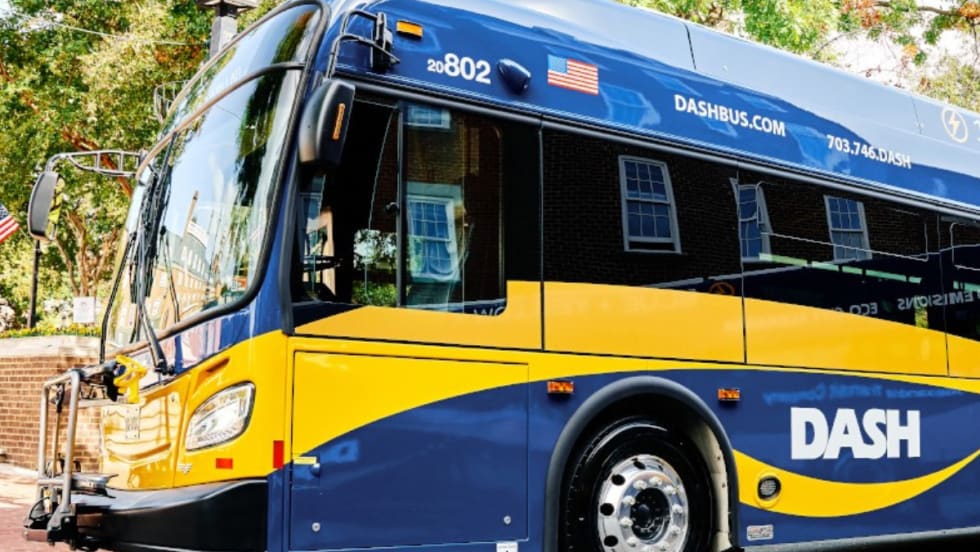
City of Alexandria's DASH Partners with ABM to Support EV Bus Charging Infrastructure
DASH is expanding its electric bus operations in Alexandria, Va., with new in-route charging infrastructure.
Read More →