![Alejandro Mayorkas, secretary of the Department of Homeland Security, walks along the field at SoFi Stadium with Inglewood Police Chief Mark Fronterotta while working with state and local law enforcement and the National Football League to review DHS operations prior to Super Bowl LVI.[|CREDIT|]Photo: U.S. Department of Homeland Security/Benjamin Applebaum](https://assets.bobitstudios.com/image/upload/f_auto,q_auto,dpr_auto,c_limit,w_920/pm.dhs-01cms_1759887337998_iedllv.jpg)
When it comes to law enforcement vehicle lifecycles, most fleets aim for 100,000-mile lifecycles. Sometimes, fleets can justify fewer miles. But more often than not, they are forced to hold onto vehicles for more than that, with some agencies pushing vehicles closer to 200,000 miles before replacing them.
When the Government Fleet team learned that the Kansas Highway Patrol (KHP) vehicle lifecycle is 50,000 miles, we were intrigued.
KHP Fleet Operations Manager Capt. Brian E. Basore gave us some insight into the agency’s patrol vehicle lifecycles for its 462 troopers.
From Initial Sale to Resale
KHP first began the transition to a younger vehicle fleet in the 1990s, when the agency determined there was a need for better, more reliable equipment.
“They used to run these things 100,000 miles, refurbish the engines, and then put them back out on the road,” Basore said.
The agency modeled its program after the Missouri State Highway Patrol’s fleet vehicle program, which aged its vehicles out after between 55,000 miles and 75,000 miles depeending on the vehicle type, then sent them to auction.
At the time, 50,000 miles didn’t seem so drastic, because law enforcement vehicle lifecycles used to sit around 75,000 miles. They’ve slowly increased over time — in part because vehicles are made better — but also because public sector fleet budgets have become more strained. You don’t need us to tell you procurement is often the most expensive part of a fleet operation.
One way KHP has been able to make up for the high up-front costs of the new vehicles is by reselling its used ones. The agency has a maintenance facility where vehicles are brought for upfitting. They are then issued to a trooper, who uses them until they are ready for resale at the end of their lifecycle.
The agency’s mechanic will do a final inspection and a vehicle service. If any basic work is needed, the mechanic does it in-house. If more detailed work is needed, the agency will outsource the job.
Once the vehicle is repaired, it’s ready for resale. Troopers can top out at 50,000 miles in between 12 to 18 months, depending on their assigned troop.
Patrol vehicle equipment is sold as a package deal with the vehicles when they are purchased by government entities, which can increase the resale price and help the agency retain a higher value.
It’s hard to rely solely on used vehicle sales for vehicle replacements since prices go up every year — especially nowadays.
“You have to have something to help supplement your vehicle sales,” Basore said.
For KHP, this came in the form of state legislation that redirects a portion of title fees to go to the fleet fund for new vehicle purchases.
While the vehicle sales aren’t enough to entirely account for the cost, the money made from the sales — in addition to a portion of the title fee — do make a significant difference.
The agency also has higher mileage vehicles used for administrative and civilian positions. Sometimes, these are patrol vehicles that had a lot of money invested in them due to things like crash repairs.
Because these vehicles have already depreciated, they are kept as long as possible, to support civilian staff duties. Once the agency deems these have reached the end of their lifecycle, they are stripped of equipment and decals and sold at auction.
A Return on Investment Will Take Time
Like many fleet investments, it will take time to see a return on investment when beginning a program with a shorter vehicle lifecycle. That was the case for KHP too.
“You have to have a fleet of [new] vehicles to start with. And for us, that first cycle would last 12 to 18 months before we had a car ready to resell [to make a profit on],” Basore explained. “And then you have to have another supply of vehicles in the warehouse to build prior to that sale to replace the vehicle.”
Getting a steady replacement cycle going can take around three years, sometimes longer, depending on factors like the supply chain crisis.
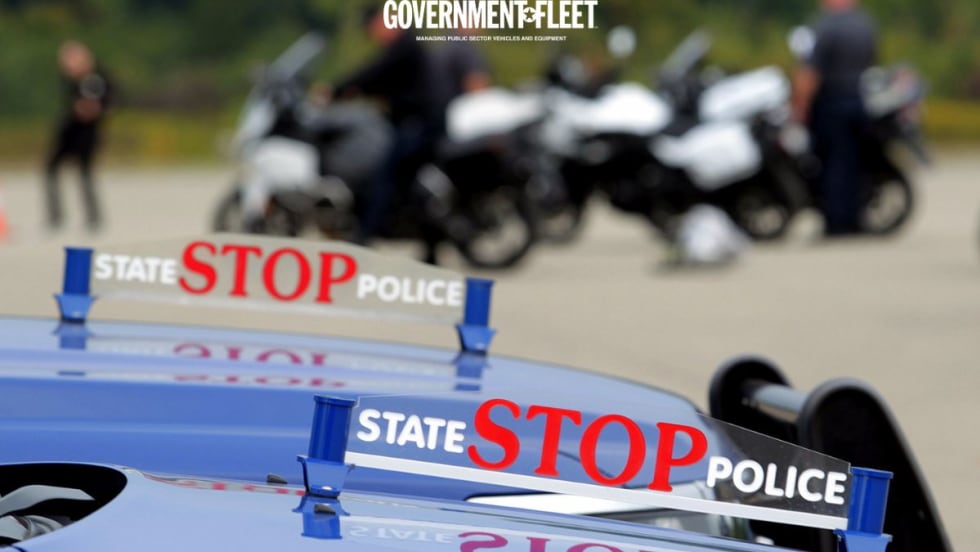
KHP has a central maintenance facility in Topeka where vehicles are brought for upfitting. The vehicles also receive a final service there before being sold.
KHP maintains an organized vehicle replacement process in order to avoid gaps. Troopers submit a form when they calculate that they are 90 days from reaching 50,000 miles. The fleet team then adds the newly submitted vehicle to its replacement list, prioritizing new vehicle builds based on that information.
“We're always ahead of the game. When the car comes in, we usually have a vehicle ready for [troopers] weeks before they need it,” Basore said.
Maintaining a fleet of newer vehicles can also be a way to attract and retain law enforcement officers.
Calculating Maintenance Cost Savings
When determining whether a 50,000-mile lifecycle is right for your fleet, one factor to consider is thfe maintenance cost savings associated with lower mileage vehicles.
“If you have one or two vehicles, your maintenance cost won't be that bad. But for us, we have almost 500 vehicles that we have to maintain. So that maintenance cost can be significant,” Basore said. “If you can figure out a way to sell your car before you acquire the maintenance costs, you can save a lot of money.”
Likewise, the new patrol vehicles are always upfitted with new equipment. While that can have high up-front costs, the agency doesn’t have to worry about the costs associated with equipment maintenance and failures on older equipment.
Taking Advantage of the OEM Warranty
The majority of vehicle OEM warranties run 36,000 miles or three years. With a 50,000-mile vehicle lifecycle, there are two options:
Take over maintenance and repair costs after the warranty runs out.
Purchase an extended warranty to cover the vehicle during the entirety of its time on your fleet.
Unexpected repairs after that first 36,000 miles can be costly; Basore recommends the latter.
Retaining Vehicle Value with Regular Maintenance
![AutoReturn says its cloud-based software solution can cut the tow response time from 30 minutes down to less than 10 minutes. The company’s municipal clients like the City of Fort Worth are finding that this reduces the chance for the kinds of secondary accidents, the kind that kill police officers. (Photo: AutoReturn)[|CREDIT|]](https://assets.bobitstudios.com/image/upload/f_auto,q_auto,dpr_auto,c_limit,w_684/pm.first_look-2_1759887336261_rutg7i.jpg)
KHP's mechanic does a final inspection and a vehicle service before vehicles are sold. When they are sold to other government agencies, they are sold with their equipment as a package dea.
As with many state law enforcement agencies, KHP requires its troopers to stay on top of preventive maintenance schedules. This is key in retaining vehicle resale value. The agency developed software on troopers’ in-car computers that notifies them when preventive maintenance is needed, based on manufacturer-suggested schedules.
“We put tools in place to make it as simple as possible for the end user to keep the maintenance to where it needs to be,” Basore said.
Bringing Stakeholders Onboard
Always do your research when you’re interested in bringing an idea like this to your stakeholders, Basore urged.
“Do the research first. Figure out what that's worth and if they're going to be able to support it. If the numbers match, then you need to educate your stakeholders, and get them onboard by showing them what the benefits are,” he added.
For Basore, the benefits far outweigh the drawbacks.