





The reasons for communicating your achievements to upper management go beyond earning recognition and trust.
First and foremost, you can’t expect leadership to identify your achievements on their own. You know the ins and outs of the operation better than anyone, so it’s up to you to communicate the value of what you do.
Creating reports of upper management can help you show you’re
Delivering on key performance indicators (KPIs)
Making progress on fleet goals
Being a good steward of taxpayer dollars
Running an efficient, high-performing fleet
Reports also give leaders the opportunity to ask questions and give you the chance provide explanations instead of letting them make assumptions.
How Often Should You Share Reports?
The choice of whether to provide fleet reports daily, monthly, or yearly all depends on what leadership cares most about and what is included in the report.
Nicholas Bradshaw, Director of Fleet Services, City of Knoxville, said shop productivity reports are important, so he shares them with supervisors monthly.
“Productivity reports help us make our leaders aware of how much time our folks are spending on a task and demonstrating the amount of work we perform in the shop,” he said. “Taking out breaks, our technicians are available 37 hours per week, so our goal is 35 hours per week. It's all about demonstrating accountability and efficiency.”
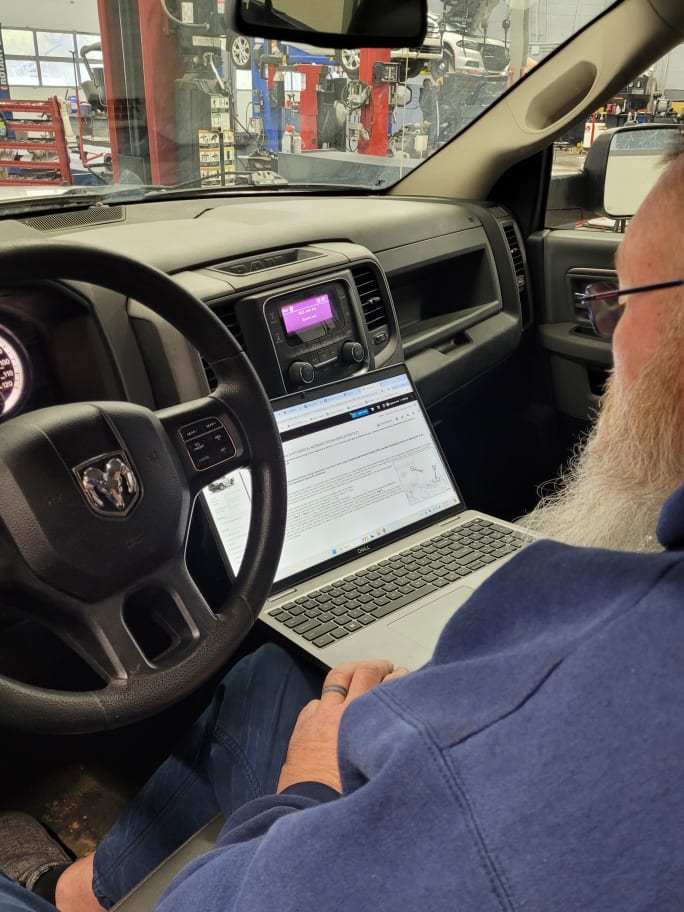
Productivity reports can help make leaders aware of how much time a fleet team is spending on a task and demonstrating the amount of work that is performed in the shop.
Photo: City of Knoxville
Bradshaw also runs annual reports that include productivity metrics to gain a broader view of shop performance.
“We run annual reports on vehicle equivalency units, which lets us report on how many work orders we completed in a year and how many hours were spent completing them,” Bradshaw explained. “Then we break that down into categories, like how many hours we needed at each shop, at each location, for each piece of equipment, group of equipment, and each individual piece of equipment.”
Bradshaw said these reports help assess whether there is adequate staffing at the city’s three maintenance shops, help him spot trends with vehicles and equipment, and help him make the case for adding staff and making equipment changes.
Reports also help Bradshaw make a solid case for keeping the majority of maintenance and repairs in house. Using budgetary reports, he can compare public- and private-sector costs to show how affordable and valuable it is to keep work in house.
“We're still trying to do most of our own work, but there are jobs that we outsource, and we want to track that budgetarily and compare those rates to our labor rates,” Bradshaw said. “These reports help us show we're still providing competitive services compared to our private sector peers.”
Bradshaw also provides daily reports, primarily on fleet availability and fuel. “The golden metric in fleet management is availability rate, so we do a turnover report every day that lists which units are down that moment, and then provides a brief description of the status, like if it’s currently being worked on in house or is with a vendor for repair,” he explained. “We also run fuel reports regularly. We have three fuel sites here at the city, so I want to know how much gas, diesel, and propane we’re using as well as how much is being spent on a daily basis.”
In addition to helping Bradshaw and his team do their jobs, fleet availability demonstrates to upper management that fleet customers are getting top-notch service and that fuel, typically a fleet’s largest expense, is being managed properly.
Jeff Booton, senior director of maintenance (field/fleet) for Denver International Airport, has replaced traditional reports with performance dashboards that can be accessed at any time.
“We provide real-time metrics on the performance of our fleet. Because we utilize real-time dashboards, we no longer need to develop annual reports,” he said. “Our dashboards are available to our customers and leadership, which allows us to engage immediately as concerns arise. This also affords us the opportunity to highlight achievements and positive outcomes as they occur, facilitating timely recognition for our employees.”
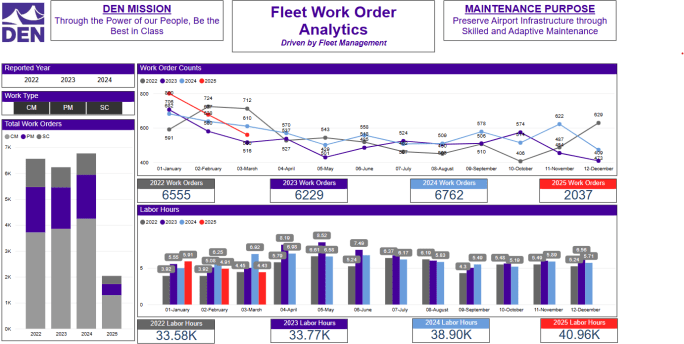
Determining the types of reports to share with leadership should be based on their preferences and your goals.
Photo: Denver International Airport
Booton said the choice to move away from reporting to dashboards was based on how upper management likes to receive information.
“Senior leaders like to discuss what’s happening today, not last month. Real-time dashboards allow us to be in that conversation with actual data versus having to pull something together on short notice or wait for the monthly report,” he said. “There is still great value in historical information, but society and business are more concerned with the now.”
How Do You Build Reports?
Building reports should begin with putting yourself in upper management’s shoes.
“Our dashboards were decided upon and developed primarily based on the questions that our leadership and customers ask most often. By addressing these issues, we can visually paint a broader picture of what goes into the program in question,” Booton said. “The key to any beneficial dashboard is to fully understand your underlying business processes so you portray the correct information. Anything you display will be critiqued so you and your team need to be on-the-same-page on what the dashboard is saying (and what it’s not saying).”
Other effective starting places are fleet goals, customer needs, and the best interests of the public.
“We create reports that demonstrate we’re meeting best practices,” Bradshaw said. “We also keep the big picture in mind. Our mayor developed a citywide mission and values, so every report we run and every activity we do should relate back to them.”
Ultimately, Bradshaw said knowing what you want to achieve and which evidence will help the audience see your point of view is always a solid foundation to start from.
“Depending on what you're trying to prove and what you're trying to advocate for, there are any number of reports you can run,” he said. “For instance, if your city council is big on energy consumption and green initiatives, create a breakdown of your fuel sources and show how much fuel you've saved by switching to electric vehicles.”
Getting the Message Across
In order to close the loop on highlighting the fleet team’s accomplishments, Bradshaw meets with his upper leadership team once a month to review reports, discuss service performance, and show they are being good stewards of the public’s tax dollars.
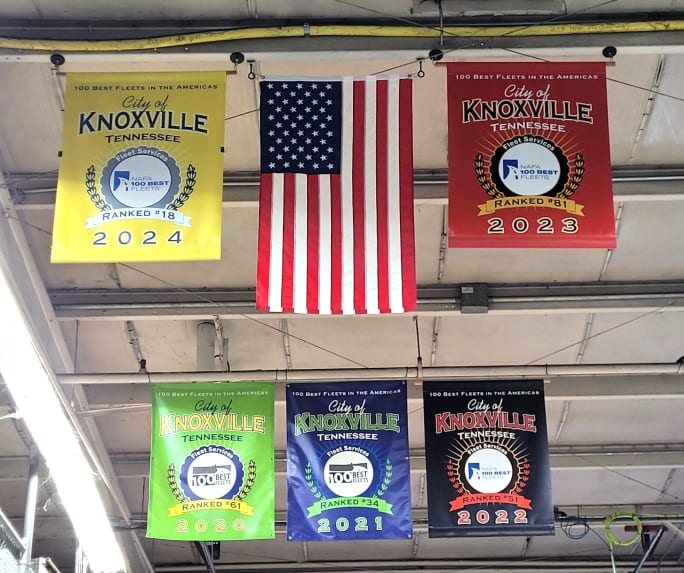
Making dashboards available to customers and leadership can provide an opportunity to highlight achievements and positive outcomes as they occur.
Photo: City of Knoxville
“We give them access to a lot of that data. We try to be as transparent as we possibly can,” he said. “There are 100 different ways you can share the data, but keeping reports simple is really important. If you're talking to the mayor or council, you need to come at it from a big picture perspective, knowing they won’t have interest in a high level of detail.”
For Booton, developing dashboards garnered recognition on its own.
“Several years ago, our fleet team was one of the first with in the greater organization to move toward dashboard reporting so the reaction was great. Our team was highlighted as innovators and used as an example of how to manage operations through dashboards,” he said. “Now the entire organization has developed dashboards and there are regular meetings with leadership to talk about our operations.”
Determining the types of reports to share with leadership should be based on their preferences and your goals. Booton and Bradshaw’s go-to reports include:
Budget tracking
Fleet availability
Fuel
Shop productivity
Preventive maintenance program status
Fleet readiness (uptime)
Historical reactive vs. preventive maintenance
Return to service rates (in hours, by customer)
Upfitting
Parts inventory
Vehicle underutilization
Driver safety