Red Government Fleet with star logo
MenuMENU
SearchSEARCH

Is Nitrogen a Better Tire Fill?

The air in tires is 78-percent nitrogen. There appear to be many advantages to filling tires with 99-percent pure nitrogen. Equipment is available for centrally managed fleets to do the job.

Paul Dexler
Paul DexlerFormer Contributor
Read Paul's Posts
September 1, 2006
3 min to read


Traditionally, tires have been filled with compressed air. It’s cheap, easy, and available, but has had problems that now can be resolved.

If air pressure in tires is not kept at the correct level, at best, they wear out too soon. At worst, they could cause a serious accident. The most important factor in tire performance and life is correct air pressure. Research indicates that nearly 83 percent of tire problems start with low tire pressure.

The air in a tire leaks. Even with perfect valves and unblemished casings, air leaks permeate the rubber itself and the interface between the tire and the rim.As a tire heats during driving, the air inside expands, then contracts when the tire cools down. This means that tire pressures must be checked prior to driving more than a mile or so, since recommended tire pressures always refer to the cold state.

Air is 78-Percent Nitrogen
The air that we breathe is about 78-percent nitrogen, 21-percent oxygen, and 1-percent other gases. Nitrogen is inert, noncombustible, and noncorrosive. Oxygen, on the other hand, is corrosive and immensely destructive to rubber and other tire materials.As soon as a tire is manufactured and exposed to air, the effects of oxidation begin to deteriorate the rubber.

Over time it loses elasticity and strength, just like an old rubber band. Likewise, the oxygen in inflated tires permeates the tire structure and ultimately the tread. This is why tire manufacturers recommend replacing tires that are six years old, even if the tread is still good.

One way to solve the problems of air-inflated tires is to inflate them with an inert gas, such as nitrogen.

In the past, the equipment needed to produce nitrogen was large and expensive. The only alternative was to use externally filled high-pressure nitrogen bottles, which were also expensive and a safety hazard.

The NitroFill company, which produces nitrogen tire inflation equipment, has developed a solution to these problems. Instead of using stored nitrogen, NitroFill takes advantage of technology that allows nitrogen to be separated from the air. The process is done under low pressure and results in highly purified nitrogen.

The purity of nitrogen available from nitrogen generators generally ranges from 95 percent (low purity) to 99.9 percent (high purity). NitroFill generators can produce nitrogen in excess of 99.9 percent purity and provide the procedures to guarantee a minimum of 95-percent purity in a serviced tire, the minimum purity that must be maintained in the tire to enjoy the benefits that nitrogen provides.

The Benefits of Nitrogen
The use of nitrogen to inflate tires:

  • Slows pressure loss from permeation.

  • Stabilizes pressure and virtually eliminates pressure fluctuations due to temperature change.

  • Reduces tire oxidation.

  • Eliminates interior wheel corrosion.

  • Reduces running temperatures.

  • Decreases false alarms and activation of tire pressure-monitoring systems.

    Nitrogen use in tires is not new. It has been used on earth-moving equipment and aircraft tires and in racecars. Air is not used in those applications because it is one-fifth oxygen, and oxygen fuels fires. Aircraft and racecar tires can become so hot they actually catch fire.Nitrogen does not support combustion.

    A heavy truck fleet running the system in Class 8 tractors reports that tires run cooler; and it found a 2-percent fuel economy improvement.

    The air inside a tire eats away at the rubber casing, and the moisture in the air can contribute to wheel corrosion. Nitrogen has no moisture, therefore, no wheel corrosion. An inert gas, it doesn’t permeate the molecular structure of the tire casing. A nitrogen-filled tire holds its pressure longer and runs cooler, both of which contribute to longer tire life.

    Click here to see the article

Topics:Operations
Subscribe to Our Newsletter

More Operations

Weekly cheat sheet reset button.
Operationsby Staff WriterFebruary 6, 2026

Is Fleet in a Reset Mode? | GovCast Shorts

On the go and want a snapshot of our top industry news? Check out Government Fleet's new video short of what's been happening.

Read More →
person at laptop taking survey.
Operationsby Staff WriterFebruary 6, 2026

Are You Paid Enough? Fleet Salary Study Open

Work Truck, Automotive Fleet, and Government Fleet have partnered to conduct a salary survey to determine the average salary for a fleet management position in commercial and public sector fleets.

Read More →
SponsoredFebruary 6, 2026

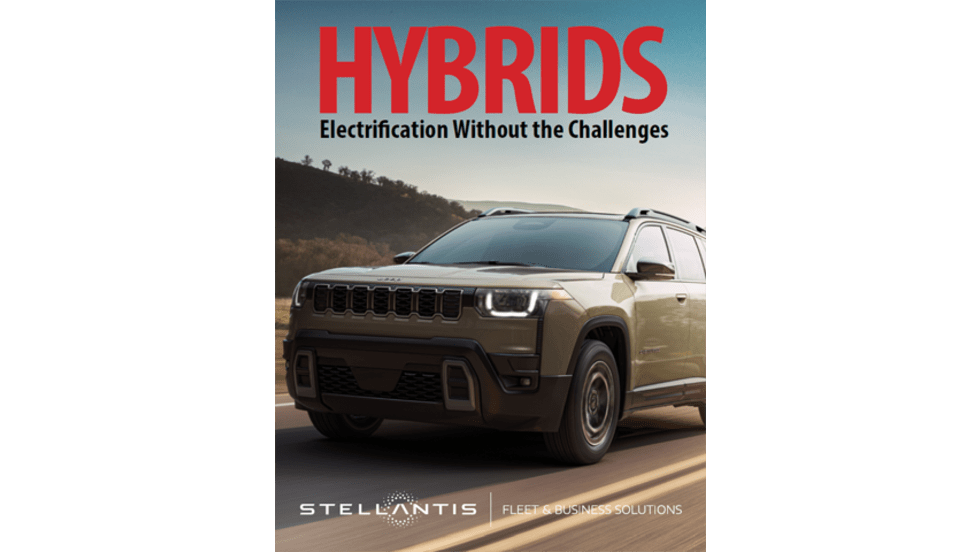
Hybrids: Electrification Without the Challenges

Hybrids bridge the gap between ICE vehicles and EVs, making them a smart choice for fleets that want to reduce emissions but aren’t ready to fully electrify. Hybrids, which are powered by internal combustion engines and electric motors, capture the benefits of electric power without the barriers many organizations find challenging.

Read More →
Ad Loading...
Image showing fleets dealing with budgets, data, and people for success.
Operationsby Nichole OsinskiFebruary 1, 2026

Fleet Performance Comes Down to People, Data, and Budgets

When it comes to the public sector, outcomes are usually driven by three areas fleet leaders can actually control, but it’s combining these into one operating model where operations see the most success.

Read More →
SponsoredFebruary 1, 2026

Why One Car Wash Wasn’t Enough For This Fleet

Limited wash locations can increase travel time, fuel costs, and admin work for fleets. Here’s how one government fleet expanded access and simplified operations.

Read More →
fleet image of check report and words cheat sheet.
Operationsby Staff WriterJanuary 30, 2026

Leading Fleets Lessons, Autonomous Policing, and the BEV Reality Check | The January Dispatch

To keep you in the loop, this episode is a quick reset on what mattered during the past month, from how to turn award season into a practical self-audit to what “leadership” looks like.

Read More →
Ad Loading...
image with the words read learn earn and a BBM star.
Operationsby News/Media ReleaseJanuary 29, 2026

Bobit Business Media Launches New Rewards Program for Industry Professionals

The new rewards initiative, B2X Rewards, is a gamified incentive program designed to increase engagement across BBM’s websites, eNewsletters, events, and TheFleetSource.com.

Read More →
Government Fleet's weekly cheat sheet for the end of January.
Operationsby Staff WriterJanuary 29, 2026

Cold Weather, EV Reality Checks, and What Fleet Leaders Are Doing Next | GovCast Shorts

On the go and want a snapshot of our top industry news? Check out Government Fleet's new video short of what's been happening.

Read More →
Image of man applying for leading fleets.
Operationsby Nichole OsinskiJanuary 28, 2026

Your Leading Fleets Application Can Do More Than Win an Award

Hear directly from this year's judges on what separates standout submissions and use their tips to submit a clearer, stronger application.

Read More →
Ad Loading...
A DASH electric bus parked on a city street in Alexandria, Virginia.
Operationsby News/Media ReleaseJanuary 27, 2026

City of Alexandria's DASH Partners with ABM to Support EV Bus Charging Infrastructure

DASH is expanding its electric bus operations in Alexandria, Va., with new in-route charging infrastructure.

Read More →