![[|CREDIT|]](https://assets.bobitstudios.com/image/upload/f_auto,q_auto,dpr_auto,c_limit,w_684/pm.robotex_avatar_img_1121_1759886611189_byoybw.jpg)
Joshua Green
For those who weren’t born longing to grow up to become a fleet manager, not every aspect of the job is easy to catch on to. Joshua Green was able to take his love of cars and use it to segue into a career he loves in the County of York, Va., but has definitely had to overcome a few barriers before getting to where he is today. These are the lessons he’s learned and wishes to impart to others.
Spec’ing Woes and Triumphs
The first big challenge Green faced was spec’ing vehicles. He didn't have any prior experience in ordering cars for a fleet, and therefore didn't really know what pitfalls to look out for.
When he first started, he missed a couple of order dates. It takes about four months to get a car from being an order on a piece of paper to actually receiving it in person. His mistake cost him a few months of delay, but he’s never made the mistake again. He now ensures he has order sheets and cutoff dates in line. In addition to this, he also works with his local dealerships so his orders make it in before the cut offs.
“When you buy a car as a citizen, you just go into a dealership, find what you are looking for, and you’re good to go. But as a government fleet, we have to make sure we're ordering necessities versus perks. It's the county citizen’s money, and people don’t want to see you spending in excess.”
This is why he talks with the operators and sometimes does a ride along with county employees in order to truly understand what the driver’s duties entail and what they need to get their job done right. It’s unwise to just order what you’ve ordered in the past; if you don’t talk to those who actually use the vehicle, you might never find out it hasn’t actually been working for them.
Spec’ing for standardization will also save headaches down the road.
“You're trying to make sure your technicians can focus on one type of vehicle. This enables repetition, making PMs and repairs move faster. Your employees become more efficient, and you don’t have all this extra stock on the shelves you have to hold onto for one specialty type of car. You want to keep things as consistent as possible.”
Digging Deeper to Solve Challenges
Currently, Green is trying to figure out if there’s a way to build vehicles utilizing a dual battery setup. Most of his fleet are Fords, and he’s attempting to determine if there can be a way using dual battery setup with different light packages to help reduce idling just to operate the lights.” When a vehicle stops on the side of the road, they have to leave it on in order for the flashers to work.
“We are trying to determine how long a vehicle’s lights can remain on without it running for a period of time and still have the ability to drive off. These new LED lights have really reduced the draw off the battery and seeing if this is a possible solution in trying to reduce our idling times.”
Creating Efficiencies with Telematics
Green has just switched the fleet over to Geotab. It’s leaf cleanup season, and the staff currently use routes done from hand drawn maps. He hopes to use the telematics solution to discover more efficient routes so the drivers can help the County save gas. This also can help improve route efficiency when a service request is made and a stop is added while the vehicle is out on the road. He plans to collect more data to streamline PM schedules, better understand the idling issue, and improve on driver safety.
“We hope to work with our insurance company to try and see what we can do to help improve our costs. To offset the cost of the telematics devices, we want to use the data we collect to receive better rates and improve driver behavior.”
COVID Improvements
Fleet is often the centralized hub of any kind of government; if there are no vehicles to operate, employees can't provide necessary services. Fleet facilities therefore often see a lot of foot traffic…which could be dangerous during a pandemic. Green has had to restrict access to the shop to prevent non-essential personnel from coming in and potentially spreading the virus.
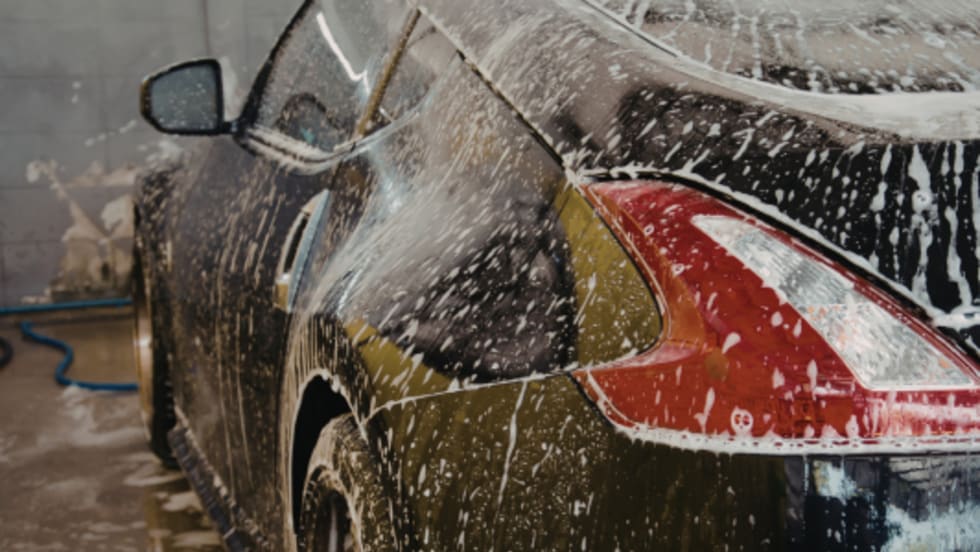
“We funneled everybody through our main foyer to try and minimize the amount of space we had to keep constantly clean. Dealing with COVID has definitely made us realize we could have been cleaning our cars a little better for our customers before the pandemic hit.”