One of the first things an observer might notice about the city of Tallahassee is the diversity of its fleet.
From refuse, police, and fire to the airport, power plants, solar farms, and water/sewage treatment facilities, there are few places you won’t find the fleet’s reach. With so much ground to cover, the fleet team has to stay one step ahead of what’s happening. It’s a challenge, but one that the No. 1 Leading Fleet is always ready to meet.
Transit Partnership and Electrification
One area that the fleet has been paying close attention to is transit. The fleet handles the city’s transit buses, including buying parts, cleaning, and repairs at the transit facility. It's a partnership where the transit department receives federal grants and the fleet works with them, procuring buses and charging systems.
It’s no small project, and it’s growing in size.
“We’ve installed approximately 100 chargers so far, and we just got a $20 million grant to purchase more electric buses and 16 overhead chargers,” said Jeff Shepard, Fleet Director at the city of Tallahassee. “The buses are in shipment now.”

Shepard noted they are also working on the infrastructure needed to support the overhead chargers for the buses. On top of this, they received another grant for six more electric buses to support the transit facility.
Tallahassee’s Light-Duty Fleet Goals
For the light-duty fleet, the goal is to transition to 100% hybrid or electric vehicles by 2035. The fleet reached 25% in the first five years, prompting an updated target of 66% within the next five years.
This progress keeps the fleet on track to meet the 2035 goal. Currently, all new light-duty vehicles purchased are either hybrid or fully electric, an approach that, according to Shepard, has resulted in significant fuel savings.
“So far, the vehicles have been really good to us, and they’ve held up really well,” he said.
Since the city of Tallahassee began purchasing electric and hybrid vehicles, the fleet has projected fuel savings based on actual usage data: more than 1.6 million miles have been traveled using EVs and 3.7 million miles using hybrids.
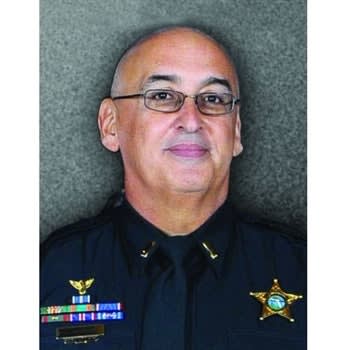
The fleet handles the city’s transit buses, including buying parts, cleaning, and repairs at the transit facility.
Using real-world efficiency averages and current fuel and electricity costs, the team has calculated total savings of approximately 150,000 gallons of gasoline and over $369,000 in avoided fuel expenses.
"These savings not only demonstrate the financial benefits of the fleet’s transition but also reflect the city’s commitment to reducing emissions and dependence on fossil fuels," Shepard explained.
Breaking it Down: Fleet Size and Staffing
To meet the city’s wide-ranging operational needs, Tallahassee’s fleet comprises a substantial number of units, ranging from 2,900 to 3,000 pieces of equipment that travel approximately 1.1 million miles per month within the city.
That number of vehicles equals a replacement value of $300 million.
Supporting a fleet of that size requires about 100 employees total, with about half being technicians and the rest support staff.
On the light-duty side, the city of Tallahassee is an authorized Ford warranty center for gas and diesel vehicles. To support this, the city has trained its technicians to become Ford-certified, allowing them to perform warranty work in-house and streamline service for its fleet.
Facility Improvements and Storm Response
They’re also focused on upgrading their aged facility. Current upgrades include roofing and the installation of two generators: one for the entire transit facility, and another for the fleet itself.
Because of the number of storms Tallahassee sees, they’re steadily enhancing storm cleanup with more versatile, multipurpose equipment. The storm response process also includes the purchase of extra fuel tanks that can be moved to different fuel sites.
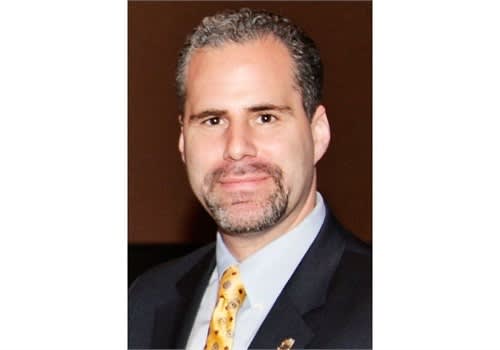
The city of Tallahassee, Florida, was named the No. 1 fleet among the Leading Fleets at the Government Fleet Expo and Conference (GFX) on June 24.
They recently replaced a couple of specialized mowers with skid steers that have detachable mowers and grapples for storm cleanup. This provides a more versatile piece of equipment for storm response.
There are also plans to enhance and renew the fleet’s contracts by next year.
Before any new vehicle or equipment purchase, the fleet evaluates who can use it and whether it can be shared among departments.
Shepard said the team uses a fleet utilization strategy that aims to reduce the number of underutilized vehicles by 10% annually.
To do this, departments must justify keeping vehicles that aren't frequently used. Approval is required from both fleet management and department heads, especially for specialized equipment.
When possible, these vehicles are transitioned into the shared motor pool.
Internal Customer Support and the Power of Communication
But it’s the support of their internal customers that remains a primary focus. That begins with providing data such as equipment costs, current value, utilization rates, and projections of future needs.
The team sends out annual reports and meets with departments as often as possible to understand what they’re looking for when it comes to replacements and new equipment.
Is the current asset still the right fit? Do they need something different or upgraded?
For Shepard, it’s about more than just data; it’s about listening and maintaining open, meaningful communication.
“We want to try and focus on our people,” he said. “We’re focused on investing in the training and our technicians and investing in our customers and keeping an open line of communication.”
Shepard’s advice? Communicate. Communicate with your departments, communicate with managers, and make sure that management understands what is going on.
![[|CREDIT|]](https://assets.bobitstudios.com/image/upload/f_auto,q_auto,dpr_auto,c_limit,w_684/pm.weblets_investigate_1759887012422_xsfvbr.jpg)
With more than 1,000 on-highway vehicles off-highway vehicles combined, Tallahassee was also named the No. 1 large fleet.
Shepard also makes sure that when the fleet team is speaking with management, they are able to answer any fleet-related questions.
One example he provided was when the city manager visited the fleet during a luncheon and the technicians were able to provide detailed information about what they were doing, the vehicles they had, and what it takes to keep the fleet rolling.
“That’s just the biggest key: the people,” Shepard said. “Invest in the people, believe in the people, and just keep steadily improving your processes and communication.”
Overcoming Electrification Challenges
But a successful fleet isn’t without challenges. A significant factor for Tallahassee has been electrification, particularly in gaining customer buy-in for electric vehicles.
To do that, they held informational meetings and formed committees with partner departments. They also hosted ride-and-drive events to give people a firsthand experience and focused heavily on education.
On the infrastructure side, they installed a fast charger at the fleet facility and gained access to a few others throughout the city.
The fleet also developed an app that maps out all available fast chargers, helping users locate where they can charge their vehicles.
For overnight charging, they have made sure chargers are installed where they’re most needed.
“That’s really helped reduce range anxiety,” Shepard said. “Now, we’re getting people coming to us asking for electric vehicles. Some are even requesting specific models like the F-150 Lightning.”
Vendor Strategy and Diversification
Another challenge came right after COVID with the shortage of vehicles and parts. Prior to COVID, the fleet had already started moving away from the practice of relying on single vendor contracts for standardization.
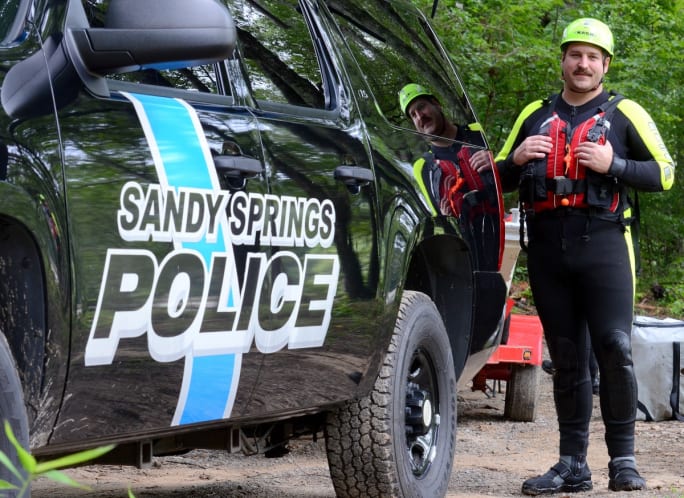
To meet the city’s wide-ranging operational needs, Tallahassee’s fleet comprises a substantial number of units, ranging from 2,900 to 3,000 pieces of equipment that travel approximately 1.1 million miles per month within the city.
PHOTO: Sandy Springs Police Department
Instead, they began shifting to working with multiple vendors. Shepard said he liked the idea of contracting with one dealer or manufacturer, but he wanted all vendors to be part of the partnership.
“You’ve got to get support from everybody,” Shepard explained. “No one manufacturer can really support this organization.”
Shepard sees the biggest challenge ahead as the change in the vehicles and the technology that fleets now have to keep up with, in addition to the regulations that fleets now have to be aware of.
“You’ve got to know what's changing, what's coming down the pipeline.”
Shepard said that also means keeping a clear relationship with your vendors in order to know what isn’t available, what needs to be ordered immediately, and what you won’t be able to get.
Today, the fleet holds contracts with four different automotive dealers, each offering access to multiple brands.
Supporting a fleet of Tallahassee's size requires about 100 employees total, with about half being technicians and the rest support staff.
This diversification ensures that if one vendor doesn’t have a vehicle available, another might. Shepard emphasized that this not only secures supply but also fosters price competition.
When the fleet went out and got these contracts, they sent an email to automotive dealers, asking questions that included “What do you have? What can you give me, and what's the price?”
This approach also extends to heavy equipment, where the fleet now contracts with multiple brands, including John Deere, Caterpillar, and CASE, rather than relying on a single manufacturer.
While this makes repairs more complex, Shepard said the strength of their vendor relationships and contractual support offsets the challenge.
The fleet also has four in-house, factory-trained technicians whose services are negotiated into the contracts at set rates. These technicians handle maintenance and repairs, helping reduce downtime and control costs.
Buyback and Service Agreements, plus Smarter Parts Management
To reduce long-term maintenance costs and downtime, the fleet has negotiated service agreements and buyback programs into its contracts. Under these agreements, the vendor not only services the equipment but also takes it back after a set period.
For some vehicles, particularly specialized heavy trucks, this means replacing them annually.
When they compared the total maintenance cost of keeping a vehicle for eight years with the cost of a yearly replacement under buyback terms, the pricing was nearly identical.
Shepard said that switch has worked out well for them and significantly reduced downtime across departments.

For the light-duty fleet, the goal is to transition to 100% hybrid or electric vehicles by 2035. The fleet reached 25% in the first five years, prompting an updated target of 66% within the next five years.
In a similar vein, to address ongoing parts availability issues, the fleet has expanded its use of multiple vendors.
Rather than relying on a single parts supplier, they now work with several contractors, some of whom provide parts on a consignment basis.
Under these consignment agreements, the fleet doesn't pay for the part until it’s used. The parts are stored on-site at the fleet facility and inventoried monthly.
Shepard explained that the fleet guarantees the parts won’t be lost, and the inventory is closely tracked.
This arrangement has proven highly effective, enabling the team to reduce overhead by avoiding the need to purchase and store large volumes of parts upfront.
Previously, the fleet would stockpile parts for specific vehicles or equipment.
But when that equipment was later sold, the unused parts would often be forgotten, only to be discovered later as obsolete inventory that no longer fit newer models.
“We’d end up having to surplus them for pennies on the dollar,” Shepard said. “That’s where we were several years ago.”
With consignment, the fleet avoids this waste. Instead of being stuck with unused or outdated parts, they only pay for what they use, keeping their inventory lean and relevant to current assets.
What’s Ahead for Tallahassee’s Fleet Team
When it comes to the future, there is much excitement for the 2025 Leading Fleet, especially surrounding the team behind the fleet.
“Our progression plan has worked really well for us,” said Shepard, himself having been with the city for 32 years.
According to Shepard, the city is able to compete with the surrounding dealers thanks in part to multiple funnels for moving individuals through a career pipeline within the fleet.
The fleet partners with local technical colleges, bringing in interns and sending technicians for continued training.
“We’re hiring some great technicians,” Shepard said. “The number of ASE certifications has jumped.” He added, “We're just really excited about where we're moving in the future.”
As for being the No. 1 Leading Fleet for 2025?
“It just validates the hard work that all of our people do.”