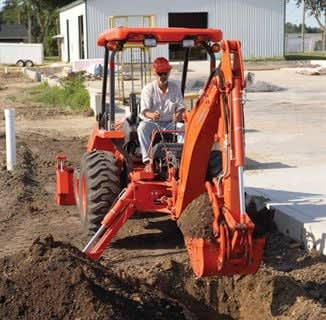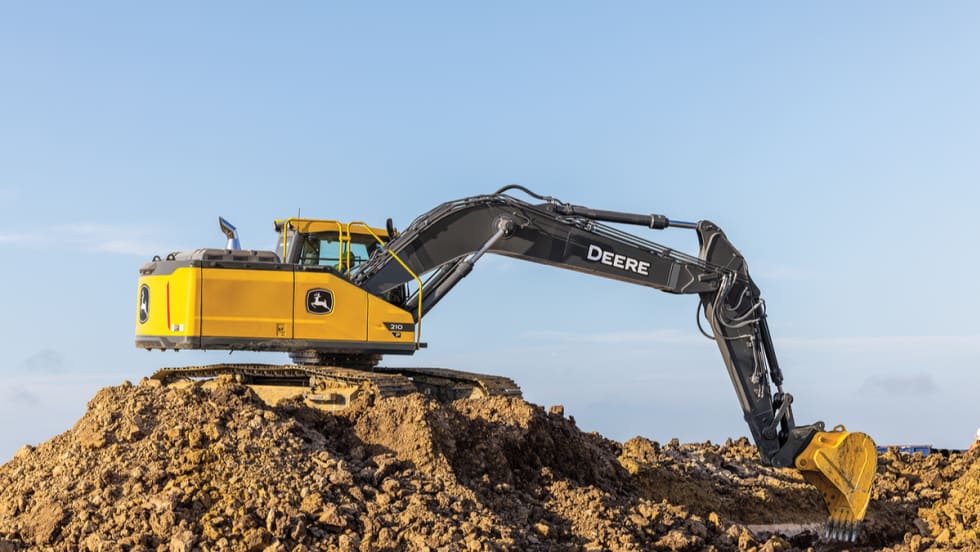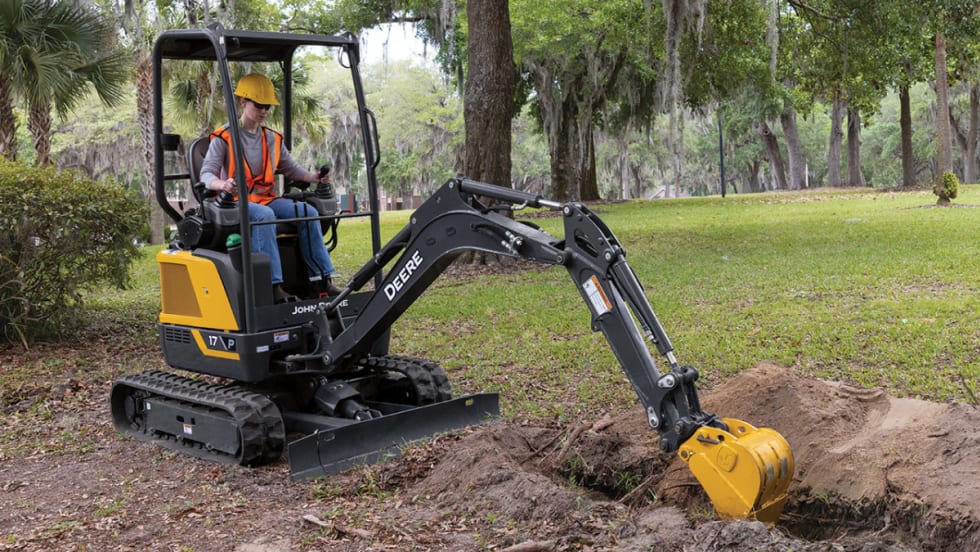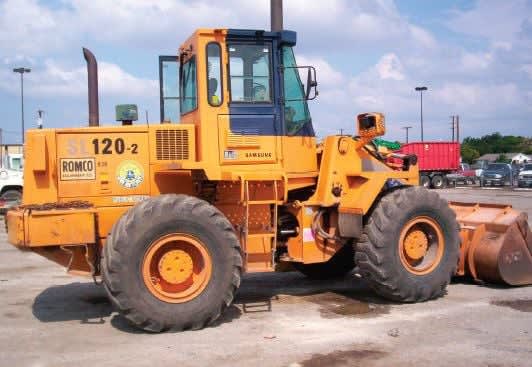
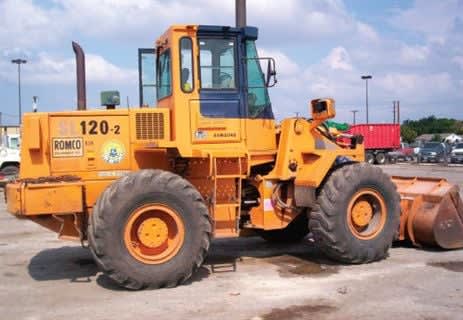
While loaders and backhoes don't constitute a large percentage of public sector fleets, they are an essential part of many construction and public works projects. A loader, normally used to lift and move materials on the ground, can be equipped with a backhoe for digging, called a loader-backhoe.
This equipment is used for a variety of purposes across various public agencies. Fleet managers and maintenance equipment supervisors from Snohomish County, Wash., Department of Public Works Fleet Management Division; Collier County, Fla., Fleet Management Department; and City of San Antonio Department of Public Works Fleet Services Division discuss acquisition, maintenance, and tips for managing loader-backhoe maintenance.
Approaching Purchasing and Training
To attain the best price and ensure fair purchases, most public sector fleets procure loader and backhoe equipment (and other equipment) through competitive bidding.
According to Allen Mitchell, CPFP, fleet manager for Snohomish County, the County also purchases equipment through state contracts that allow municipal purchases. Of its total 386 off-highway fleet vehicles, Snohomish County maintains 17 loader-backhoes used in paving operations, as portable compactors, for road projects, and for use at a mining quarry. The equipment includes units from Case, Kubota, John Deere, Caterpillar, Bobcat, and Hyundai.
Florencio Peña, assistant director of the City of San Antonio Department of Public Works, who manages the Fleet Services Division, explained that fleet works with the user department to understand its operational requirements and works with manufacturers in a pre-bid meeting to ensure comparable specs are developed for fair bidding. The City of San Antonio, which maintains 15 backhoes and 25 loaders from Terex, New Holland, JCB, Case, Hyundai, and Samsung, will only use a cooperative purchase agreement if an expedited purchase is needed.
Specifications for loaders and backhoes can depend on the user department or geographic location. "We always buy cabs, heaters, and air conditioning for a broad temperature operating environment," said Mitchell of Snohomish County. He said this also helps keep out dust and contaminants.
Mario Menendez, fleet maintenance supervisor for Collier County, said the County's policy is to allow the user department to choose features and accessories as long as they are justified and within budget. Collier County owns and maintains 23 units (seven front-end loaders and 14 loader-backhoe combinations) from Caterpillar, John Deere, Case, Ford, and New Holland, used in solid waste and recycling centers, for road maintenance and general material handling, water department projects, and beach maintenance.
San Antonio sometimes includes rippers in its specs, mainly for street operation use, where breaking up concrete is needed, and at mulching centers.
Operator and technician training can be completed in a number of ways, which include studying parts and service manuals and watching instructional DVDs that come with the equipment. However, on-site training is also often written into the bid to familiarize operators and technicians with new equipment.
According to Peña, San Antonio requires on-site training for both operators and technicians for new or unfamiliar equipment. The Fleet Services Division meets with the user department and the superintendent of heavy equipment to decide how much training the bid should include. "It depends on the equipment, but it can be anywhere from two hours to two days," Peña said. He added that retraining is provided on an as-needed basis.
Mitchell explained training usually takes place within 15-30 days of equipment delivery and additional refreshers are sometimes purchased. Menendez added that private companies specializing in hydraulic and electric training may also come in to train staff.
Equipment safety features include standard or available lockout/tag-outs, wheel chocks and blocks, guards, and covers. Fleet managers agree safety features should be kept unmodified.
Common sense plays a large role in equipment safety, according to Menendez. "Never crawl into confined spaces in an articulating loader or any other equipment unless you have disabled the starting mechanism," he said. "Report damaged holds, ladders, or steps as soon as possible to a supervisor."[PAGEBREAK]
Perfecting Maintenance Procedures
Equipment replacement cycles depend on use and often vary from location to location. Peña explained that both loaders and backhoes have a lifecycle of eight years in San Antonio, and new purchases come from the replacement fund from user department lease payments.
In contrast, Snohomish County and Collier County approach lifecycles from an hours-used schedule. Snohomish County's vehicles are replaced every seven years for heavy-use machines such as loaders used daily in Solid Waste transfer station operations, to 15 years in road maintenance operations, which may only be used about 400-500 hours annually.
Menendez estimates Collier County gets about 10-14 years of service on loaders and backhoes, although those used for beach maintenance may need replacement after eight to nine years.
Preventive maintenance (PM) schedules also differ depending on the agency. San Antonio performs its PM based on the calendar year, with different PM levels performed every month.
Another approach is to perform PM based on use. Stephen Terra, equipment maintenance supervisor for Snohomish County, said because of inconsistent use of the machines, PM for the County is done on a per-hour or day-use schedule. Collier County also calculates PM by hours used, and its schedule is based on the manufacturer's recommended service interval.
The City of San Antonio began a new lubing and inspection process last year to ensure equipment gets required services. In addition to monthly maintenance performed by heavy equipment mobile service trucks, two Department of Public Works mobile fueling trucks became part of the fleet division's fuel operations. "They go out on fuel service calls and while they're fueling, fleet technicians also do the lubing for that equipment," Peña said. "We hope that's going to improve the availability of that equipment."
This also adds another benefit to maintenance: "It's critical that these two fuel drivers, who are also fleet technicians, now become our eyes out there and proactively identify any needs that piece of equipment may have so we can get to it before it breaks down," Peña said.
This fueling, lubing, and inspection process is done once a week to every two weeks, depending on fueling needs.
Fleet departments often rely on the operator to keep equipment clean, but Menendez believes "washing and lubrication will extend the life of any equipment. I believe operators and owners under-estimate the value of this basic maintenance item." He added the County has wash bays to clean equipment before servicing it, in addition to encouraging operators to routinely wash down their equipment.
According to Menendez, another simple way to keep equipment in top shape is to know its limitations. "If the bucket was not designed to break concrete, don't do it," he advised.
Handling Problems with Equipment
Some common problems Snohomish County sees with loaders and backhoes are hydraulic oil leaks, electrical problems, and tire issues. "Some equipment design and use makes preventing hydraulic leaks next to impossible," explained Terra. "An intensive inspection program while these machines are being used does help reduce breakdowns and downtime."
Electrical problems are mainly failures of the charging system or battery, he continued. Batteries can be load-tested and changed, and Terra said this should be done especially before the weather gets colder. Wiring or cable corrosion problems can be prevented by checking battery cables during PM inspections, he said.
Menendez stated that one of the bigger challenges of maintaining loaders and backhoes is transporting the equipment. He explained that fleet doesn't have the resources to service everything on-site.
"Transportation is sometimes overlooked when purchasing equipment. Customers may purchase a 14,000-lb. tractor and later realize their biggest trailer has a 10,000-lb. GVW rating," he said. "Sometimes, the equipment needed at a particular site is too large to transport without permits. All this will affect overall maintenance cost." If servicing at the user-department facility isn't possible, such as for major repairs, a transport company is contracted to move the equipment to the fleet facility, Menendez said.
While the expertise of fleet services is essential in keeping loaders and loader-backhoes well-maintained, ensuring proper operator use and familiarization of equipment is essential. For recurring problems that may involve the operator, fleet technicians in the City of San Antonio may arrange periodic ride-alongs to see how operators are applying that equipment. As Peña puts it: "Operators change; equipment doesn't."
[PAGEBREAK]
Product Spotlight
Compiled by Jennifer Washington, editorial assistant
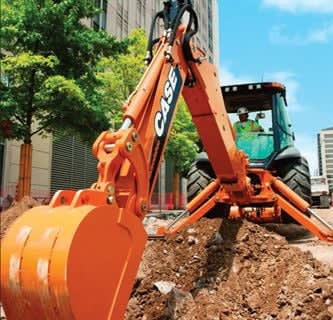
Case N Series
Case's N Series backhoe loaders feature 4.5L turbocharged engines ranging from 79 hp to 108 hp, and increased breakout and lift capabilities. Various machines run at low engine rpms, deliver improved cycle times, and feature a Power Lift button that channels hydraulic power directly to the boom.
Caterpillar E-Series
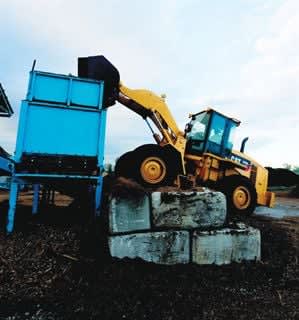
Caterpillar's E-Series Backhoe Loaders — the 416E, 420E and 430E — replace the D-series line. Digging depths range from 14 feet to just under 18 inches and net hp ranges from 74 to 97. New features include a narrowed front dash, foot-operated tilt steering, new conditioning system, and in-cab control pattern changer for the 420E and 430E.
John Deere 110 TLB
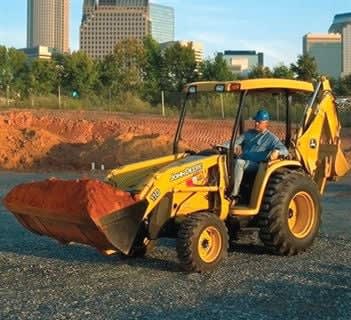
John Deere's 110 TLB is a construction-style dedicated tractor loader with 43 hp, 31 hydraulic hp, a four-cylinder direct injection diesel engine, and a Load-Match load sensing drive system that minimizes stalling. Transport only requires a heavy-duty pickup and trailer rated at 10,000-lbs. GVWR.
Kubota L45
Kubota's L45 TLB features an integrated loader and quick-attach backhoe with a Category I three-point hitch, as well as an HST (hydrostatic) Plus transmission that provides automated control of the HST pump and motor. The L45 has a lifting capacity of 2,200 lbs., a 10-foot digging depth, and offers backhoe crawling mode to reposition along trenches.