




A lot is going on in the police fleet industry: OEMs are giving police vehicles major upgrades for model year 2025,emerging technologies continue to hit the market, and law enforcement fleets keep finding innovative solutions for keeping officers safe.
All of this begs the question: Which trends resonate with law enforcement fleet leaders and what are their plans for the year ahead? We checked in with three public sector fleets to find out.
Which Police Vehicles Are in the Lineup?
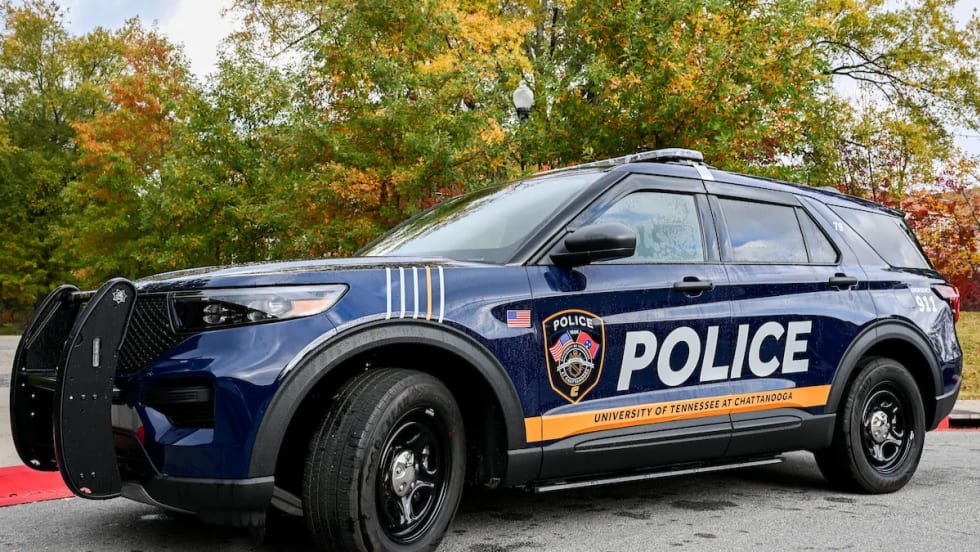
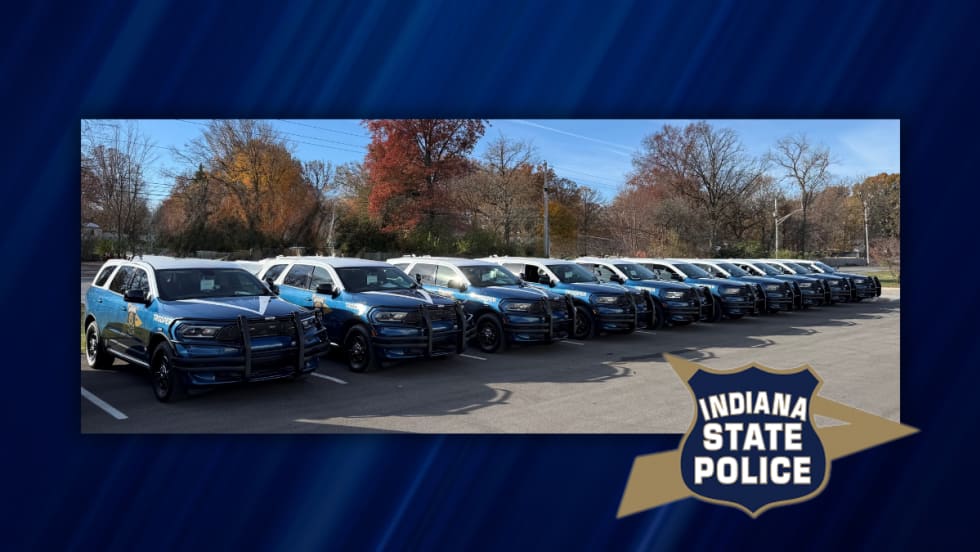
Christopher Franks, Captain for the Kalamazoo Department of Public Safety, said this year’s lineup includes the Dodge Durango, Ford Utility, and Chevrolet Tahoe.
“We chose these vehicles to meet the different needs and comfort levels for officers,” he said. “Here at our department every officer is cross-trained: we are Police, Fire, and Medical First Responders. We have a lot of equipment that needs to be carried with us in our vehicles, so space can become a premium.”
Over at the city of Fayetteville, Arkansas, officers will be driving Chevy Tahoe police pursuit vehicles (PPVs) and special service vehicles (SSVs). Fleet Operations Superintendent Ross Jackson, CAFM, said he plans to continue leveraging these models.
“As of now, we still have half a dozen replacement PPV/SSVs ready to build and more on order,” he said.
In Cobb County, Georgia, Fleet Director Al Curtis and Fleet Administrator Cheri Norry are running the Ford Police Interceptor Utility (PIU), which is currently the best-selling police vehicle in the United States and is the only pursuit-rated hybrid police utility vehicle.
“Most of our pursuit vehicles are Ford Explorers because they lack mechanical issues and have high safety ratings,” Curtis said.
To Electrify or Not to Electrify?
All three fleets currently operate EVs or are exploring electrification options.
Franks said that, although they haven’t built the charging infrastructure for EVs, Kalamazoo plans to add them to the police fleet in the future.
Trends in current vehicle lineups, upcoming models, electric vehicles, and hybrids differ from fleet to fleet.
“We are looking at the Chevrolet Blazer pursuit vehicle to use for patrol,” Franks said.
The City of Fayetteville is also considering Chevrolet Blazer EVs for use as patrol and admin vehicles.
“We will have to future-plan for possible EVSE [electric vehicle supply equipment] at PD headquarters,” Jackson said. “Outside of PD, we plan to rollout EVs across the rest of the city fleet and have already identified a list of vehicles to immediately transition to EV as they reach replacement.”
Cobb County currently has EVs in rotation, including Mustang Mach-E vehicles, which are used by the Sheriff’s office for deputies serving warrants, the country’s first all-electric prisoner transport van, and Nissan Leafs for administrative staff. New to the EV roster are 2025 Chevrolet EV Blazer AWD police pursuit vehicles.
“There are a few new vehicle features we are excited about on the 2025 Blazer EV PPV including police-specific engineering, like skid plates, police-rated tires, and front Brembo brakes, features for easier upfitting, and a police-specific front seat with haptic driver's seat warning to alert officers to a hazard and keep them safe,” Norry said. “We have plans for additional electric vehicles as well.”
Curtis added that minimizing vehicle downtime to keep vehicles in service and reducing fuel consumption are key priorities for the fleet, so they are exploring more idle management software and are committed to incorporating electric and hybrid vehicles into the fleet wherever possible.

For the Kalamazoo Department of Public Safety, vehicles were chosen to meet the different needs and comfort levels for officers.
Looking ahead, Curtis notes that solid-state batteries, which use a solid electrolyte to conduct ions between the electrodes, instead of the liquid or gel polymer electrolytes found in conventional batteries, will open up additional applications for electrification.
“This will allow vehicles to travel 600-1,000 miles on a single charge and reach full charging capacity in 10 minutes,” he explained. “This will allow public safety to further embrace electric vehicles.”
Mixed Views on Hybrids
The fleets were split on the use of hybrids.
Franks said he’s noticed other law enforcement fleets employing them, but they weren’t the right fit for Kalamazoo.
“We tried hybrids and discovered there were too many issues with the vehicles and have decided to not continue with them,” he said.
Jackson sees hybrids as an opportunity to reduce fuel consumption and emissions while they’re establishing charging solutions for electric vehicles.
“I am very excited to see and hope for all OEMs to continue to include more hybrid options for those that do not have the EVSE infrastructure in place today, to do what we can to minimize idle time, fuel consumption and reduce emissions,” he said.
Norry said she’s looking forward to the release of the 2025 Ford Interceptor Utility Hybrid PIU coming soon that will have improved safety and technology features as well as ballistic panels, police engine idle, and police dark car.