Red Government Fleet with star logo
MenuMENU
SearchSEARCH

The First Hybrid Pursuit SUV: Ford's 2020 Police Interceptor Utility

Ford’s 2020 Police Interceptor Utility vehicle is a hybrid delivering 40% better fuel economy than its predecessor. Here’s what you should know about it.

Thi Dao
Thi DaoFormer Executive Editor
Read Thi's Posts
October 17, 2018
Photo: Bulletsafe

The Ford PIU hybrid vehicle will be shipped beginning summer of 2019. 

3 min to read


Ford is fulfilling its pledge to invest in electrification. In June, the company announced its 2020 Ford Police Interceptor Utility  (PIU) — the U.S.’s top-selling police vehicle — would come standard with a hybrid powertrain. This announcement came about a year after Ford announced a 2019 model-year hybrid, the Police Responder Hybrid Sedan. 

What should fleets expect with the new vehicle? Similar interior space as past PIUs, lower fuel costs, standard police-tuned full-time all-wheel-drive, and other standard features.

Calculating Fuel Savings

Why hybrids? For police work, where there are frequent long periods of idling, hybrid technology is ideal, according to Ford. When the vehicle is stopped, its lithium-ion hybrid battery powers lights, radios, computer, and other on-board electrical equipment. The gasoline engine shuts off and intermittently runs to charge the battery. This should result in lower fuel consumption, CO2 emissions, engine use, and maintenance needs. And it also leads to increased uptime.

The hybrid is projected to have an EPA-estimated 24 mpg combined, which is about 40% better than the current 3.7L V-6. Ford estimated that the improved fuel economy while driving could result in fuel savings of 343 gallons per year. Reduced idling expenses is expected to save even more fuel, since the hybrid is expected to consume less than half the fuel while idling compared to the current 3.7L vehicle. Assuming 4.9 hours of idling per eight-hour shift and two shifts per day, a police department could save up to 933 gallons of fuel per year. Combined, reduced fuel use could result in savings of $3,509 per vehicle, per year if fuel costs $2.75 per gallon. It would also reduce carbon dioxide emissions by 25,560 lbs. per vehicle, per year, according to Ford.

Still want the gasoline version? The 2020 PI Utility has a hybrid-delete option as well as an available EcoBoost.

New Features & Cost

MSRP for the 2020 hybrid vehicle is $40,615 in comparison to $33,275 MSRP for the gasoline-powered 2019-MY PIU. In addition to the expected fuel savings, it’s important to note what comes with this new price.

New standard features include the hybrid powertrain with 10-speed transmission as well as more than $2,000 worth of additional standard equipment, said Stephen Tyler, police brand marketing manager for Ford. These include a factory-installed Ford modem with a two-year complimentary Ford Telematics subscription; standard Bluetooth capability so officers can keep their hands on the wheel and eyes on the road; LED low and high headlamps with integrated wig-wag functionality; four user-configurable steering wheel switches; Class III trailer-tow bar for up to 5,000 lbs. of towing capacity; tilt and telescoping steering wheel; and deep snow/sand traction control. 

Options for the vehicle include factory-­installed Police Perimeter Alert, Rear Camera on Demand, and Automatic Emergency Braking with police-­specific temporary disable switch. 

The vehicle also faced strict safety tests, including a 75-mph rear-impact crash test — more rigorous than the federal standard of 50 mph, according to Ford.

The hybrid doesn’t compromise on interior passenger or cargo space because it was engineered around the hybrid battery. It features 168 cubic feet of total interior volume, compared to 166 cubic feet for the current 3.7L model.

Ford advertises the vehicle as upfit friendly, and for fleets wanting to transfer equipment from their current PIUs, the company expects light bars to transfer (with new mounting hardware) as well as center consoles that currently mount to Ford’s standard metal console mounting plate. In addition, Ford expects the core/center section of partitions between the first and second row to be transferrable with modifications, as well as the pushbars with new mounting hardware, Tyler said.

The all-new Ford Police Interceptor hybrid will be built at the Ford Chicago Assembly plant and upfitted at Ford’s Chicago Modification Center. Vehicles are available to order now, and shipments will begin summer of 2019. 

Standard Telematics

The 2020 Ford Police Interceptor Utility, along with the 2019 Ford Responder Hybrid Sedan, will come standard with a built-in Ford modem and a two-year complimentary Ford Telematics subscription. The cloud-based software package provides an intelligent dashboard that allows fleet managers to track and improve fleet operational effectiveness, said Brock Winger, global marketing manager for Ford Commercial Solutions.

“In addition to keeping their officers safe, police departments are tasked with improving their financial positions, decreasing budgets, and increasing efficiency, and this tool we’re providing will provide insights into driver coaching opportunities, fuel consumption and usage, ways to improve that, CO2 emissions, and the benefits of electric vehicles in their fleets,” Winger said. It also provides information on vehicle location and health.

Police departments will be able to control and restrict who has access to various data and information.

In spring of 2019, the automaker will offer a Ford-engineered retrofit modem for vehicles MY-2012 and later that don’t have the embedded modem installed. This would allow police departments with the Police Interceptor Sedan, older PI Utility vehicles, and the F-150 Police Responder to add telematics to their vehicles already in service.

All Ford vehicles by the end of 2019 and later will come with modems installed, so fleets can connect any additional vehicles to the same telematics solution — without having to worry about hardware installations or inadvertent removal of devices that plug into the OBD-II port.

For those that already use another telematics product, Ford has agreements with Verizon Connect, Spireon, Geotab, and ARI for data integration and is working on more, Winger said. Using the company’s Data Services solution, fleet managers will be able to integrate Ford vehicle data into their existing provider’s dashboard. 

He added that because these are Ford-designed and integrated solutions, they will evolve as Ford’s vehicles evolve. 

Subscribe to Our Newsletter

More Police

Policeby Jeanny RoaFebruary 4, 2026

Addressing Fueling Failures to Reduce Operational Risks

Working to eliminate errors and challenges and increase reliability during fueling, the Madison County Sheriff’s Office has implemented RoadFlex for its 37-vehicle patrol fleet.

Read More →
Policeby Nichole OsinskiJanuary 26, 2026

PUG: When Policing Goes Autonomous

How an uncrewed police ground vehicle is providing technical assistance to the Miami-Dade Sheriff’s Office through a pilot program with the goal of supporting officers and reducing crime through increased marked police presence.

Read More →
Policeby Staff WriterJanuary 20, 2026

Applications Open: 2026 Police Fleet Innovators Award

The Police Fleet Innovators Award is for fleet operations teams that have come up with innovative solutions to common problems in law enforcement fleets. Click for deadline details, plus an award FAQ.

Read More →
Ad Loading...
SponsoredJanuary 19, 2026

Basic Tracking vs Next Generation Fleet Technology

Fleet software is getting more sophisticated and effective than ever, tying big data models together to transform maintenance, safety, and the value of your existing tech stack. Fleet technology upgrades are undoubtedly an investment, but updated technology can offer a much higher return. Read how upgrading your fleet technology can increase the return on your investment.

Read More →
a bullet board with police pictures of vehicles plus handcuffs and police tape.
Policeby Nichole OsinskiDecember 26, 2025

Police Fleets in 2025: Stories That Defined the Year

What did police fleets actually wrestle with in 2025? We highlight the most impactful stories on vehicles, funding, technology, and operations, distilling the key takeaways for fleet and command staff.

Read More →
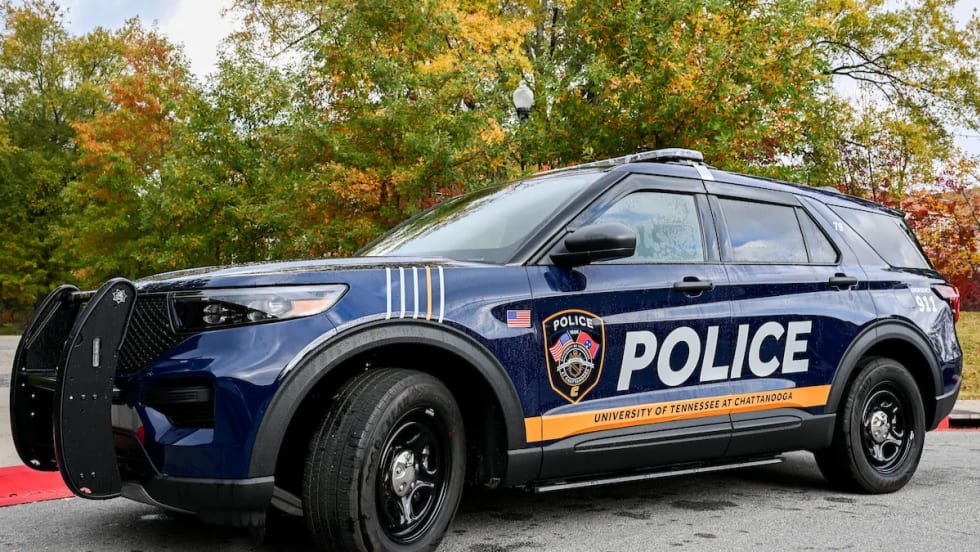
University of Tennessee at Chattanooga Police SUV parked outdoors, displaying updated blue-and-gold graphics, police markings, and university identification.
Policeby News/Media ReleaseDecember 24, 2025

New UTC Police Cars Hit the Campus Roads

The University of Tennessee at Chattanooga Police and Public Safety has updated the graphics and branding across its vehicle fleet.

Read More →
Ad Loading...
A newly delivered red Airbus H125 helicopter marked “Sheriff” and “Erie County” inside an Airbus facility.
Policeby News/Media ReleaseDecember 18, 2025

Davenport Aviation Delivers New Airbus H125 Helicopter to Erie County Sheriff’s Office

Erie County adds its first of two Airbus H125 helicopters, boosting aviation readiness and public-safety response capabilities.

Read More →
PoliceDecember 10, 2025

Weather Protection Strategies For Public Safety Fleets

How Mansfield PD addressed weather-related risks to its patrol vehicles, and what fleets need to know about planning and specifying protective structures for similar conditions.

Read More →
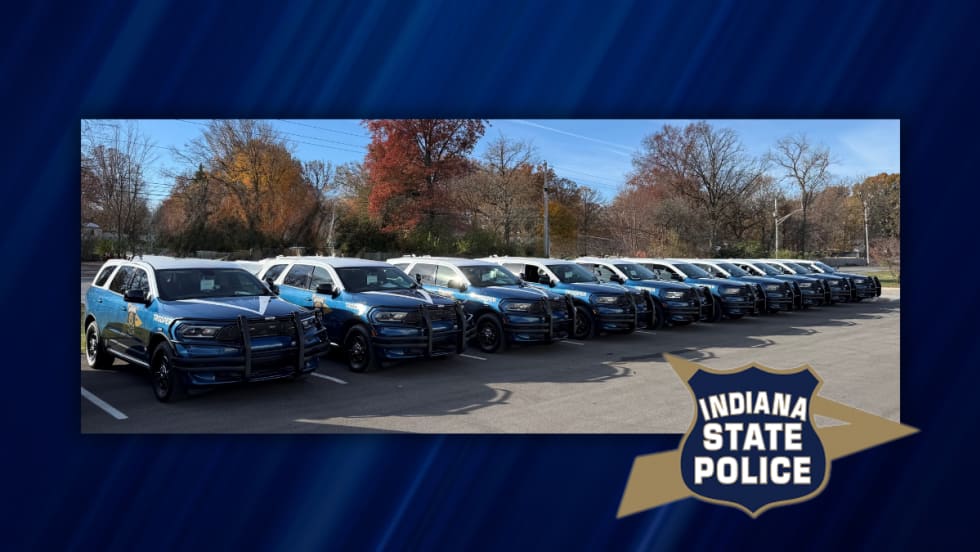
Row of newly designed Indiana State Police Dodge Durango patrol vehicles parked outdoors, marking the rollout of the new fleet design for graduating troopers.
Policeby News/Media ReleaseDecember 2, 2025

Indiana State Police Troopers Receive New Look Dodge Durango Patrol Vehicles

Indiana State Police rolls out its first fleet of newly redesigned Dodge Durango patrol vehicles as 20 probationary troopers from the 87th Recruit Academy begin service across the state.

Read More →
Ad Loading...
Policeby Staff WriterDecember 1, 2025

Michigan State Police 2026 Vehicle Testing Results

2025 MSP vehicle tests revealed standout police cars, from EVs to pursuit-ready SUVs.

Read More →