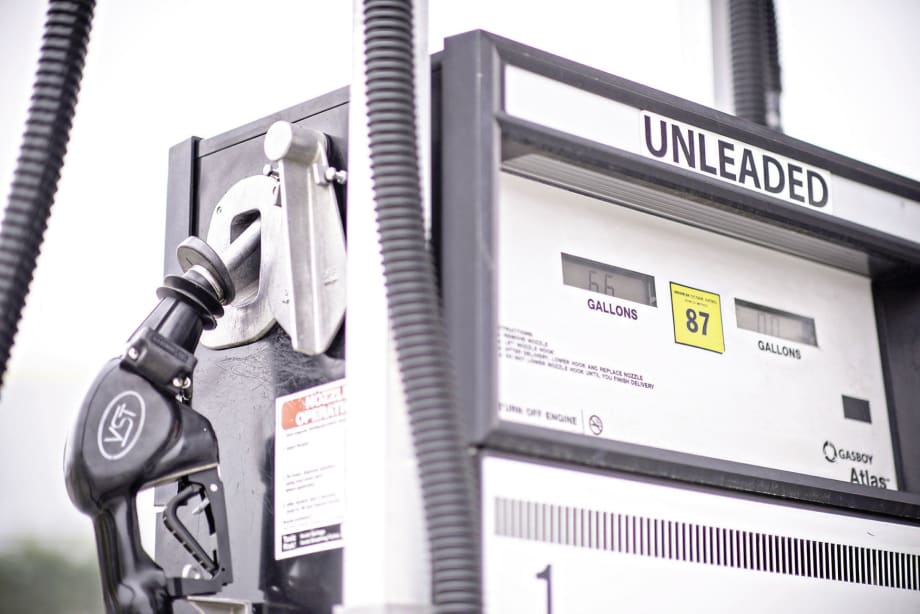
With fuel being a major operating cost, reducing purchasing cost by a few cents per gallon can result in big savings. Photo: Vince Taroc
A few years ago, public fleet managers in Oregon started getting together for breakfast to see how they could work together. This eventually led to them signing an intergovernmental agreement (IGA) to share resources when possible. The agreement has led to a cooperative fuel purchasing program that lowers, among other things, fuel and electric vehicle procurement costs.
“In light of tight budgets in all of our organizations, we need to push for greater cooperation with other fleets,” said Gary Lentsch, CAFM, fleet manager for the Eugene Water & Electric Board (EWEB) in Oregon. “Each of our operations had unique capabilities that others could use. For example, our Lane County Public Works fleet has some very good fabricators and a dedicated welding shop, so they are doing some work for EWEB that will provide them some revenue while providing us with service that we would have contracted.”
Fleets have shared staff members during vehicle auctions, or one might let others know that a third party was coming to conduct annual inspections, so the other fleets could get their vehicles inspected as well.
“Ultimately, by having an IGA in place, we are able to share equipment and resources when an emergency event happens,” Lentsch added.
Then they thought about cooperative purchasing, and how leveraging their collective buying power could result in steep discounts. Was it possible?
This group of fleet managers, along with their agencies’ purchasing partners, got together to discuss this option, and everyone agreed it was something they needed. Shortly after, they formed the Greater Oregon Fleet Cooperative (GOFC).
Starting With Bulk Fuel Purchasing
In the spring of 2016, 11 agencies signed on to GOFC. Their first contract was a fuel purchasing cooperative contract that included numerous types of fuels. The group consisted of utilities, school districts, cities, counties, and a transit agency, and the way it’s written, any Oregon public agency can join GOFC at a later time.
Every agency was doing something different when it came to buying fuel, meaning everybody was paying different fuel prices, said Lentsch, whose agency took the lead on the contract.
Where EWEB normally purchased 190,000 gallons of fuel annually, the cooperative contract pushed the number to more than 2.7 million gallons. The large contract “got the attention of our fuel suppliers,” Lentsch said. “We got some great results from it.”
The group opted to go with two suppliers: a primary and a backup. The suppliers provided E-10 unleaded gasoline and custom blends such as E-15 and E-85, B-5 and B-20 biodiesel, and R99 renewable diesel.
From Electric Vehicles to Fossil Fuels
GOFC members expect big savings through its cooperative fuel contract, but another cooperative gave Lentsch the idea to combine purchasing power. He’d first heard about it from Doug Bond, logistics services manager for Alameda County, Calif.
In 2013, the Alameda County fleet led the cooperative purchase of 90 battery-electric vehicles and 90 charging stations, including installation, for 10 agencies. The agencies had received $2.8 million in funding in the form of Congestion Mitigation & Air Quality (CMAQ) grants for the purchase.
Alameda County saved $109,000 off the suggested retail price of 26 vehicles; other partners collectively saved $349,000 on vehicle purchasing. For EV charging stations, the county saved $29,400 off retail price, while other partners saved $101,650. In addition, all partners received subscriptions to ChargePoint’s electric vehicle (EV) charging network plans.
The success of this cooperative procurement led Bond to look into other options — specifically with fuel purchasing.
“We found multiple agencies that were interested in a collaborative bid for fuel. We also heard a group in Sacramento that was doing this as well. Before we opened our bid, timing actually worked out perfectly where Santa Clara County was doing a second round of a collaborative bid it had done,” he said.
In 2014, Alameda County joined this fuel purchasing cooperative with 11 other agencies. Santa Clara County, the lead agency, conducted a reverse auction, awarding four contracts for diesel and gasoline, staff members said. The number of contracts that resulted from the solicitation for the other participating agencies is unknown. Total volume was in the millions of gallons — Alameda County at the time purchased about 1 million gallons, while Santa Clara County purchased 1.3 million gallons.

Bond
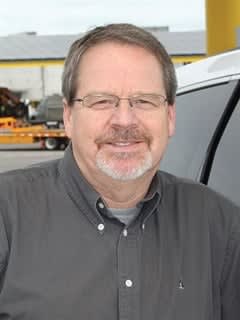
Lentsch
Calculating Fuel Cost Savings
At the time of publication, GOFC didn’t yet have complete numbers showing savings for its members. However, based on calculations so far, the group anticipates its members will save $190,000 per year cumulatively. EWEB ended up paying almost 7 cents per gallon less than it did under its previous contract. For the estimated 169,000 gallons of bulk fuel purchases annually, that adds up to $11,800 in one year for the utility.
Total savings for the Santa Clara County fuel cooperative contract are unavailable, but Alameda County saved 5 cents per gallon over its prior contract for unleaded fuel. On B-20, which it was using at the time, it saved 8 cents per gallon. Overall, this was a $53,000 savings per year on fuel for the county.
Just because Alameda County has access to the fuel cooperative doesn’t mean it has to use it — when the county switched from biodiesel to renewable diesel, Bond and his team looked for other options.
“The same vendor that had the contract for biodiesel had just been awarded a contract with San Francisco for renewable diesel, and so we were able to piggyback off that contract and bring down our cost of renewable diesel from our B-20 pricing. That was a reduction of 9 cents per gallon,” he said.
Bond said the county stayed on the collaborative contract for unleaded gasoline while purchasing renewable diesel through the San Francisco contract. The county’s fuel use is 10% diesel, 90% gasoline.
Alameda County only consumes about half the fuel it buys — the rest is dispensed to other agencies (at contract price plus a 13-cent per-gallon markup based on actual fuel station management costs), so neighboring fleets are also benefitting from lower prices as a result of the cooperative.
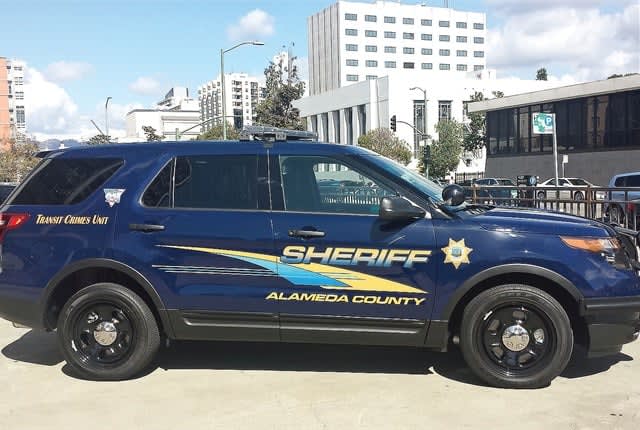
By joining a cooperative contract, Alameda County, Calif., saved 5 cents per gallon for unleaded gasoline. The majority of the county’s vehicles, including this Sheriff’s SUV, run on gasoline. Photo courtesy of Alameda County
Expanding a Successful Purchasing Program
In the year since its inception, GOFC has grown by two agencies, to 13 members.
GOFC is working on its second cooperative solicitation — this time for service level agreements. This contract would include work done by dealerships, body shops, upfitters, glass shops, alignment services, etc. The group is still deciding which agency will take the lead on the project.
“We’re looking to go out to multiple vendors and have them sign up and already have them approved so we can take any of our vehicles to these shops and have them worked on without having to worry about some of the procurement rules that we normally have,” Lentsch said.
Cooperative contracts have helped many fleets with their procurement needs, but it’s important to remember that having good relationships is key to starting them. Lentsch emphasized that the group and the cooperative contracts wouldn’t have been possible without the relationships fleet managers in the area had with each other.
“By collaboratively working together, we were able to establish a cooperative to purchase commonly used fleet-related products that allowed us to gain economies of scale and, potentially, give us more competitive pricing,” he said.
Bond agreed that collaboration has been a big benefit for participating agencies.
“Collaborations have been incredible for us…we’ve saved significant money for our agency and the others,” he said. “It’s a huge benefit, a huge time-saver for each individual agency because those agencies don’t need to go through their own separate procurement process. So you’re saving time on the administrative side, beyond the actual cost savings of buying the goods itself.”



![Is the law on use of force really changing? What is science saying about bias? What can you do to be safer on the job?[|CREDIT|]Photo: Getty Images](https://assets.bobitstudios.com/image/upload/f_auto,q_auto,dpr_auto,c_fill,w_980,h_552/pm.gettyimages-169937496_web_1759886967625_pm6g0r.jpg)