The City of Madison has a new fleet facility that's LEED-Gold certified for sustainability. What features make a fleet facility sustainable, and how do you balance sustainability with higher construction costs?
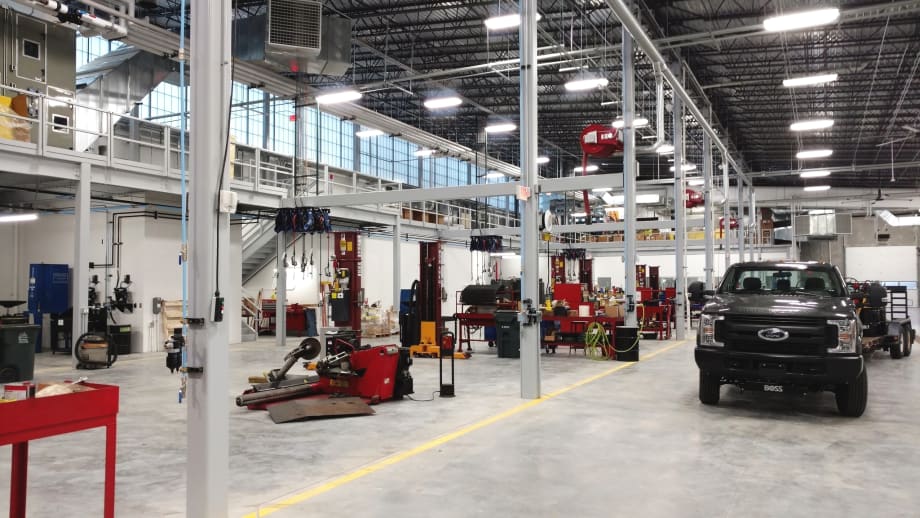
Better lighting — with large windows and LED lights — is a huge step up from the old shop's poor lighting conditions.
Photo: City of Madison
4 min to read
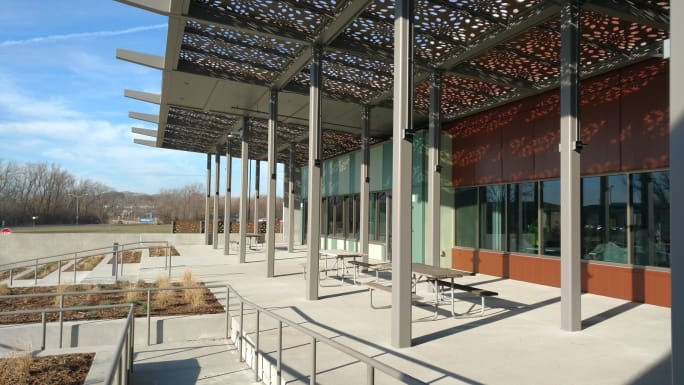
The Madison fleet facility cost $33 million and has a number of sustainable features. Pictured is the front entrance.
Photo: City of Madison
In December 2020, the City of Madison, Wisconsin, opened a $33 million fleet facility. The shop not only consolidates various facilities and brings together about 40 staff members, but it has also been certified a LEED Gold facility by the U.S. Green Building Council, a designation Fleet Superintendent Mahanth Joishy believes is a first for any fleet shop.
But what features makes a fleet facility sustainable, which features are the most important for those who work there daily, and how do you balance sustainability with higher construction costs? Here’s what staff members with the city had to say.
Lighting Makes a Difference
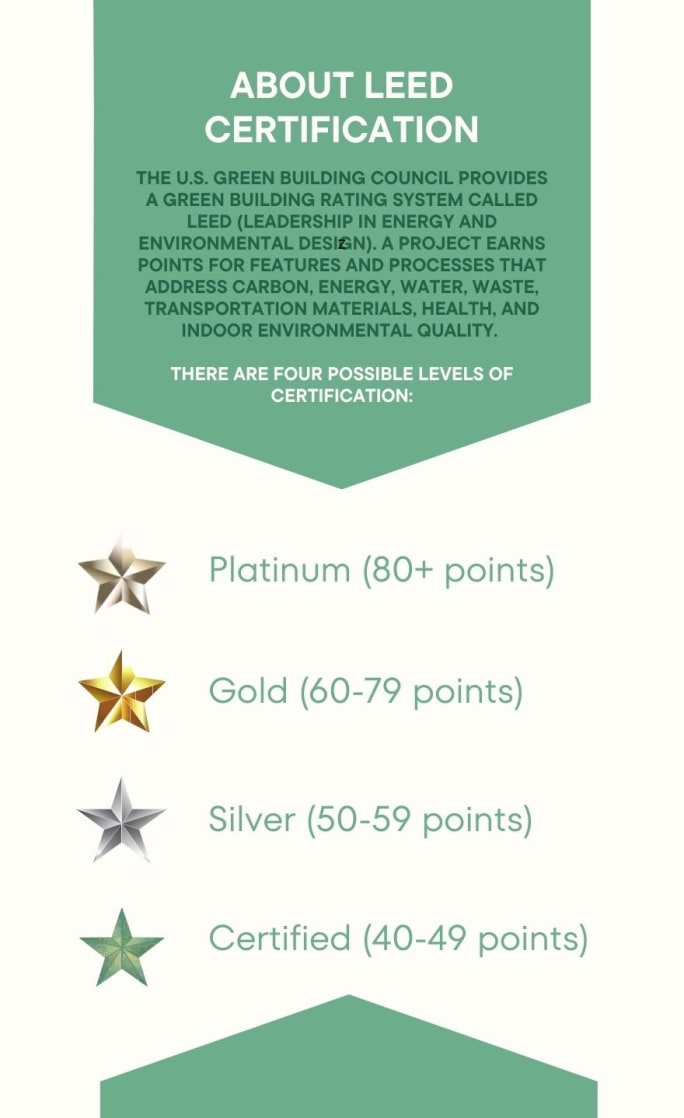
The city’s engineering staff had initially aimed for Silver certification but “overdesigned” and were able to achieve Gold during the construction phase, said Jim Whitney, a city architect and architect project manager for the building.
Whitney said the top five features in making the building sustainable are:
Clerestory window natural daylighting
LED lighting systems
Hydronic hot water floor heating system
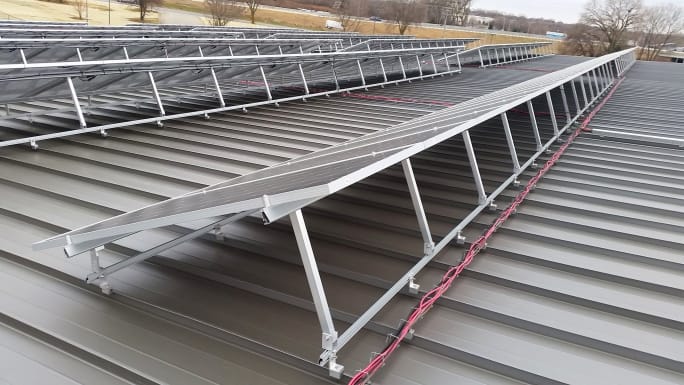
100kw solar electric photovoltaic panels
Passive solar heating wall at light-duty bays.
Joishy agrees better lighting is a major plus for fleet staff and technicians; they moved from a building constructed in the 1950s with poor lighting.
“After 20 years of working in auto garages, I have never experienced the level of creature comforts for all fleet staff that our new shop has — excellent air quality, comfortable temperatures and humidity, and Vitamin D from natural sunlight in every corner of the shop, all without compromising on sustainability,” Joishy said.
Jon Evans, a city engineer and building design project manager, said one of the building's unique features is that it has three solar features — solar electric panels, solar hot water panels, and a solar air wall. The hot water panels preheat hot water and reduce hot water needs, while the solar air wall preheats the ventilation air; both reduce natural gas use. All three solar features help lower the utility bill.
[EMPTY CREDIT]
Evaluating Cost Comparisons & Payback
Add the word “sustainable” to anything and you’ll likely see higher costs. But Evans believes that over the lifespan of the building, it won’t cost more.
“How do you define cost? [There are] more construction costs, but does it save you in utility costs as you operate the building? Does it help with staff retention and less sick days? And the disposal costs if you’re using less harsh materials and chemicals?” Evans said. “You can probably argue that on a lifecycle basis they don’t cost you more; they actually cost you less.”
He pointed out some energy-saving features and their costs: solar panels cost $300,000; installing radiant heat flooring costs $400,000; insulated garage doors with insulated glass cost $100,000; a solar hot water heater costs about $100,000, even with donated panels. All this, and more, amounted to about an extra million dollars in sustainable and energy-efficient features. He added that Focus on Energy, Wisconsin’s energy efficiency and renewable resource program, provided a rebate check of $150,000.
Evans predicts a 10- to 15-year payback for these features alone. That’s not mentioning that great lighting, comfortable and safe spaces, thermal comfort, good acoustics, and a nice breakroom and multi-purpose community room that will improve staff satisfaction and retention.
Whitney added that the team worked with Focus on Energy to look at baseline equipment costs and compare them to energy improvement costs. They determined the most energy-efficient products were too costly.
“We went with the middle-of-the-road package that provided significant improvements for energy conservation — a good balance of that along with increased costs and a good payback,” he said.
The facility also enables growth for an alternative-fuel fleet. It has charging infrastructure for city fleet vehicles, employee personal vehicles, and public charging for visitors, including six solar-powered stations via three ARC units from Beam. It's designed to grow to accommodate heavy-duty compressed natural gas (CNG) vehicles if the city decides to take that path in the future, and this year, the city will add significantly more solar panels to the rooftop.
Solar electric photovoltaic panels help power the facility.
Photo: City of Madison
Here are all the features that make the Madison fleet facility sustainable, provided by Jim Whtiney.
LED lighting throughout
Solar tube daylighting in the office areas and hallways
Innovative passive solar heating wall at the light-duty bays
All floor areas with radiant in-floor hot water heating system
Solar hot water heating system using recycled solar collector panels
Solar PV, 100kw, expandable in the future on the heavy-duty bay roof area
Clerestory daylighting in the repair bay areas (light duty/heavy duty/radio shop)
EV charging stations for service and public
Office areas with outside air ventilation system with heat recovery and air-cooling units
Compressed natural gas (CNG) vehicle ventilation in the radio shop bays with CNG gas exhaust-air fans and CNG gas alarms
Future CNG vehicle ventilation in the heavy-duty bays, exhaust-air ducts in place, and fans sized for future CNG ventilation use
Work Truck, Automotive Fleet, and Government Fleet have partnered to conduct a salary survey to determine the average salary for a fleet management position in commercial and public sector fleets.
Hybrids bridge the gap between ICE vehicles and EVs, making them a smart choice for fleets that want to reduce emissions but aren’t ready to fully electrify. Hybrids, which are powered by internal combustion engines and electric motors, capture the benefits of electric power without the barriers many organizations find challenging.
When it comes to the public sector, outcomes are usually driven by three areas fleet leaders can actually control, but it’s combining these into one operating model where operations see the most success.
Limited wash locations can increase travel time, fuel costs, and admin work for fleets. Here’s how one government fleet expanded access and simplified operations.
To keep you in the loop, this episode is a quick reset on what mattered during the past month, from how to turn award season into a practical self-audit to what “leadership” looks like.
The new rewards initiative, B2X Rewards, is a gamified incentive program designed to increase engagement across BBM’s websites, eNewsletters, events, and TheFleetSource.com.