Santa may have made a list and checked that list twice, but for fleet managers, lists are checked, rechecked, and revisited repeatedly in the quest to resolve pressing issues and move priorities forward.
Unlike a simple 'nice or naughty' list, fleet decisions come with nuance. Should funds be reallocated? Does a particular department require more attention? Can the budget stretch to hire two additional technicians?
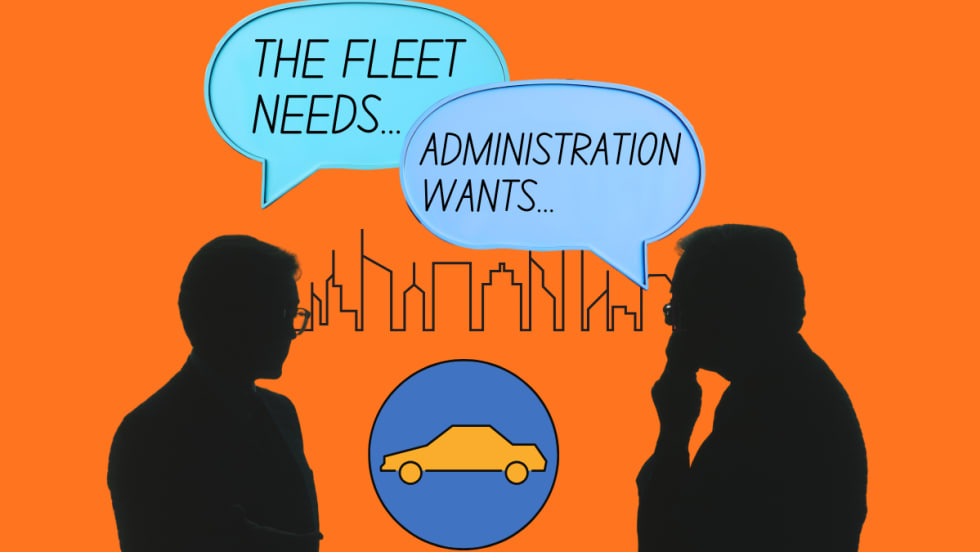
You've likely encountered these questions—or others like them—in your discussions. Or perhaps they haven't come up because you're unsure how to approach them, or because they involve challenging conversations with administration.
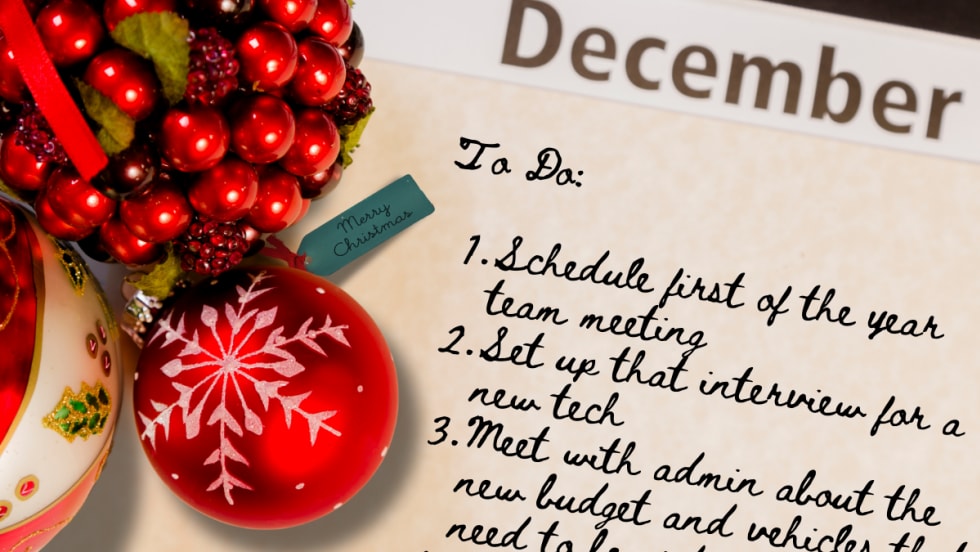
So in the spirit of the holiday season, I encourage you to put together your fleet resolutions for the New Year. Get a sticky note, piece of paper, whatever will give you enough room, and write down a list of wants (a wish list, to speak) and put that tangible list somewhere you, and others can see it.
You might be asking, how is this any different than what I've done in the past? It's really not, but it's the practice of having your fleet needs in a physical space that you and others can see that makes this important, and I have some psychology notes to back it up.
Aside from organization, lists are a way to preserve our cognitive resources. The idea behind this is that lists allow cognitive offload, which is when we free up mental space for other cognitive processes. It's something that can be very useful if you're in a high-stress environment and are constantly moving from one task to another.
A study conducted by Masicampo and Baumeister in 2011 found that goals tend to linger in our minds (for more on that look up the the Zeigarnik effect). Traditionally, it's believed that this mental focus continues until the goal is achieved. However, the study showed that creating a clear plan for pursuing a goal can ease this mental persistence.
Researchers found that unfulfilled goals caused intrusive thoughts and even disrupted unrelated tasks. However, when participants created specific plans for their goals, these effects disappeared, especially for those who followed through on their plans.
Interestingly, emotional changes weren't necessary for this shift. By making a plan, cognitive resources tied to the goal are freed, allowing you to focus on other tasks until it's time to act on the plan.
And why write these goals down when most everything has gone digital? Well, another study, this one from the Norwegian University of Science and Technology, found that handwriting activated more brain regions and connections compared to typing, potentially enhancing learning and memory.
This information isn't exactly groundbreaking, but I'm hoping it might help in your day-to-day, freeing up some extra cognitive space and helping with the stresses of fleet management.
And hey, maybe the right person will see what you've been writing and free up some resources to make those goals a reality. After all, visibility is key—not just for you, but for the people who have the power to help prioritize and address the needs of your fleet. Who knows, your list might just turn into the gift that keeps on giving for your fleet.