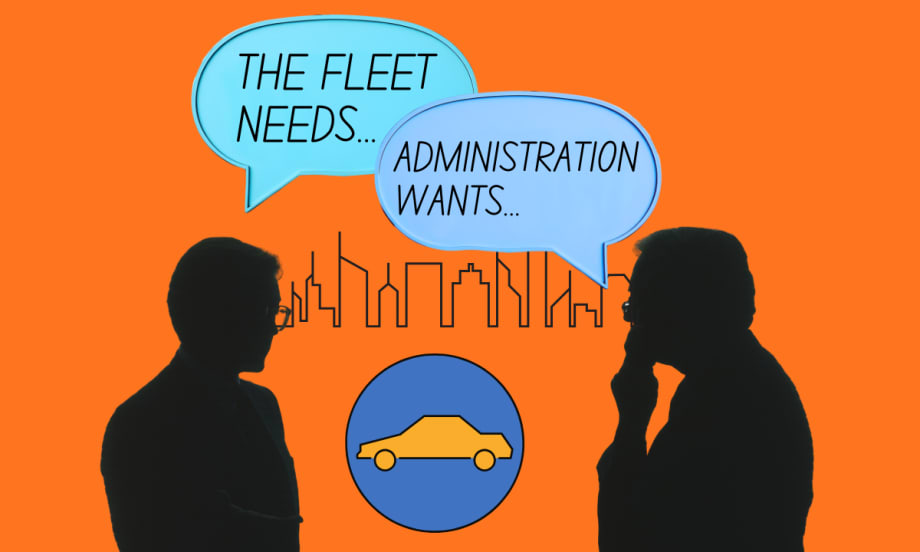
This past month, while at RTA Connect, I had a short discussion, then a few more conversations, around the issue of fleets trying to plan for what the operation needs when leadership priorities are always changing.
The need to plan long-term and navigate the varying priorities of revolving government leadership is a challenge unique to public sector fleets. A fleet manager can build out a carefully constructed replacement schedule or map out infrastructure investments only to have a new city manager, department head, or elected official walk in with a whole new set of expectations.
One day, it could be budget cuts, the next, it might be a push for EVs. Fleets get caught in the middle and are expected to adjust quickly, even when it undermines the long-term plan.
Finding the Balance Between Change and Communication
The hard truth is that revolving leadership isn't going away. Administrators come and go, and so do their policies. But fleets don't have the luxury of starting over every few years. Vehicles still need replacement parts before something goes south. Safety and compliance requirements can't be paused. Technicians can't be trained overnight. Without that stability, everything starts to stall, and the chain reaction continues to trickle all the way down to the taxpayer.
So how do fleet managers protect against that political whiplash? My first thought turns to the communication pipeline. I imagine that explaining to leadership why they can't just make sudden changes is often the hardest part. Fleet managers need to be able to make sure higher-ups understand the ripple effect of every decision.
One way to do that is by educating leadership in terms that resonate with them. Most administration isn't going to know the ins and outs of a fleet operation. However, they should care about issues such as reliability, reducing risk, and keeping costs predictable. Fleets need to be able to translate the operation's needs into those priorities and develop a conversation that's less about what the fleet wants and more about what the entire organization needs to succeed.
Plan Now for the Fleet's Future
In practical terms, your plans need to hold up no matter who’s in charge. And those plans need to be able to last by showing how that plan keeps vehicles safe, reliable, and (I feel like this is the kicker for leadership) cost-effective down the line. If that kind of plan is framed as non-negotiable, it should become harder to dismiss.
As a coda to that approach, those plans need to live somewhere beyond the fleet manager’s desk. Clear documentation that shows costs, timelines, and operational impacts makes it more difficult for new leadership to overlook years of work. It also creates continuity so that when leadership turns over, the fleet doesn’t lose ground in the transition.
With all that said, one of the best ways to get that additional support is by finding allies in other departments. As someone on the outside looking in, the successful fleets involve everyone they can — providing updates from their side of the operation and making it known just how important the work is that they’re doing. Without a voice, your fleet won’t be heard.