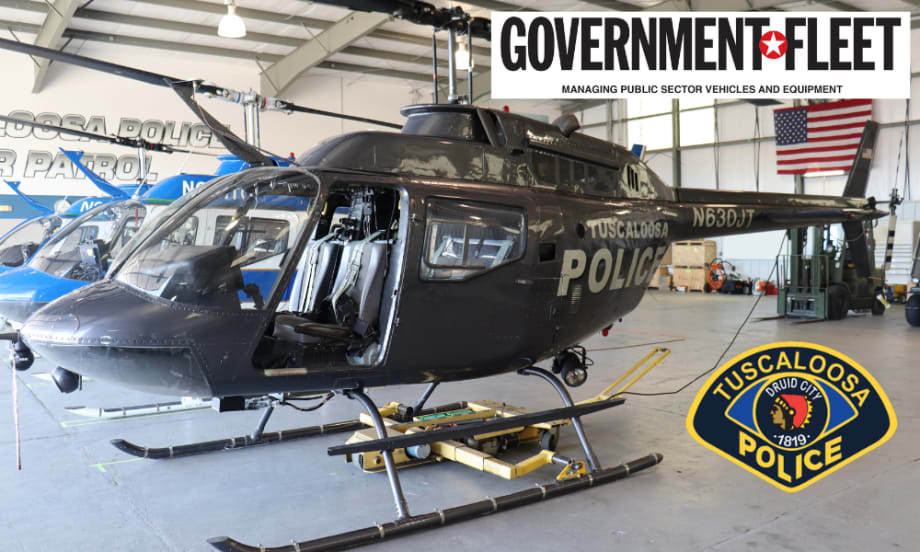
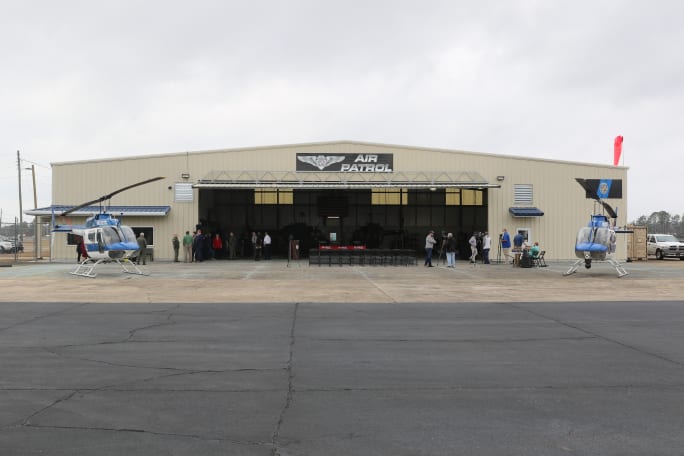
Tuscaloosa PD's new hangar is 13,500 sq ft, compared to the old hangar's 2,600 sq ft. It houses four helicopters and the Air Patrol Division, which includes five pilots and two mechanics.
Tuscaloosa's police hangar has room to store its 4 helicopters, three of which are seen here. The blue helicopters were recently given to the department from the Tuscaloosa County Sheriff's Office.
The Tuscaloosa, Alabama, Police Department's Air Patrol Division has a new home. The division recently moved into its new hangar at the Tuscaloosa National Airport.
About the Facility
The new hangar is 13,500 sq ft, compared to the old hangar's 2,600 sq ft, according to a department spokesperson. It houses four helicopters and the Air Patrol Division, which includes five pilots and two mechanics.
Tuscaloosa PD's new hangar is 13,500 sq ft, compared to the old hangar's 2,600 sq ft.
Photo: Tuscaloosa Police Department
The division used to operate two helicopters, but it recently gained ownership of two more from the Tuscaloosa County Sheriff's Office. The sheriff's office helicopters are painted blue. They will eventually be painted to match the other two helicopters.
The old hangar only had space to house two helicopters, and it was difficult to perform maintenance work when needed.
The hangar is part of a citywide initiative called Elevate Tuscaloosa, which is meant to invest millions of dollars in projects that are meant to "create a brighter future" for Tuscaloosa. So far, the cost of the project has come in at $20,045 under budget. The total projected spending on the hangar is $892,477.
About the Helicopters
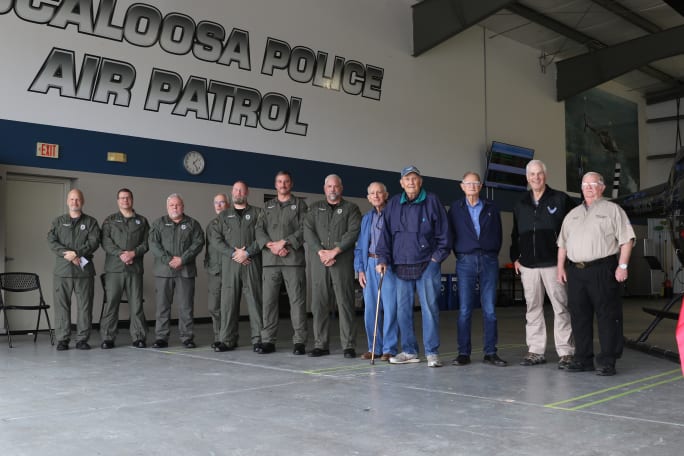
Tuscaloosa PD's current air patrol pilots stand with some of the department's first pilots in the unit. They were invited to the ribbon-cutting for the new hangar.
Photo: Tuscaloosa Police Department
Tuscaloosa PD became the first law enforcement aviation unit in the state in 1971 when the city obtained a Hiller FH-1100 helicopter. The unit went on to fly a Bell Model 47, a Bell UH-1 “Huey” and a Hughes TH-55.
In 1995, it transitioned to flying a Bell OH-58 Kiowa; that is the model the division currently operates. Two of the helicopters were used during the Persian Gulf War. They carry one pilot and three passengers, 138 mph max speed, 12,500 ft max altitude.
Helicopters vs. Drones
While drones are being used more and more by police departments, Tuscaloosa PD still sees the value in its air patrol fleet. Drones are limited to only 400 feet altitude, and cannot fly over major roadways, per local law. They also have a much more limited battery life than a fuel tank on a helicopter. A battery swap could hinder critical police response.
Drone pilots have to drive to the location of an incident before putting the drone up, while on-duty helicopter pilots who are already at the hangar can be in the air within minutes. Manned aircraft also have the capability to pick up and transport people if needed, like an injured officer or a specialized officer or equipment needed at an incident scene. In one instance, the air patrol unit flew to a multi-vehicle crash to deliver blood needed for an emergency blood transfusion.
The annual fuel and maintenance costs to operate four helicopters is about the same as the cost to fuel and maintain three patrol line cars that are used 24 hours a day, a department spokesperson told Government Fleet.
Working to eliminate errors and challenges and increase reliability during fueling, the Madison County Sheriff’s Office has implemented RoadFlex for its 37-vehicle patrol fleet.
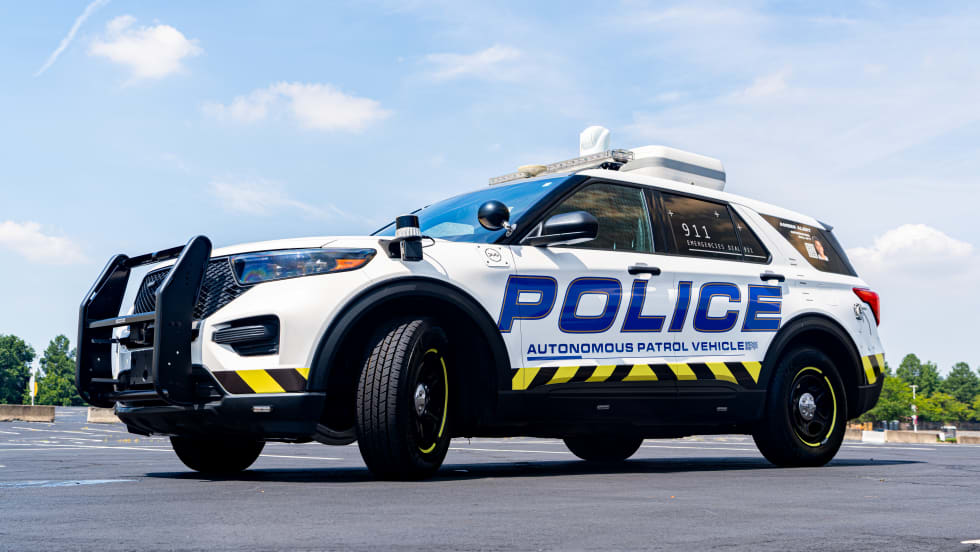
How an uncrewed police ground vehicle is providing technical assistance to the Miami-Dade Sheriff’s Office through a pilot program with the goal of supporting officers and reducing crime through increased marked police presence.
The Police Fleet Innovators Award is for fleet operations teams that have come up with innovative solutions to common problems in law enforcement fleets. Click for deadline details, plus an award FAQ.
Fleet software is getting more sophisticated and effective than ever, tying big data models together to transform maintenance, safety, and the value of your existing tech stack. Fleet technology upgrades are undoubtedly an investment, but updated technology can offer a much higher return. Read how upgrading your fleet technology can increase the return on your investment.
What did police fleets actually wrestle with in 2025? We highlight the most impactful stories on vehicles, funding, technology, and operations, distilling the key takeaways for fleet and command staff.
How Mansfield PD addressed weather-related risks to its patrol vehicles, and what fleets need to know about planning and specifying protective structures for similar conditions.
Indiana State Police rolls out its first fleet of newly redesigned Dodge Durango patrol vehicles as 20 probationary troopers from the 87th Recruit Academy begin service across the state.