




The U.S. Environmental Protection Agency (EPA) announced new proposed federal vehicle emissions standards aimed at accelerating the ongoing transition to cleaner vehicles and tackling the climate crisis. The proposed standards, announced April 12, are meant to improve air quality for communities across the nation.
The EPA expects that the proposed standards would:
Avoid nearly 10 billion tons of CO2 emissions, equivalent to more than twice the total U.S. CO2 emissions in 2022.
Save thousands of dollars over the lives of the vehicles meeting these new standards.
Reduce the nation's reliance on approximately 20 billion barrels of oil imports.
“By proposing the most ambitious pollution standards ever for cars and trucks, we are delivering on the Biden-Harris Administration’s promise to protect people and the planet, securing critical reductions in dangerous air and climate pollution and ensuring significant economic benefits like lower fuel and maintenance costs for families,” EPA Administrator Michael S. Regan said. “These ambitious standards are readily achievable thanks to President Biden’s Investing in America agenda, which is already driving historic progress to build more American-made electric cars and secure America’s global competitiveness.”
A look At the Proposed Standards for Light- and Medium-Duty Vehicles
The first set of proposed standards announced, the “Multi-Pollutant Emissions Standards for Model Years (MYs) 2027 and Later Light-Duty and Medium Duty Vehicles,” builds on EPA’s existing emissions standards for passenger cars and light trucks for MY 2023 through 2026. The proposal retains the proven regulatory design of previous EPA standards for light-duty vehicles, but leverages advances in clean car technology to further reduce both climate pollution and smog- and soot-forming emissions, according to a press release.
The proposed standards would:
Establish new, more stringent vehicle emissions standards for criteria pollutant and greenhouse gas (GHG) emissions from motor vehicles for MYs 2027 through 2032. The standards would increase each year during that time.
Result in an industrywide average target for the light-duty fleet of 82 grams/mile (g/mile) of CO2 in MY 2032, representing a 56% reduction in projected fleet average GHG emissions target levels from the existing MY 2026 standards.
Result in an average target for medium-duty vehicles of 275 grams/mile of CO2 by MY 2032, which would represent a reduction of 44% compared to the current MY 2026 standards.
Include revisions to the GHG program in areas like off-cyle and air conditioning credits. Some provisions and incentives could be sunsetted.
Proposed Changes to Pollutant Standards
EPA is proposing more stringent emissions standards for criteria pollutants for both light-duty and medium-duty vehicles for MYs 2027-2032.
For light-duty vehicles, EPA is proposing nonmethane organic gases (NMOG) plus nitrogen oxides (NOX) standards that would phase-down to a fleet average level of 12 mg/mi by MY 2032, representing a 60% reduction from the existing 30 mg/mi standards for MY 2025 established in the Tier 3 rule in 2014.
For medium-duty vehicles, EPA is proposing NMOG+NOX standards that would require a fleet average level of 60 mg/mi by MY 2032, representing a 66-76% reduction from the Tier 3 standards of 178 mg/mi for Class 2b vehicles and 247 mg/mi for Class 3 vehicles.
EPA is also seeking comment on whether the standards should continue to increase in stringency for future years.
Between 2027 and 2055, the total projected net benefits of the light- and medium-duty proposal range from $850 billion to $1.6 trillion. The proposal is expected to avoid 7.3 billion tons of CO2 emissions through 2055, equivalent to eliminating all GHG emissions from the entire current U.S. transportation sector for four years.
The EPA reported that the new standards would also deliver significant health benefits by reducing fine particulate matter that can cause premature death, heart attacks, respiratory and cardiovascular illnesses, aggravated asthma, and decreased lung function. EPA analysis shows that severe health impacts related to particulate matter exposure will also be reduced – including lung disorders (including cancer), heart disease, and premature mortality.
EPA’s proposal considers a broad suite of available emission control technologies. The standards are designed to allow manufacturers to meet the performance-based standards however works best for their vehicle fleets. EPA projects that for the industry as a whole, the standards are expected to drive widespread use of filters to reduce gasoline particulate matter emissions and spur greater deployment of CO2-reducing technologies for gasoline-powered vehicles.
The changes would also affect heavy-duty trucks, as reported by Heavy Duty Trucking.
Accelerating the Transition to EVs
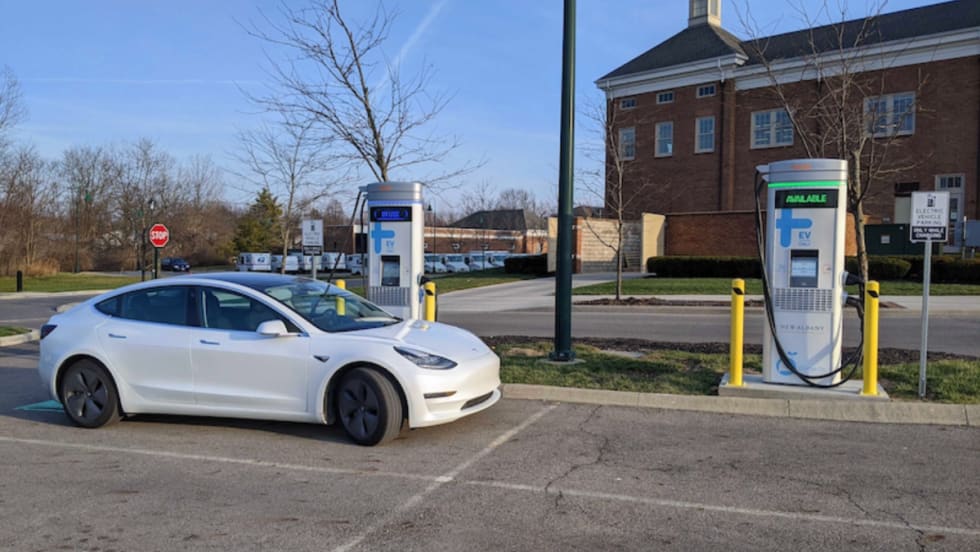
The proposed standards are also projected to speed up the transition to electric vehicles (EVs). Depending on the compliance pathways manufacturers select to meet the standards, EPA projects that EVs could account for 67% of new light-duty vehicle sales and 46% of new medium-duty vehicle sales in MY 2032. The proposed MY 2032 light-duty standards are projected to result in a 56% reduction in projected fleet average GHG emissions target levels compared to the existing MY 2026 standards. The proposed MY 2032 medium-duty vehicle standards would result in a 44% reduction compared to MY 2026 standards.
The proposed standards align with commitments made by automakers and U.S. states as they plan to accelerate clean vehicle technologies in the light- and medium-duty fleets in the next 10 to 15 years. In 2022, California made national headlines when the state's Air Resources Board voted on a proposal, requiring all new passenger cars, trucks, and SUVs sold in California to be zero emissions by 2035.
Changes to Battery Durability Standards
EPA recognizes the importance of battery durability in EVs. The agency is proposing new battery durability requirements for light-duty and medium-duty battery-electric vehicles (BEVs) and plug-in hybrid electric vehicles (PHEVs).
Additionally, the agency is proposing revised regulations which would include BEV and PHEV batteries and associated electric powertrain components under existing emission warranty provisions. EPA is also proposing the addition of two new grouping definitions for BEVs and PHEVs (monitor family and battery durability family), new reporting requirements, and a new calculation for the PHEV charge depletion test to support the battery durability requirements.