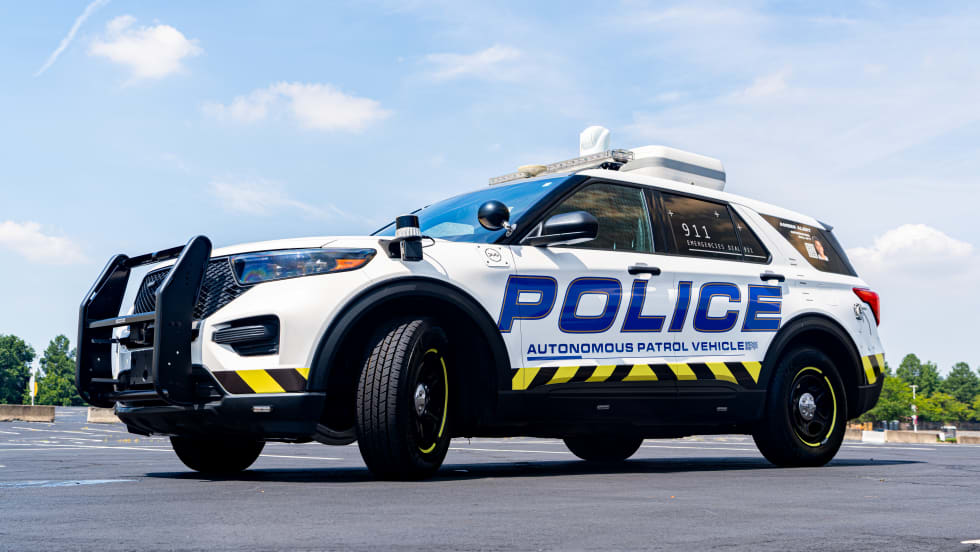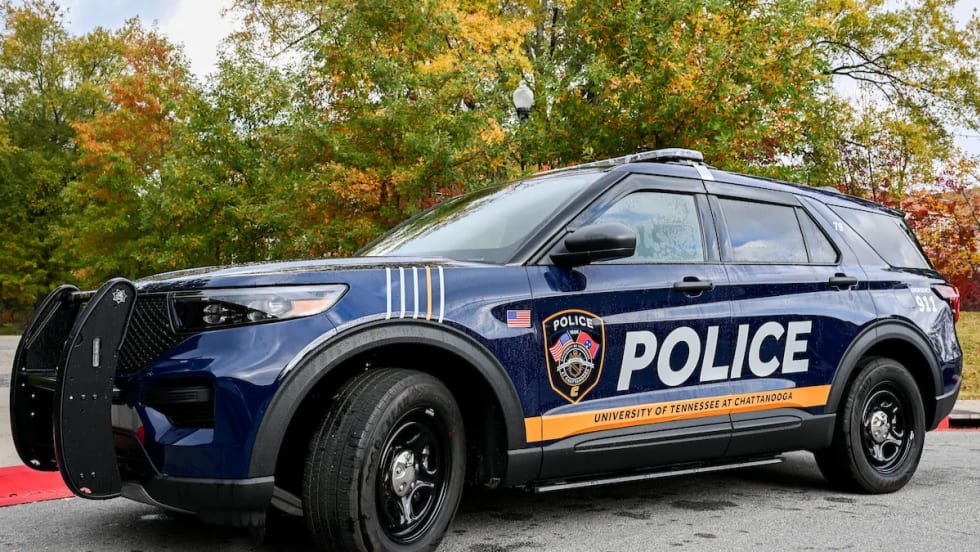






The South Pasadena, California, Police Department has officially become the nation's first law enforcement agency to completely replace its gasoline-powered vehicles with non-polluting electric vehicles (EVs).
The city’s zero-emission police fleet of 20 new Teslas was unveiled on July 29, 2024.
“This transition reflects the city’s vision of a sustainable future based on both sound fiscal management and environmental stewardship,” South Pasadena Mayor Evelyn Zneimer said. “We will have a 21st Century police force that is safe, clean, and saves taxpayer dollars. We’re very excited to be working with our regional and corporate partners to make this happen.”
Prepping to Switch from ICE to EV
The process to switch to EVs began in May 2021, when South Pasadena Councilmember and South Coast Air Quality Management District (SCAQMD) Vice Chair Michael Cacciotti requested staff explore and research the possibility of transitioning to an all-EV fleet.
Police department leadership met with Enterprise Fleet Management and Tesla's Fleet Division in Oct. 2022 to discuss potential vehicle options.
Enterprise Fleet Management assisted the city in acquiring 10 Tesla Model Ys as patrol vehicles and 10 Tesla Model 3s for detective and administrative duties. A city spokesperson told Government Fleet that the models were chosen because of their safety, performance, and large charging network.
GF first reported about the planned EV transition in June 2023.
The cars were upfitted for patrol and administrative police use through Unplugged Performance’s UP.FIT division. Each vehicle's graphics were designed by Anyone Collective. The department put its first Model Y in service in Dec. 2023.
“Switching to these vehicles offers the Police Department the opportunity to acquire a cutting-edge vehicle fleet,” South Pasadena Police Chief Brian Solinsky said. “This initiative not only ensures the safest vehicles for officers and staff but also leads to substantial reductions in both fuel and maintenance costs. Simultaneously, this transition enhances service levels for the residents of South Pasadena by minimizing maintenance downtime commonly seen with traditional gas combustion engines.”
According to city staff reports, the transition is expected to save about $4,000 a year per vehicle on energy costs, plus provide additional savings on maintenance, such as brakes, oil changes, air filters, and more.
Overall, Solinsky estimates that the operational cost of EVs will be at least half the per-mile cost of gasoline-powered vehicles. Preventive maintenance is minimal, and most will be performed in-house.
Repairs and more complex maintenance will be addressed either by the city’s upfitter or manufacturer, depending on the nature of the repair.
To monitor costs and savings, ensure long-term fleet health, and manage vehicles day-to-day, the city has partnered with Standard Fleet. Collaborating with UP.FIT, Standard Fleet’s advanced software offers complete control over charging, maintenance, and dispatching of the customized Tesla vehicles used by the police force.
“We have been working on this for over a decade. We finally got it right and the future for municipalities across the country is clear. Partnering is the way to get big ideas done. Our city is helping to make that a reality today," Cacciotti said.
Police leadership worked with Enterprise Fleet Management to find the right EVs for its fleet. Enterprise Fleet Management used proprietary tools and resources — including an EV suitability assessment — to evaluate the impact of fleet electrification and determine a strategy that met the city’s business and sustainability objectives.
"Your approach to considering EVs and hybrids should be no different from conventional vehicles: match the right vehicle with the right task and user," Enterprise Fleet Management President Brice Adamson told GF.
However, there is no one-size-fits-all solution for governments making the switch, Adamson continued. A customized strategy might include selecting a mixed-energy fleet.
“An organization’s fleet can be a clear indication of its values and priorities, and South Pasadena’s strategy emphasizes its dedication to sustainability and innovation,” said John Mills, Enterprise Fleet Management Vice President of Southern California. “We are proud to help South Pasadena adopt an all-electric police fleet that better reflects its objectives and saves costs along the way. This program sets a high standard for other municipalities across the country.”
Benefits to the Local Community
One of the city’s key motivations in moving to EVs, according to Cacciotti, was protecting public health and improving the environment.
South Pasadena’s electric police fleet will cut both toxic smog-forming emissions of nitrogen oxides, volatile organic compounds, and carbon monoxide, plus emissions of carbon dioxide, the key driver of global heating.
“This is important, particularly in the Los Angeles area which still has the most unhealthful air in the nation,” said Cacciotti. “We hope other police departments in the region and state will make the switch, too. Finishing the job of cleaning up the region’s unhealthy smog and protecting our atmosphere will require wholesale adoption of vehicles that produce no emissions while driving."
Replacing gasoline-powered police and other public safety vehicles with EVs, he added, is critical since they are particularly high emitters.
Police vehicles typically idle more than other vehicles when officers make traffic stops or respond to emergency calls, which greatly adds to emissions.
Generally, the gasoline engines must continue to run — which creates pollution — just to power the cars’ emergency lights, radios, and other crucial equipment used in police cars. In contrast, EVs are emissions-free while driving.
As transportation solutions continue to evolve, it will be critical for businesses to understand sustainability, its impact on the future of mobility, and how to tailor their business solutions to meet objectives.
"When it comes to sustainability, the vehicles we drive are an important piece of the puzzle. And, vehicles that are past their prime may prove to be more trouble than they’re worth — generating higher maintenance and fuel costs as well as increased greenhouse gas emissions," Adamson noted.
Putting Power Back into the Grid

The police EVs will rely on a bank of 34 new electric vehicle chargers contracted through Rexel Energy Solutions installed at South Pasadena City Hall.
Upon completion of the final electrification project component, City Hall, the Police Station, and the Fire Station buildings will be backed up by a solar-powered system with battery storage adding critical power resilience in the event of an outage.
Under its Charge Ready program, Southern California Edison upgraded its local distribution system to supply the higher level of power needed to energize the vehicles and installed the underground wiring needed to install the chargers.
In addition to installing a solar system canopy over the adjacent parking lot, Clean Power Alliance will reserve a portion of battery capacity in case of an outage and the batteries will be used daily for grid and energy optimization — participating in demand response events and increasing overall system reliability.
Working with multiple companies can be a challenge. The city spokesperson said ensuring the infrastructure was installed efficiently and with consideration for the deployment of the police vehicles in a timely manner was the biggest challenge for the agency.
Southern California Edison worked with the South Pasadena Police and Public Works staff to ensure that the timing of the project was on schedule.
"Working collaboratively between departments and partners was key to bringing the project together on time and on budget," the spokesperson said.
Overcoming EV Transition Challenges
The spokesperson continued, saying that it was important to communicate the operational and safety benefits of the Teslas, as well as the overall commitment to health and well-being in the community. Sharing these points widely helped overcome the initial uncertainties for involved stakeholders.
The transition to EVs has required training for police staff. This training helped the staff become more supportive of the change.
"Comprehensive training programs for both drivers and maintenance personnel are essential. In general, driving an EV feels very similar to a conventional vehicle. Drivers may notice EVs accelerate faster from a stop — and they are very quiet on the road. And EVs may be different mechanically compared to traditional ICE vehicles, but preventive maintenance is still just as important," Adamson said.
Some guidance was given to officers during an initial training on how to manage the state of charge in an EV, the same way an officer would manage fuel in their previous gas-powered cars.
As far as the daily workflow goes, there has been no significant change. It consists of charging at their end-of-watch versus filling up a gas tank.
The city spokesperson shared guidance for other police departments, advising them to:
perform their due diligence and select an EV best suited to their use case
choose an upfitter with a high level of expertise in their chosen EV platform
educate their communities and decision makers at the outset
involve police association/union leadership early on in the process to provide opportunities for input and education
Funding the All-EV Fleet
More than half the cost of the electrification project is being met by the city’s project partners. Among those are the Mobile Source Air Pollution Reduction Review Committee, which provided nearly $500,000 in Clean Transportation Funding to this clean air project.
Additionally, approximately $530,000 in work conducted by Southern California Edison is being funded under its Charge Ready program.
The solar and battery storage system from the CPA's Power Ready Program comes at no cost, as a Local Programs benefit to CPA’s member agencies.
The city’s net expense is $1.85 million, which covers the cost of the EV chargers and lease payments to Enterprise Fleet Management.
What About the Other City Fleet Vehicles?
The city has been able to purchase other EVs for light-duty administrative functions — as well as buses and vans for the city's on-call transit services for seniors.
City staff continue to explore the feasibility of EV transitions for other uses, including trucks for heavier duty assignments.