The California Department of General Services (DGS) announced it is developing a policy that will require state agencies to only purchase vehicles from OEMs that recognize the California Air Resources Board (CARB)’s authority to set greenhouse gas and zero-emission vehicle standards, and which have committed to continuing stringent emissions reduction goals for their vehicles. This policy would take effect Jan. 1, 2020.
Effective immediately, the agency is also prohibiting state agencies from purchasing sedans solely powered by an internal combustion engine, with an exemption for public safety vehicles.
The two policies will limit the vehicles that state agencies can buy. "This will clearly decrease the amount of vehicles available for the state to purchase. We are currently in the process of identifying comparable vehicles for those that will be prohibited," a DGS spokesperson stated.
This announcement from DGS came the same day the California Attorney General announced a lawsuit challenging the U.S. Environmental Protection Agency (EPA) for its attempt to revoke portions of a waiver it granted in 2013 that permitted the State of California to implement its own greenhouse gas (GHG) and zero-emission vehicle (ZEV) standards. These standards are followed, in whole or in part, by 13 other states.
“California’s Clean Car Standards are achievable. They not only work, many other states around the country have chosen to adopt them. The Trump Administration, on the other hand, has chosen to side with polluters. We believe we’re on the right side of history,” California Attorney General Xavier Becerra said in a statement.
Who’s on Each Side?
In July, Ford, Honda, BMW of North America, and Volkswagen Group of America agreed to voluntarily follow CARB’s rules for improving fuel economy. Under this framework, gasoline and diesel cars and light trucks would get cleaner through 2026 at about the same rate as the current program.
In contrast, FCA, General Motors, Toyota, and the Association of Global Automakers that represents international OEMs such as Nissan, Hyundai, and Kia announced in late October that they would intervene in a lawsuit between California and the federal government with the goal of achieving a unified fuel economy and GHG program.
“We do not believe that there should be different fuel economy standards in different states. There should be one standard for all Americans and all auto companies,” Toyota said in a statement at the time. “Multiple standards will result in higher vehicle prices. And if vehicle prices increase, consumers are more likely to keep older, less efficient cars longer.”
According to DGS data obtained by CalMatters, 69% of the vehicles purchased for the California state fleet in 2018 were from OEMs affected by this new policy.
“We will be asking the court to declare that our right to demand cleaner cars and trucks is protected under the federal Clean Air Act and cannot be taken away by the Trump Administration simply because they don’t believe in the science of climate change — or because they want to punish us for taking action. For over 50 years, we have used our authority to push the auto manufacturers to build cleaner cars, using state of the art technology. We are not about to be turned around by these bullies,” California Air Resources Board Chair Mary Nichols said in a statement.
OEMs affected by this policy were contacted for comment. General Motors shared the following statement with Government Fleet:
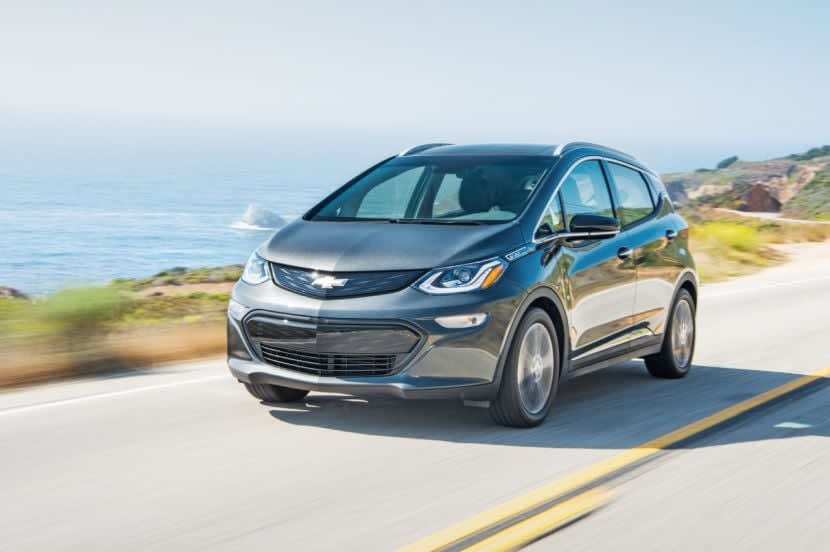
It is unfortunate that California has announced it may remove the Chevrolet Bolt EV – the first affordable EV with a range of 259 miles on a single charge – from consideration for its statewide fleet. Removing vehicles like the Chevy Bolt and prohibiting GM and other manufacturers from consideration will dramatically reduce California’s choices for affordable, American-made electric vehicles and limit its ability to reach its goal of minimizing the state government’s carbon footprint, a goal that GM shares.
GM is committed to an all-electric future which is why we support California’s initiative to electrify their fleet.
GM continues to advocate for one national program for fuel economy and emissions on which all parties, including California, can agree. GM is the only automotive company that has proposed a National Zero Emission Vehicle (NZEV) program modeled after existing state programs to deploy electric vehicles on a national scale, and we hope to continue working with all parties, including California, on achieving that goal.
This article was updated 11/19/19 with responses from DGS and GM.