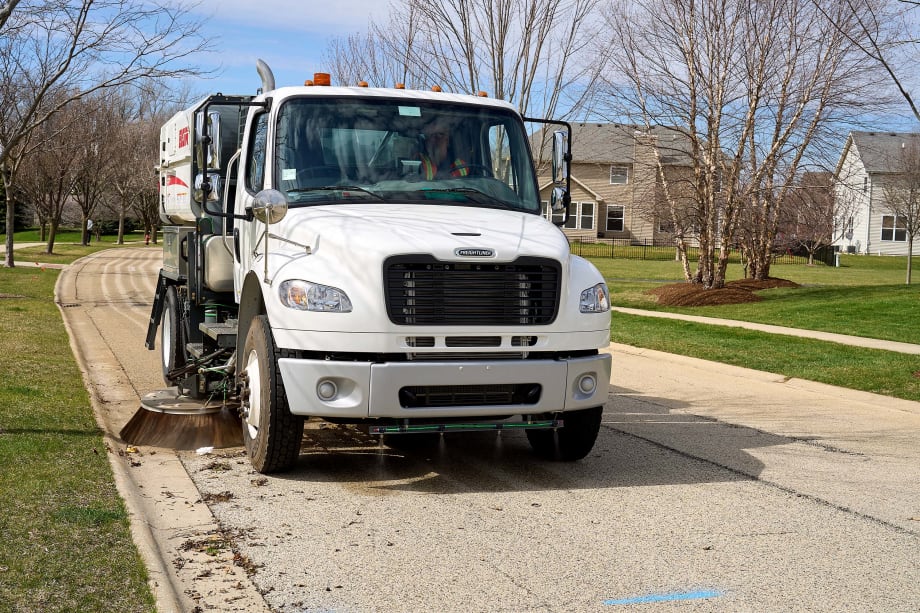
Debris can overtake the streets as changing seasons bring in new elements. Street sweeping is an essential part of keeping municipalities clean year-round, especially as seasonal changes bring varying amounts of debris. From fallen leaves in autumn to sand and runoff in the spring, different conditions require municipalities to carefully assess their equipment needs.
One key factor in this decision is hopper size, which affects how efficiently a sweeper can operate before needing to unload. Factors such as street size, debris volume, and distance to disposal sites all contribute to determining the right hopper capacity.
Here are a few things to consider when determining hopper function and capacity needs.
Street size. For narrow downtown areas, a small hopper might be necessary to maneuver down narrow roads. For larger highways, regenerative air sweepers and pure vacuum sweepers feature large hoppers that reduce the need for frequent dumping.
Seasonal changes. Street sweeping needs vary from season to season. Fall time brings in an abundance of leaves while snow melt, sand and debris make spring a busy time too. Consider the amount of debris the sweeper will encounter.
Distance to dump sites. Once the hopper is at capacity, it cannot hold more debris. Longer distances between designated dump sites may require a larger hopper. Be aware of where debris can be dumped.
Weight of debris. Heavier debris, like wet leaves and large sticks and branches, may require a larger hopper. Frequent storms and rainfall are factors to consider in areas with heavier debris.
Even after considering these factors, it can be difficult to know where to start, so here are a few sweepers to consider depending on hopper capacity.
Large capacity. Regenerative air sweepers and pure vacuum sweepers have the largest hopper capacity at 8yd3.
Standard capacity. Mechanical street sweepers might be the way to go for areas with standard debris.
Smaller Capacity: For particularly narrow streets and small capacity needs, consider mechanical street sweepers.
Having the proper size hopper prevents debris from taking over and keeps municipalities clear year-round.