




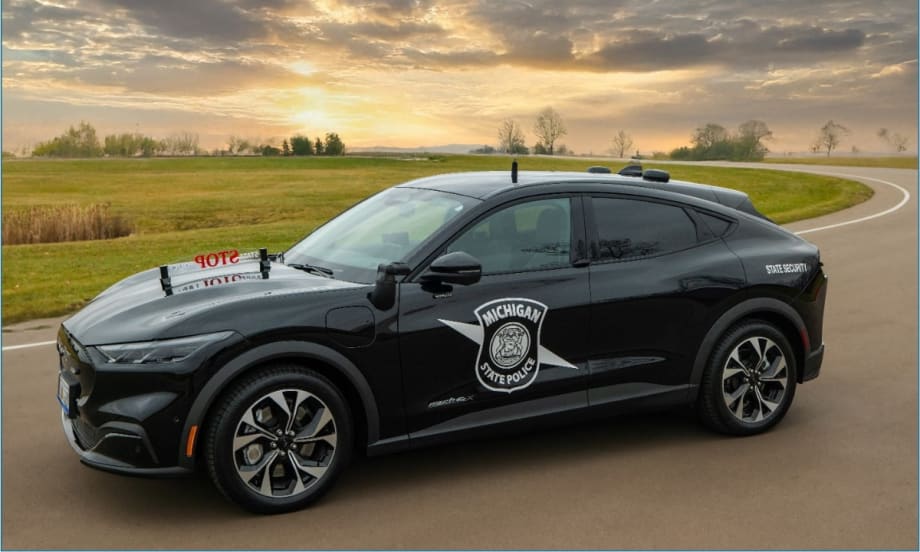
Michigan State Police (MSP) is putting a fully electric vehicle to the test for patrol use. MSP announced the addition of a 2024 Ford Mustang Mach-E to its State Security Operations Section fleet.
How the Vehicle Will be Used
The vehicle will be used by state properties security officers, who are armed, uniformed members of the MSP who specialize in general law enforcement and security services at state-owned and leased facilities in the Lansing area.
“This is an exciting opportunity for us to research, in real time, how a battery electric vehicle performs on patrol,” MSP Director Col. James F. Grady II said. “Our state properties security officers patrol a substantially smaller number of miles per day than our troopers and motor carrier officers, within city limits and at lower speeds, coupled with the availability of charging infrastructure in downtown Lansing, making this the ideal environment to test the capabilities of a police-package battery electric vehicle.”
An MSP media spokesperson told Government Fleet that by policy, state properties security officers do not engage in pursuits.
Charging and Upfitting MSP's Mustang Mach-E
The vehicle is upfitted with the same equipment as other MSP patrol vehicles, including a radio, in-car camera, mobile data computer, and slick top lighting package.
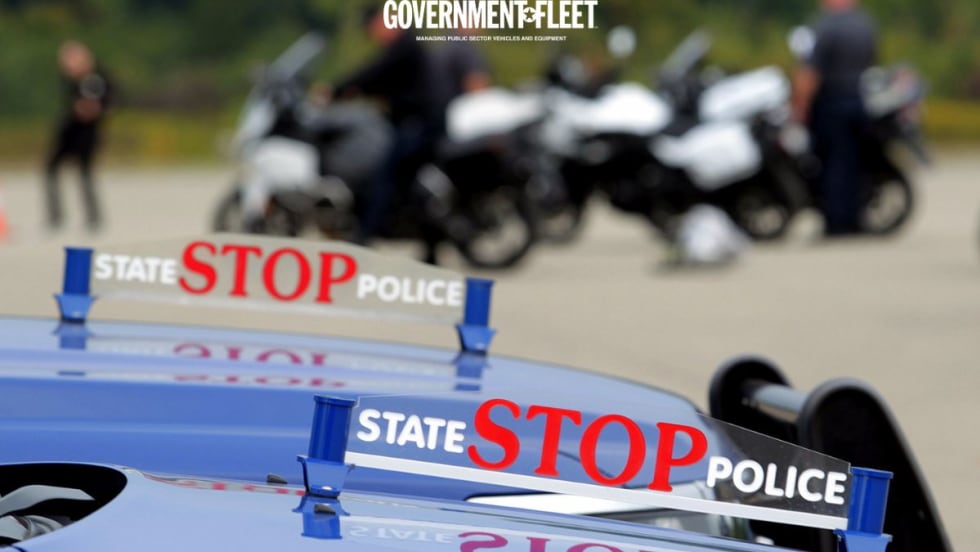
Because the vehicle has the department's slick-top package, the iconic red beacon that sits atop MSP's other vehicles is not on the vehicle. However, one longtime feature is: the 'Stop State Police' sign on the hood.
The vehicle is not equipped with an additional battery to power the upfitted equipment. The pilot will help the agency understand how the electrical load will impact range with the standard equipped battery, a spokesperson said.
“We began testing battery electric vehicles in 2022, but up until now hybrids were the only alternative fuel vehicle in our fleet,” Lt. Nicholas Darlington, commander of the Precision Driving Unit, said. “Adding this battery electric vehicle to our patrol fleet will allow us to study the vehicle’s performance long-term to determine if there is a potential for cost savings and broader applicability within our fleet.”