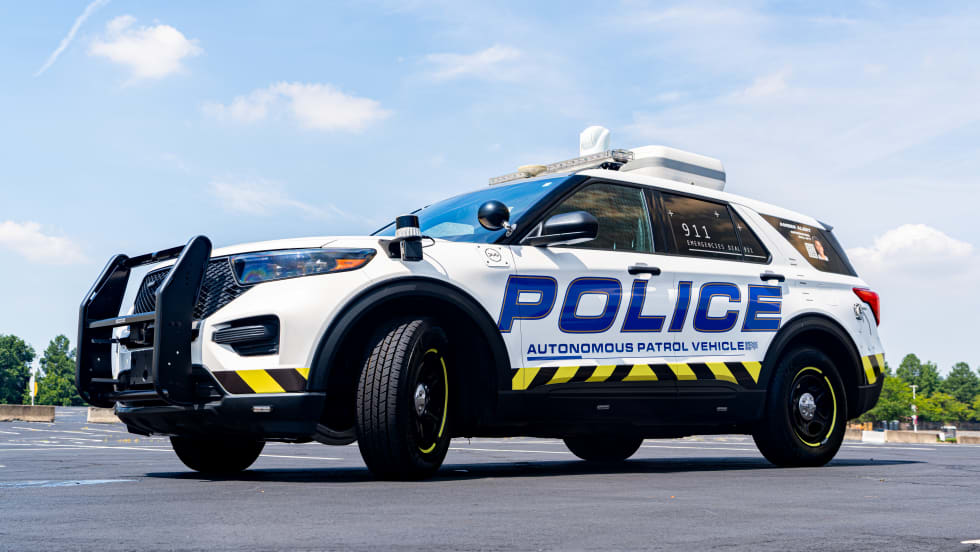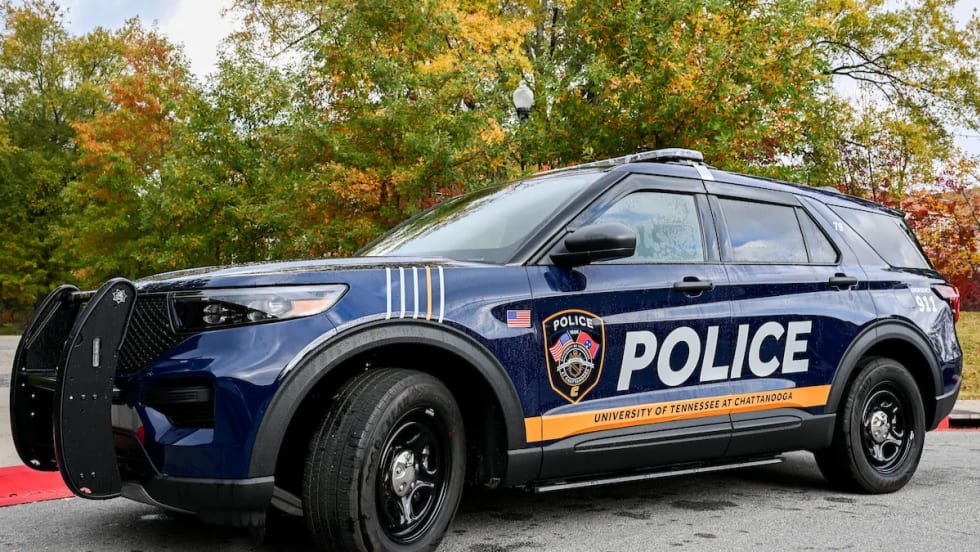
The new EVs are expected to yield overall savings for the department.
Photo: Austin Police Department
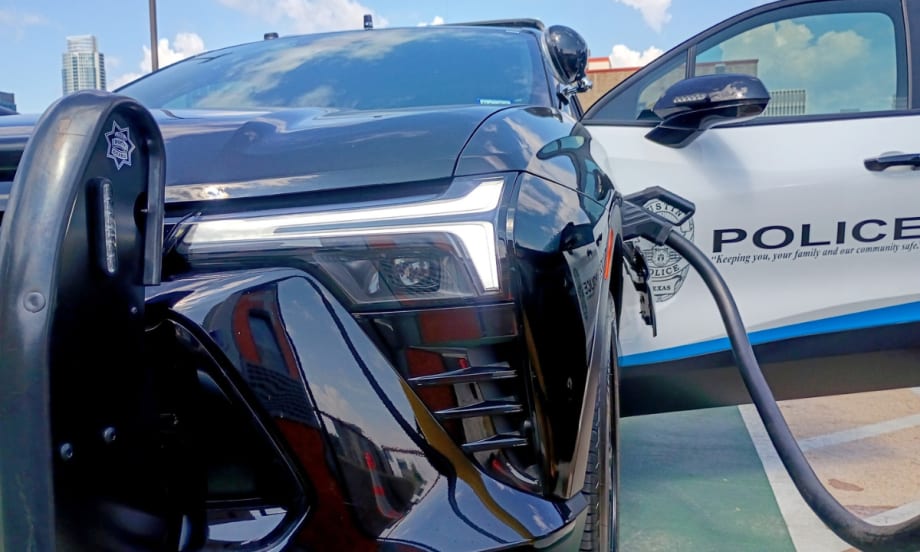
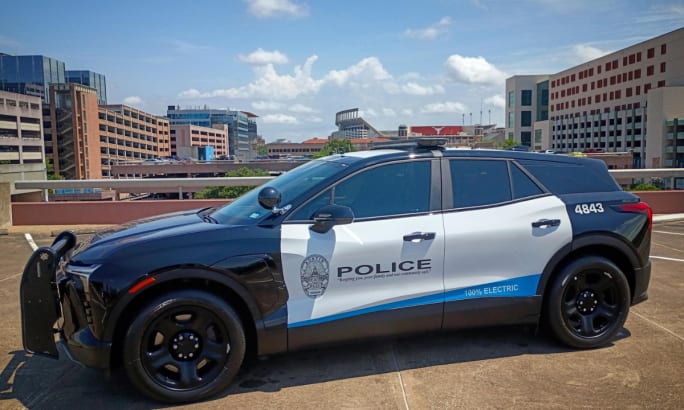
The City of Austin recently unveiled its first electric vehicle (EV) pilot to be integrated into its police fleet.
Austin’s EV pilot features the addition of specialized electric vehicles equipped with features and capabilities specifically designed for police use. Features include an EV drive system, performance all-wheel drive, and an electric center with a harness. Additional features support continuous emergency equipment loads.
Two electric vehicles are set to be added to the patrol fleet in 2026.
Designing and Training
We reached out to Austin’s Strategic Communications and Community Engagement Manager, Anna Sabana, to learn more about the new fleet.
As an emergency response fleet, there are many pieces of equipment that need to be constantly rotated on and off the vehicles. Sabana went into more detail about the specific upgrades needed to accommodate these loads.
“Each Blazer EV PPV includes a high-capacity DC power module designed to support continuous emergency equipment loads. The vehicles have been outfitted with reinforced harnessing and electrical centers to power sirens, radios, lights, and onboard computing,” she said.
Sabana added that while no major electrical issues have arisen thus far, it remains a key area of evaluation for long-term reliability.
While the timeline for deployment is not concrete yet, Sabana explained that it would be dependent on how long it takes to train the officers, which she estimates would take between 30 and 60 days.
Officer onboarding is critical to the success of this pilot. Currently, the training includes:
A 30–60-day structured program,
Modules on EV handling, regenerative braking, charging protocols, and emergency response procedures,
Emphasis on safety, operational readiness, and familiarity with EV-specific systems.
She added that training outcomes will help shape future curricula if the program expands. The current curriculum is being refined based on feedback.
Data Forward
Electrifying a fleet is a large undertaking that opens the door to new challenges and new advantages.
To ensure that electrification is successful, the Austin Police Department will track the following performance metrics:
Vehicle handling and pursuit capability: Control, steering responsiveness, traction, and overall maneuverability during patrol driving, high-speed response, or tactical movement.
Acceleration, braking, and performance: When accelerating, braking, and responding to pedal inputs under both normal and urgent conditions.
Range, charging, and infrastructure: Accuracy of range estimates, charging accessibility, and how mid-shift recharging may disrupt coverage.
Interior layout and officer ergonomics: Comfort, usability, and accessibility of the cabin while wearing full duty gear.
Durability and patrol readiness: Physical and functional reliability of the vehicle over multiple shifts.
Heat management and battery load: How well the vehicle manages cabin temperature and electronic performance during thermal load.
Equipment integration: How patrol gear, such as lights, sirens, restraints, and mounted tech systems, functions within the vehicle.
Officer confidence and readiness: Overall confidence in using the vehicle again for patrol. A high score indicates the vehicle consistently supports safe and reliable policing operations.
Another metric they will be keeping a close eye on is cost savings when comparing the EV patrol vehicles and gas-powered vehicles.
Sabana explained, “While EVs have a higher upfront cost, they are expected to outperform gas units in total cost of ownership over time. The pilot will help validate these projections in the context of emergency response operations.”
She noted that they expect potential savings in maintenance costs, fuel costs, and costs per mile. The figures will be refined as more data is collected.
Looking Ahead
“The City of Austin aims to achieve net-zero greenhouse gas emissions by 2040. While the deployment of these two electric vehicles (EVs) may seem small, it represents progress toward this goal. Consequently, this pilot program aligns with the city's broader objectives,” said Sabana.
The City of Austin is enthusiastic about this pilot, and they plan to use this pilot as a trial to identify issues and assess their impacts. While they hope this will lead to a broader EV initiative, they are focused on using the resources available now and see where the data leads.