






The city installed two new anaerobic digesters at the plant to stabilize wastewater solids generated in the treatment process and generate a sustainable fuel source.
Photo: City of Roseville
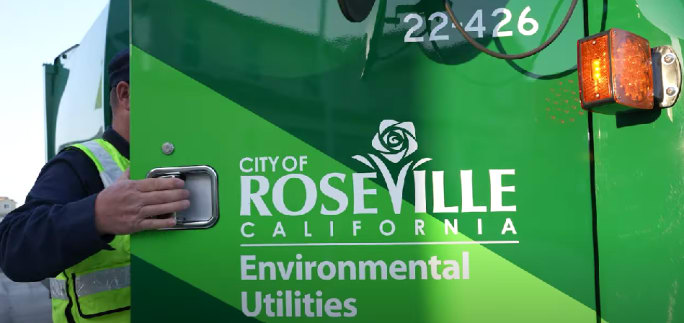
The city of Roseville, California, is working to decrease greenhouse gas emissions and minimize landfill waste by powering its trash and recycling fleet with renewable fuel, or renewable natural gas (RNG), derived from the digestion of organic waste.
The regional Pleasant Grove Wastewater Treatment Plant (PGWWTP) is owned and operated by the city, where the plant treats millions of gallons of wastewater daily. In addition, it supplies more than half of the one billion gallons of recycled water the city delivers annually for landscaping and industrial purposes.
The PGWWTP expansion has been under construction since 2020 to increase treatment capacity from 9.5 million gallons to 12 million gallons of wastewater per day to accommodate regional population growth. As part of the expansion, Roseville has developed an energy recovery project to transform the plant into a waste-to-energy facility capable of producing RNG fuel.
According to Roseville’s Environmental Utilities Director, Richard D. Plecker, “We have come full circle with managing our integrated utility service to benefit our community. Through this project, we have the opportunity to generate environmentally beneficial by-products, mitigate the impacts of climate change, comply with regulatory obligations, and safeguard the interests of our ratepayers by stabilizing fuel costs for our solid waste fleet.”
Reducing Greenhouse Gas Emissions Through Solid Waste
The city installed two new anaerobic digesters at the plant to stabilize wastewater solids generated in the treatment process and generate a sustainable fuel source. A receiving facility was constructed to accept high-strength organic wastes (fats, oils, and greases) directly into the anaerobic digesters, maximizing digester gas production for RNG conversion and diverting up to 12,000 tons of high-strength organic waste per year from landfills. Four microturbine cogeneration units produce electricity to help power the gas conversion process and provide heat for the anaerobic digesters.
By running its solid waste collection fleet (approximately 47 trucks) via a new on-site RNG fueling facility and ceasing diesel use, the city will reduce greenhouse gas emissions by about 7,000 metric tons of CO2 equivalents per year, equal to planting more than 270,000 trees. It will also earn credits through the Low Carbon Fuel Standard program as it lowers NOx emissions by five metric tons per year.
Furthermore, generating electricity with microturbines made the project eligible for the Clean Water State Revolving Fund Green Project Reserve, which incentivizes projects that address water or energy efficiency and reduces costs for utility customers.
Planning for a Future of Electric Vehicles
Roseville's fleet consists of nearly 900 vehicles consisting of a combined 131 in-service and on-order: 25 zero-emission vehicles, 76 hybrids, and 30 compressed natural gas vehicles.
Over the next several years, as vehicles are replaced, the city is transitioning to zero-emission all-electric light-duty cars, Roseville Transit buses, hybrid police patrol units, and Environmental Utilities refuse trucks fueled by compressed natural gas generated by the waste-to-energy plant.
Recently the City of Roseville was granted approximately $140,000 from the Placer County Air Pollution Control District to contribute toward a battery electric bus charging station. This funding comes from the California Air Resources Board to address local projects that take early action to achieve emission reductions beyond state regulations. Starting in 2029, all new buses in California must be zero-emission.








![Propper International HLX: Hybrid Lightweight Crossover [|CREDIT|]Photo: Propper International](https://assets.bobitstudios.com/image/upload/f_auto,q_auto,dpr_auto,c_fill,w_980,h_552/pm.propper-aug19hp_1759864252351_m5ncl6.jpg)