




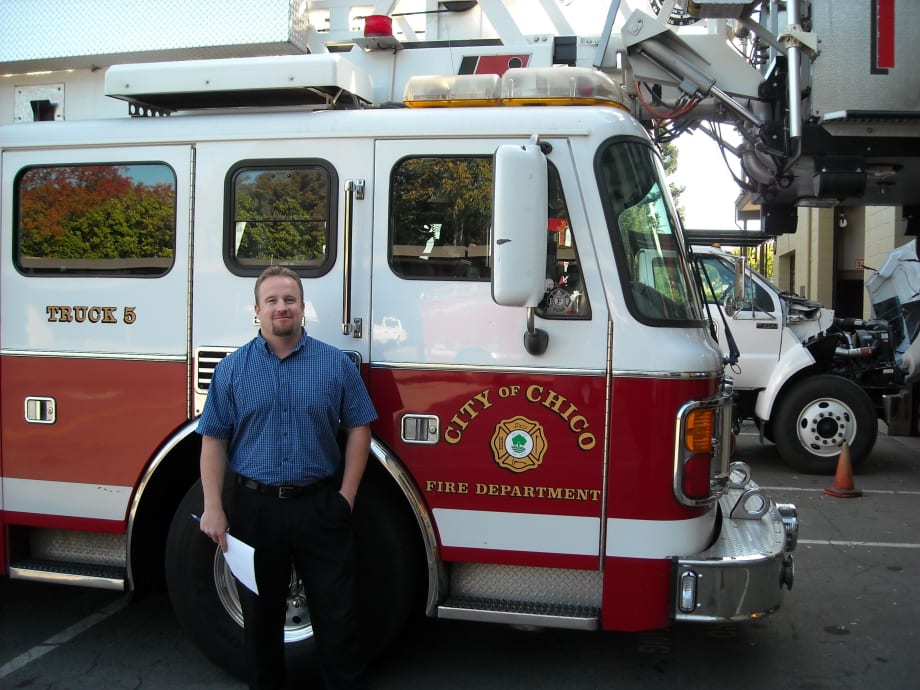
Erik Gustafson, fleet manager for the City of Chico, helped reduce the City's fleet replacement budget by $1.6 million, nearly half of which was from taking a reserve fire ladder truck out of the replacement budget.
CHICO, CA - At a time when replacement budgets are being cut and fuel costs are rising, savings in these two areas go a long way. Through fleet improvements, the City of Chico, Calif., is doing just this: The Central Garage was able to save the replacement fund $1.6 million through fleet optimization and saved $85,234 in reduced fuel consumption in the past three years mainly due to a revised vehicle use policy, according to Erik Gustafson, fleet manager for the City.
In August 2009, the City's Central Garage updated its vehicle use policy to reduce the number of take-home vehicles in its fleet. It limited take-home vehicles to only those living within the City's "sphere of influence" and upon approval of the city manager and department head on an annual basis, Gustafson stated. This new policy reduced the number of take-home vehicles from 35 to approximately 12.
Two years later, Central Garage's analysis of fuel usage found that this step, in addition to other fleet optimization efforts, has led to significant fuel savings. The City reduced fuel use by 32,731 gallons in the past three fiscal years (from 146,781 gallons in FY 2008-09 to 114,050 gallons this year), resulting in savings of $85,234, Gustafson said.
In addition, the Central Garage's fleet optimization efforts have resulted in reduced fleet size. Fleet had been undergoing cuts in replacement budget of about $300,000 annually for the past few years, and it had to find a way to purchase the right vehicles with a smaller budget. "We started off by analyzing cost per mile for each vehicle in each department, then identifying underutilized vehicles and slating them for reduction," Gustafson said.
Although user demand is high, the City's condensed location leads to lower recorded miles traveled. A city worker may drive only two miles to a jobsite, but needs to vehicle for the entire day while he is there, Gustafson explained. He began the utilization study with mileage and hour requirements, but customized the numbers to specific departmental needs.
Fleet reduced the number of vehicles by 38, bringing total units down to 347 and saving the replacement fund $1.6 million. Nearly half of the savings was through reduction of a fire ladder truck estimated to cost more than $700,000. One reserve fire truck was underutilized, and working with the Fire Department to take that truck off the replacement schedule was a big achievement that contributed greatly to the savings. The City now has two ladder fire trucks.
The estimated $1.6 million in savings will be realized over the next 25 years. The scheduled replacement budget for FY 2011-2012 is approximately $744,000.
Another fleet optimization effort under way is the standardization of vehicle types and specialized vehicle equipment. Gustafson is currently working with user departments to come to an agreement about which types of vehicles are appropriate for their various uses, he said.
Fleet also started some small, departmental motor pools, taking underutilized vehicles assigned to individuals and making them available for use within the department. These small pools are managed by the user departments, Gustafson said.
Gustafson said to enact the changes, backing from city council and the city manager was critical, especially when handling difficult discussions. However, with continuing budget reductions and CARB (California Air Resources Board) diesel emissions regulations to enforce, the timing was right for the City. "Due to current economic condition, it was easy to gain buy in," Gustafson said.
By Thi Dao






![Propper International HLX: Hybrid Lightweight Crossover [|CREDIT|]Photo: Propper International](https://assets.bobitstudios.com/image/upload/f_auto,q_auto,dpr_auto,c_fill,w_980,h_552/pm.propper-aug19hp_1759864252351_m5ncl6.jpg)