When speaking with colleagues in the public sector about the potential of Vehicle-to-Everything (V2X) solutions, I hear a common refrain: “We’re looking for new technology to improve road safety and efficiency, but are not sure where to begin.”
It’s an understandable predicament.
Federal, state, and local governments continue to take on the challenging task of helping residents move more freely and safely within our communities. They do admirable work with the resources they have. But I know we all want to do more to improve our transportation systems.
According to NHTSA, recent traffic fatalities are decreasing, thankfully, but these figures are still considerably higher than just a decade ago. When you look at pedestrian fatalities, the data shows similar concerning trends. And not to mention, traffic congestion continues to be an increasingly prevalent issue in urban areas across the U.S., according to the Federal Highway Administration.
While governments have realized new tools like V2X technology can help address these issues, it can also be difficult to find real-world examples of how to actually do it.
To help demystify this, here are three prevailing use cases that can not only help your teams work together more seamlessly but also promote safer and more efficient movement of people and goods while protecting data and personal privacy.
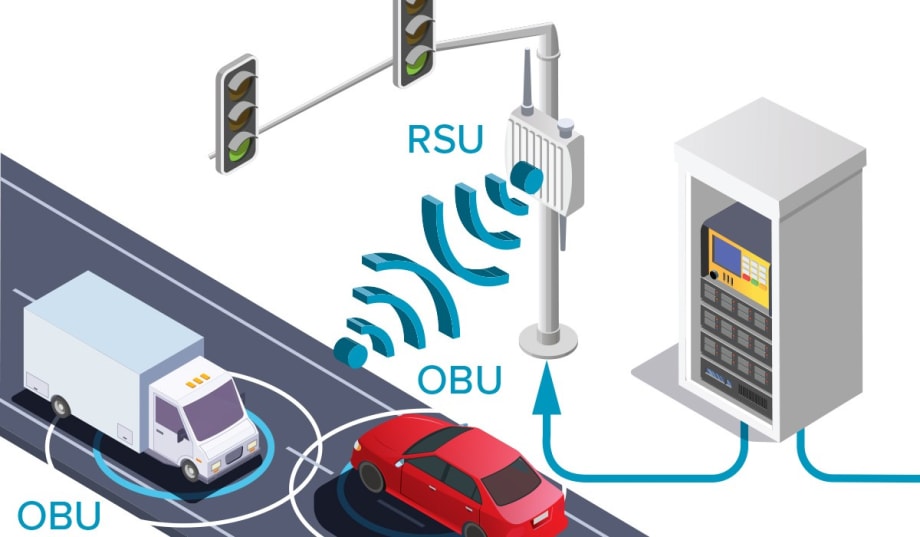
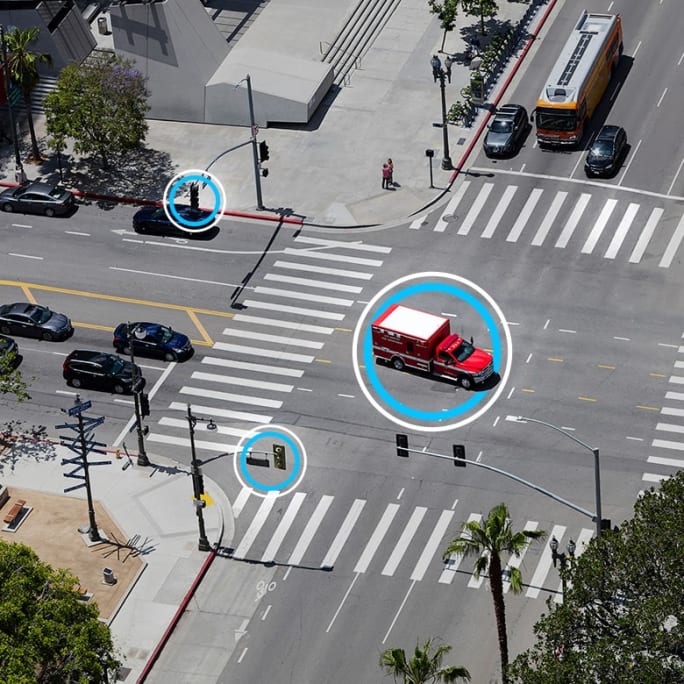
Traffic Signal Preemption and Signal Priority. When emergency vehicles and city infrastructure are equipped with V2X devices that can “speak” to each other, traffic signals can keep emergency responders and the public safer, giving priority to emergency teams and keeping traffic away from hazard areas.
Applications for Vulnerable Road Users (VRUs) and Intersection Move Assist (IMA) ensure the fleet vehicle is moving through the intersection safely, not only for itself but also for other road users.
Scenario Assessment. Development has begun on tech that would enable emergency responders to have a pre-action assessment of the accident, which could assure that the right agency and capabilities are on the scene.
So, how can these use cases come to life in the real world?
Ensure Public Transit Is in the Right Place, at the Right Time, Each Trip
Nobody likes a late bus.
But if public vehicles like city or school buses are equipped with V2X devices, fleet managers can decrease the odds of it happening. In collaboration with traffic management tools, V2X can be used as a secure communication device for infrastructure to give signal priority to public transportation fleets.
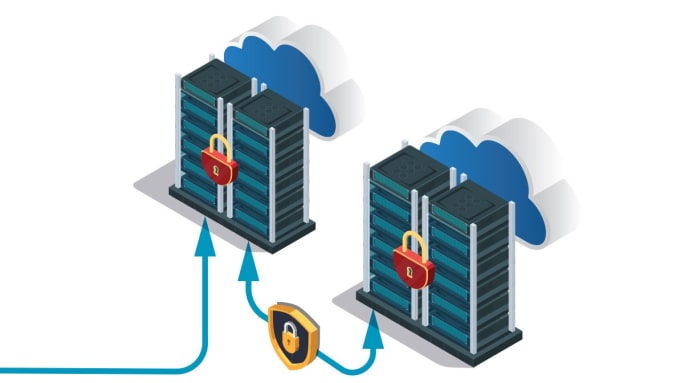
Secured cloud infrastructure plays a critical role in protecting V2X communications between vehicles, roadside units, and management systems.
Photo: DENSO
Data captured from these devices can also be used to identify improvement points in daily operations – from optimized routing to speedier service and higher vehicle utilization.
Protect Vulnerable Road Users
V2X and smart intersection technology provide safety for both the VRUs and Vehicles.
Through these tools, cities can establish smart intersections to assess future paths of VRUs. This information can help smart intersections determine if potential incidents will occur and, if so, alert the pedestrian or change the traffic signal’s state to provide safe passage.
Additionally, the smart intersection can notify fleet vehicles if they are approaching a pedestrian-rich area or warn drivers if they are on a collision path with vulnerable road users, helping avoid further accidents.
Manage Traffic During Large Events
Whether it’s a county fair or even the Olympics, which will be held in Los Angeles next year, communities across the U.S. are no strangers to events big and small.
These often involve road closures, diverted traffic, and everyone’s nemesis, higher traffic congestion.
V2X technology can help government leaders not only identify the best routes for smoother traffic movement, but also keep them safe and efficient in real time.
V2X technology supporting port infrastructure and vehicles can help areas operate more safely and efficiently, and improve relations with the surrounding community.
Photo: DENSO
Streamline Port Logistics
Communities near ports often struggle with noise and traffic congestion that can result from their busy operations.
Not unlike the other use cases, V2X technology supporting port infrastructure and vehicles can help these areas operate more safely and efficiently, and improve relations with the surrounding community.
Port managers and fleet operators want to get to main arteries such as highways safely and efficiently. Utilizing traffic signal priority, vehicle operators can gain confidence in the prescribed course, avoiding “shortcuts” through neighborhoods, helping reduce the amount of noise and emissions they produce in areas around the port, and alleviating traffic congestion for other motorists.
Accelerate Emergency Vehicle Response Times
Through V2X tools, the scene of an accident can sooner go from dangerous to under control. The catalyst is wireless connectivity, which opens new ways for governments to better respond to road crises, including traffic signal preemption and priority and scenario assessments, which I mentioned previously, along with rapid alerts, which notify traffic of approaching emergency vehicles.
All of this helps emergency teams respond faster, more safely, and with more information about the situations they encounter.
Moving forward with Your Fleet
The possibilities of V2X deployments are exciting, but they can also be daunting.
If you’re interested in this space, I encourage you to move forward anyway. Consider the needs of your community, work with partners you trust, and soon you’ll be incorporating new V2X-powered strategies to support a safer, greener world.