




In 2009, Hawaii’s procurement policy established electric vehicles as the highest priority choice for state agencies. However, due to budget constraints and the complexities of implementing the transition, government departments statewide lacked the resources to transition to electric vehicles in a timely manner.
In 2019, the state, along with individual county governments, hospitals, and the university system, issued a statewide procurement to engage an entity that would provide a holistic, user-fee-based package covering electric vehicles, chargers, and related infrastructure. The objective was to lessen the state’s dependence on oil and reduce its carbon footprint, essentially, to reach its established sustainability goals.
In late 2020, the state signed an electric vehicles as a service (EVaaS) contract to provide electric vehicles, related equipment, and energy infrastructure for state and local government agencies, with the end goal of facilitating Hawaii’s fleet transformation to zero-emission transportation.
The installation of the charging stations began in February 2021, and the first vehicles arrived that April. More than 200 electric vehicles with related charging infrastructure have been deployed statewide in Hawaii, comprising a wide array of light- and heavy-duty vehicles. These projects utilize both grant funds and tax incentives to reduce monthly usage fees.
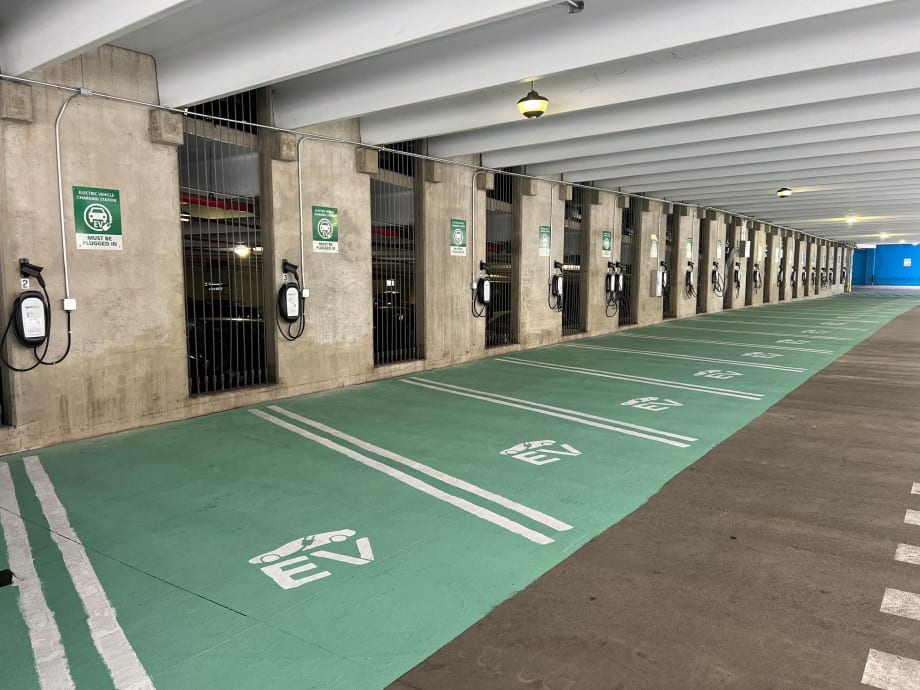
The installation included 20 OpConnect Level 2 charging stations in the airport’s international parking structure, available 24 hours a day for travelers and visitors, using standard J1772 (J-plug) connectors. Beyond installation, the EVaaS model provides ongoing monitoring and maintenance of the network to ensure reliability, optimize performance, and keep chargers available for public use.
The EVaaS contract enables Hawaii to begin adopting new fleet solutions, including electric vehicles from manufacturers such as General Motors, Ford, and Tesla, which are expected to provide financial and emissions-related benefits. The program is also intended to support the state’s 2030 clean energy target by reducing fuel consumption in on-road transportation.
Key Features of the EVaaS Approach
In the EVaaS model, a third-party service provider facilitates the entire fleet electrification process. That includes coordinating funding, procurement, vehicle deployment, charging installation, and ongoing maintenance for both vehicles and required infrastructure. Instead of committing large upfront capital, the public entity pays a monthly fee based on usage.
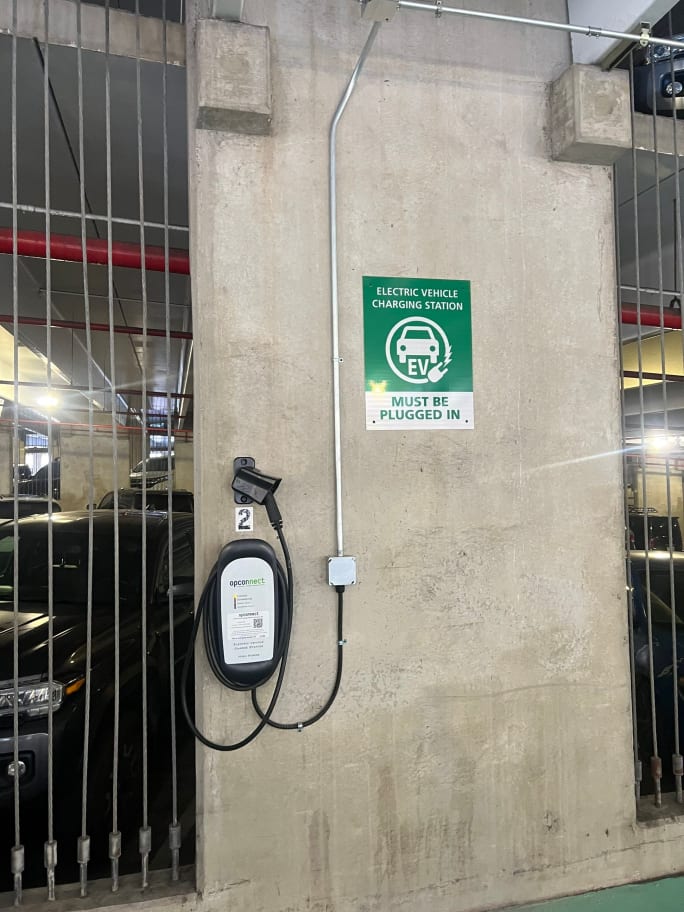
Charging infrastructure is a core component of many EVaaS offerings, with some providers integrating solar generation, battery storage, and microgrids.
Photo: Sustainability Partners
EVaaS is intended to reduce costs by streamlining implementation and aligning fleet size with operational needs, potentially decreasing the number of extra vehicles traditionally purchased to cover downtime. Many EVaaS agreements include maintenance and upgrades, which can support vehicle availability over the life of the contract.
EVaaS contracts can be structured in multiple ways. Providers may finance the full electrification effort or supplement agencies’ existing resources when state or federal grant funding is available.
In some cases, grant awards, tax incentives, or rebates can be applied to lower monthly service costs. This structure can allow agencies to move forward with EV projects despite budget constraints that might otherwise delay capital purchases.
The model can be applied to fleets of varying sizes—from small fleets of around 10 units to larger operations with hundreds of vehicles—and across multiple vehicle types and applications, from buses to fire apparatus, and more.
Charging infrastructure is a core component of many EVaaS offerings. In addition to Level 2 and Level 3 charging, some providers integrate solar generation, battery storage, and microgrids to improve power reliability and manage overall system performance.
Where agencies do not own facilities, surface-mounted charging solutions can be deployed without major construction and relocated as operational needs change, providing additional siting flexibility.
EVaaS arrangements can also include vehicle upfitting to meet specific agency requirements, such as police and emergency response equipment, specialized seating, onboard technology, and cargo management systems.
Electric Vehicles vs. Gasoline and Diesel
In Hawaii, retail gasoline and diesel often exceed $4–$5 per gallon, while commercial electricity typically runs about $0.42–$0.63 per kWh. EV adoption may add constraints that include range, terrain, and charging logistics. An EV-as-a-service model can formalize planning, vehicle selection, and infrastructure, where duty cycles and contract terms support it. In cold or remote settings, hybrids or PHEVs can supplement BEVs to preserve performance and uptime.
Maximizing Uptime for Fleets
Traditionally, public fleets carry a 20% vehicle “overage” to account for downtime from repairs or accidents. Under an EVaaS model, that margin can often be reduced or eliminated. In several public fleet implementations, agencies have been able to shrink the total vehicle count while maintaining or even improving service levels.
Doing Your EVaaS Homework
No two public fleet electrification projects are alike. One agency may need 15 vans, while another may need 250 passenger cars. Some states, such as Hawaii, set specific weight limits on light-duty vehicles, while others focus on emissions or procurement standards. Urban and rural fleets face different operational realities, from charging access to vehicle utilization.
Understanding these variables is essential. Fleet managers should review mandates, procurement rules and fleet usage patterns, and then evaluate which EVaaS providers can meet those needs with the right mix of vehicles, infrastructure and support. A well-vetted partner can help public agencies move from planning to implementation with confidence and clarity.